
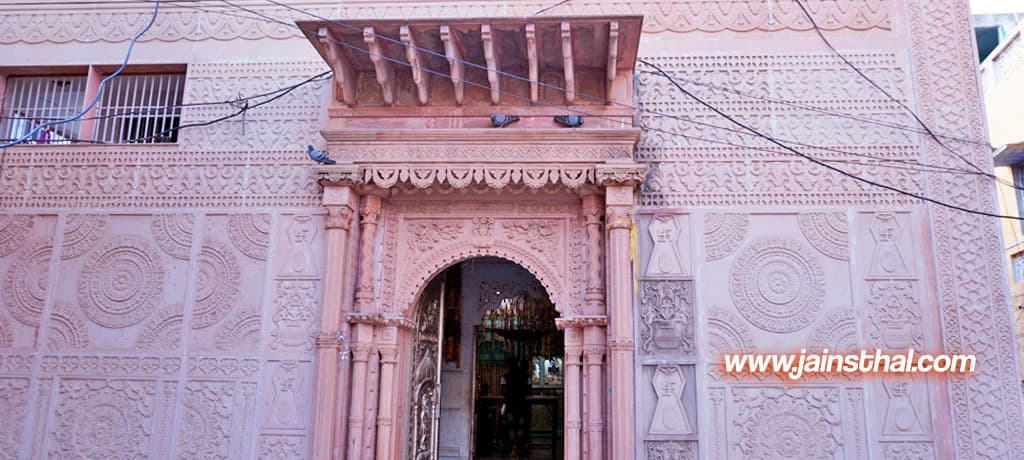
Sonipat Neminath Digambar Jain Mandir
The name "Sonipat" is derived from the Sanskrit word meaning "golden land." It is situated approximately 43 kilometers north of New Delhi and is believed to have been founded around 1500 BCE by early Aryans.
For the smooth operation of the temple, the Shri Digambar Jain Mandir Committee has been formed. The active members of the committee are as follows :
Introduction
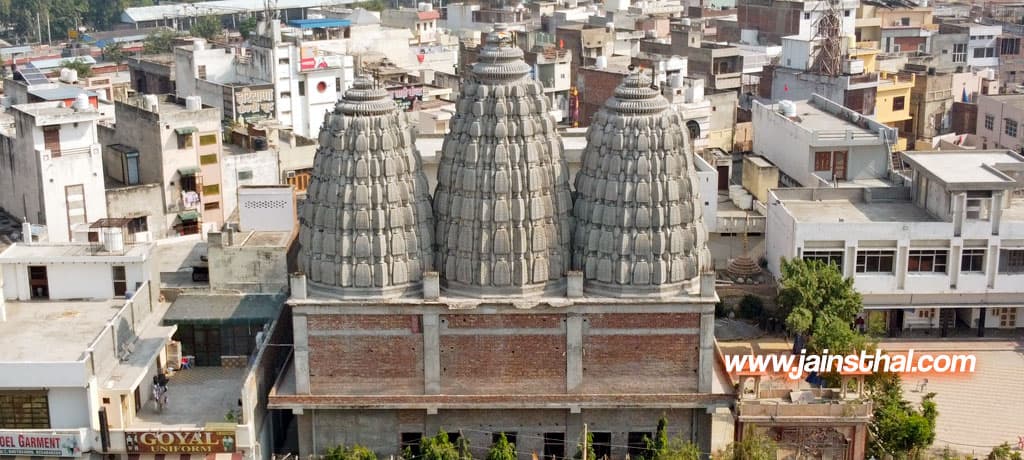
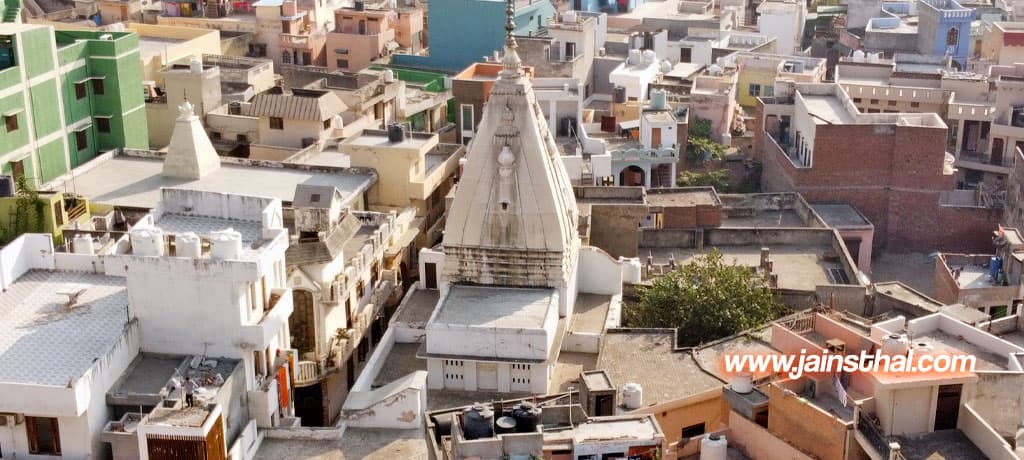
The construction of the temple was undertaken by the Jain community 300 years ago. The temple witnessed Panchkalyanak (consecration ceremony) in the presence of Muni Shri 108 Guptisagar Ji Maharaj in the year 2006. There are three Vedi (altar) in the temple. The Mool Vedi (main altar) of the temple houses the idol of Shri 1008 Neminath Bhagwan Ji. In the second Vedi, idols of the 24 Tirthankar Chaubisi are enshrined. The third Vedi houses the idol of Shri 1008 Parshvanath Bhagwan Ji. It is said by the Jain community that initially, the idol of Shri 1008 Parshvanath Bhagwan Ji was enshrined in a corner of the Garbh Grah (sanctum sanctorum). Several times, people witnessed movement of the Chhatar (brolly) over the idol, raising suspicions of an anomaly. When Aryika Swasti Bhushan Mataji arrived at the site, she advised the Jain community to relocate the idol to a separate Vedi. Accordingly, the idol of Shri 1008 Parshvanath Bhagwan Ji was reinstated in a different Vedi by the Jain community. In the temple Vedi, a silver-made idol of the twenty-fourth Tirthankar, Shri 1008 Mahavir Bhagwan Ji is enshrined. Intricate golden work has been done in all the Vedi of the temple, and Jain art has been meticulously carved on the walls above the Garbh Grah. Every day, 40 to 50 members of the Jain community come to the temple for Puja-Prakshal (worship) and Abhishek (auspicious bath of the idol).
Atishay Katha
Underneath the Mool Vedi of the temple, there used to be a basement which has been closed for quite some time. Around the year 1966, one day when the basement was opened, snakes and scorpions started coming out of it. There was a silver throne placed inside the basement. However, due to fear of snakes and scorpions, no one wanted to go down and bring the throne out. With great courage, Mrs. Indira Devi descended into the basement and brought the throne out safely, without being harmed by any snake or scorpion. It was remarkable that despite the presence of so many snakes and scorpions, Mrs. Indira Devi remained unharmed. Later, the basement was closed with the help of sand.
Dharamshala
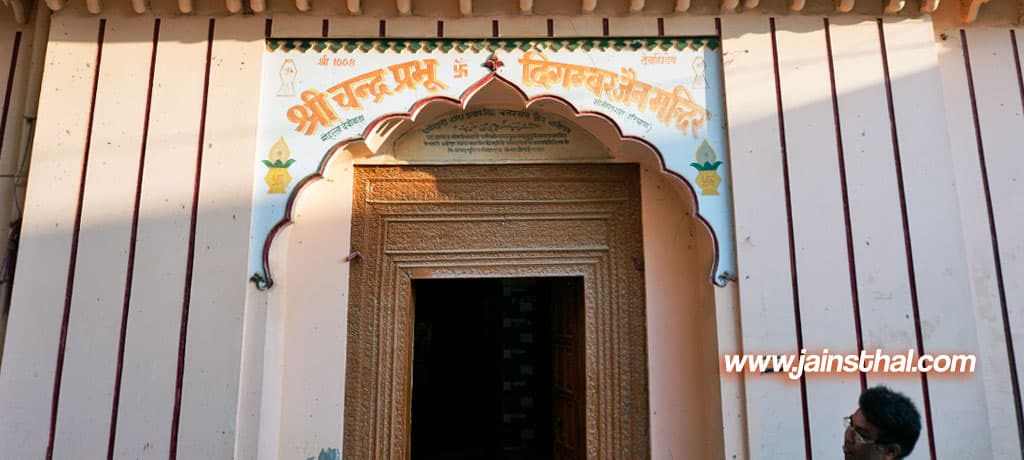
In the Falsa Mohalla of Sonipat, located about seven to eight hundred meters away from the Shri 1008 Parshvanath Digambar Jain Bada Mandir, is the Shri 1008 Neminath Digambar Jain Mandir. The area is home to approximately a hundred Digambar Jain families, and there are a total of five Digambar Jain Mandir in the area. All the temples are managed by the administration of the Shri 1008 Parshvanath Digambar Jain Bada Mandir. Arrangements for the accommodation of pilgrims visiting the temples are made at the Seth Chetan Lal Jain Dharamshala and the Paras Das Jain Dharmashala. Both dharamshala have arrangements for Ten rooms each. When Jain Muni Maharaj arrives at the Bada Jain Mandir, arrangements for their stay are made at the Tyagi Bhavan. In the premises of the Bada Jain Mandir, a school has been constructed where education is provided up to the fifth grade to children at nominal fees. The Jain Vidya Mandir School, built by the Jain community, provides education up to the twelfth grade to both Jain and non-Jain children in Sonipat.
History
Sonipat is a district located in the state of Haryana, India.
“The name "Sonipat" is derived from the Sanskrit word meaning "golden land." It is situated approximately 43 kilometers north of New Delhi and is believed to have been founded around 1500 BCE by early Aryans.”
Sonipat is renowned for its historical significance and has witnessed three major battles, which were crucial conflicts between the Mughal Empire and Islamic sultans. The strategic location of Sonipat has made it an important historical site. It serves as a significant urban center both politically and administratively. Many government and private offices and institutions are located here, making it a hub of activity. Situated on the banks of the Yamuna River, the city is lush and vibrant, although it has shifted about 15 kilometers east over time. Sonipat district is predominantly agricultural, with approximately 83% of its area dedicated to farming. Wheat and rice are the main crops, alongside other crops like millet, pulses, sugarcane, maize, sesame, and vegetables. The region around Sonipat boasts numerous cultural sites of historical and cultural importance, including temples, gurudwaras, and protected areas, which are major attractions for history enthusiasts. The Sonipat region is rich in heritage, showcasing its historical and cultural legacy through various archaeological sites and protected areas, making it significant for history enthusiasts.
Know something about this temple?
Spot something missing or incorrect, or have extra info to share? Let us know and our team will take a look.
For the smooth operation of the temple, the Shri Digambar Jain Mandir Committee has been formed. The active members of the committee are as follows :