
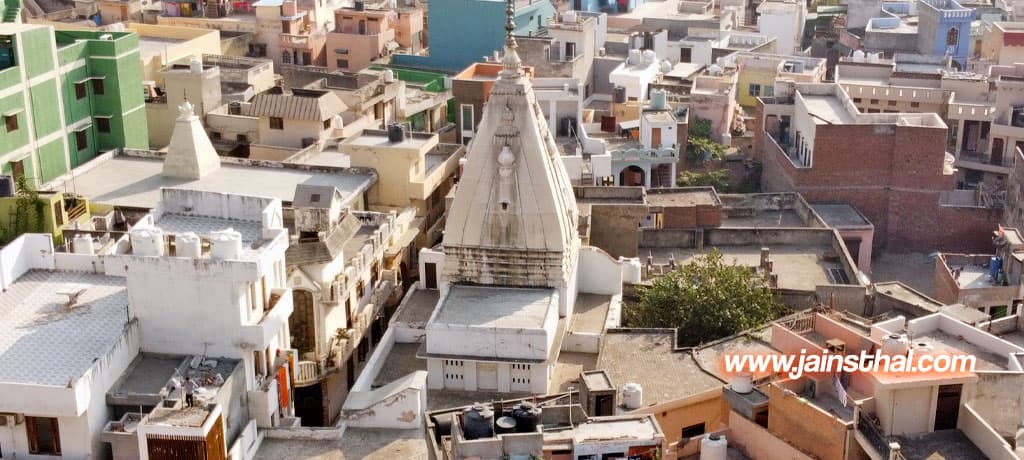
Sonipat Bada Jain Mandir
The Moolnayak Pratima (main deity’s idol) is seated on a golden throne, which makes its sighting quite rare.
The Shri Digambar Jain Mandir Committee was established for the regular operation of the Shri 1008 Parshvanath Digambar Jain Mandir. The active members of the committee are as follows :
Introduction
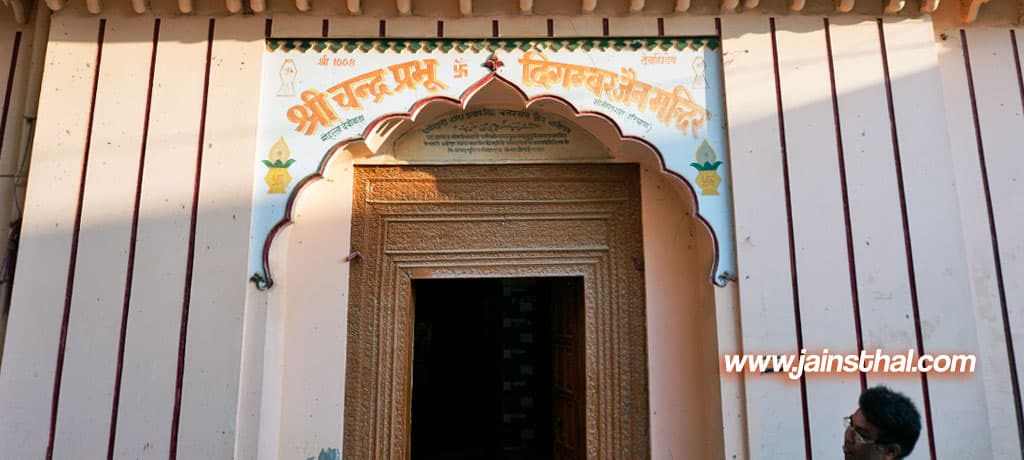
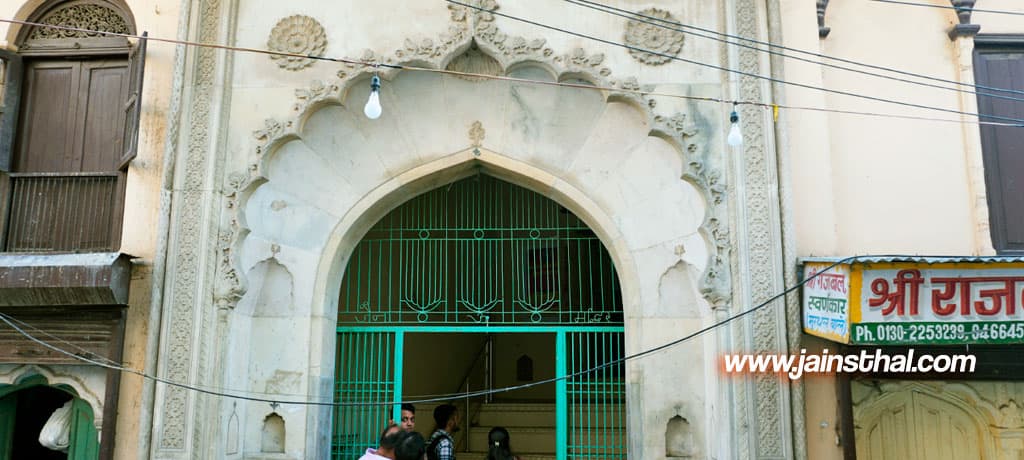
The construction of the Shri 1008 Parshvanath Digambar Jain Bada Mandir was undertaken by the Jain community around 500 years ago from today. The main entrance of the temple is very ancient and grand. Upon entering through the main entrance, there is an open courtyard. After the open courtyard, we climb stairs to enter a large hall inside the temple. The hall is adorned with ancient architecture, constructed in the Baradari style, featuring twelve towers. Moving ahead, we enter the Garbh Grah (sanctum sanctorum) of the temple. The Mool Vedi (main altar) in the temple is of Shri 1008 Parshvanath Bhagwan, dated to the Vikram Samvat 1668.
“The Moolnayak Pratima (main deity’s idol) is seated on a golden throne, which makes its sighting quite rare.”
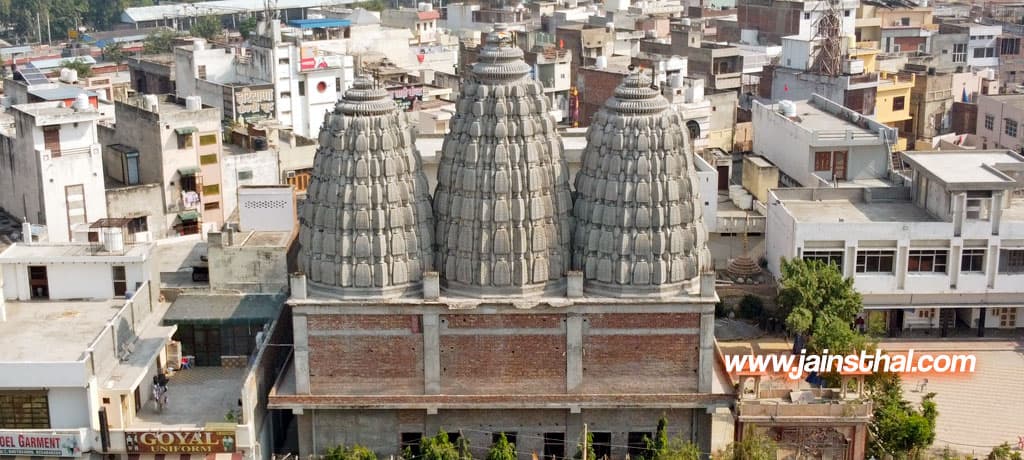
The second Vedi of the temple also belongs to Parshvanath Bhagwan, where along with the Moolnayak Pratima of Shri Parshvanath Bhagwan’s with 108 hoods, two other idols of Shri Parshvanath made of black stone are enshrined. In the third Vedi, the Moolnayak Pratima is of Shri Shantinath Bhagwan, made of red stone. In the fourth Vedi, along with the Moolnayak Pratima of Shri Neminath Bhagwan, Chaubisi pratima is also enshrined in the Vedi. The fifth Vedi of the temple houses the Moolnayak Pratima of the first Tirthankar, Shri 1008 Adinath Bhagwan. The construction of the fifth Vedi was undertaken by Shri Jayavant Jain in the year 1998. In the interior part of the temple Shikhar (spire), ancient gold work has been done. It is said that once lightning struck the Shikhar of the temple, but still, the temple did not suffer much damage. The traces of lightning can still be seen in the Garbh Grah of the temple today as well. The construction artistry of the Bada Mandir Ji exhibits remarkable craftsmanship. Another Shikhar has been constructed inside the main Shikhar of the temple. This was done so that in case of an attack on the temple, only the upper spire could be destroyed, leaving the inner spire of the temple intact. Every day, the devotees of the Jain community perform worship and Abhishek (auspicious bath of the idol) rituals in the temple. The committee ensures the complete cleanliness for the devotees who come to the temple.
Atishay Katha
In the premises of the Bada Mandir in Sonipat, there is a designated spot for the chariot, from where the chariot is only taken out during Rath Yatra. It is said that the place belongs to the Dev. During the night, Dev enters the temple from that spot, clearing away everything in their path. One night, Amar Singh, the son of the temple guard, was resting in the courtyard of the temple. Amar Singh was unaware that the Dev had come to the temple at night. Later at night a Dev came and told Amar Singh to move aside as they needed to enter the temple. However, Amar Singh replied that he could not allow him to enter the temple. After a long conversation between the two, a battle ensued. After the battle ended, impressed by Amar Singh's valor, Dev blessed him with eternal victory in wrestling matches.
Dharamshala
Shri 1008 Parshvanath Digambar Jain Bada Mandir is located in Halwai Hatta, approximately 45 kilometers from the capital city of India, Delhi, and about 600 meters from the Sonipat bus stand. The area surrounding the temple is inhabited by nearly a hundred Digambar Jain families. There are a total of five Digambar Jain Mandir in the area, all of which are managed by the administration of the Shri 1008 Parshvanath Digambar Jain Bada Mandir Ji. Arrangements have been made for pilgrims visiting the temple to stay. Accommodation for pilgrims is available at the Seth Chetan Lal Jain Dharamshala and Paras Das Jain Dharamshala, both of which have ten rooms each. When Jain Saints visit the temple, arrangements for their stay are made at the Tyagi Bhawan. A school constructed within the premises of the Bada Jain Mandir Ji provides education up to the fifth grade to children at no cost. The Jain community-built Jain Vidya Mandir School in Sonipat also offers education up to the twelfth grade to both Jain and non-Jain children.
History
Sonipat is a district located in the state of Haryana, India. The name Sonipat is derived from the Sanskrit word, meaning "golden place" or "place of gold." It is situated approximately 43 kilometers north of New Delhi and is believed to have been founded around 1500 BCE by early Aryans. Sonipat is renowned for its historical significance, having been the site of three significant battles between the Mughal Empire and Islamic sultans. Its strategic location has made it an important historical site. Sonipat is a major city in the district and holds significance from political and administrative perspectives as well. Many government and private offices and institutions of Haryana state are located here. Situated on the banks of the Yamuna River, the city is lush and vibrant, although it has shifted about 15 kilometers eastward due to urban expansion. Sonipat district is predominantly agricultural, with around 83% of its area under cultivation. Wheat and rice are the major crops, along with barley, pulses, sugarcane, millet, sesame, and vegetables. The Sonipat region is dotted with several cultural sites of historical and cultural significance, including temples, gurudwaras, and other historical landmarks. The area also boasts a rich heritage of archaeology, with many archaeological sites and protected areas of importance to history enthusiasts.
Know something about this temple?
Spot something missing or incorrect, or have extra info to share? Let us know and our team will take a look.
The Shri Digambar Jain Mandir Committee was established for the regular operation of the Shri 1008 Parshvanath Digambar Jain Mandir. The active members of the committee are as follows :