
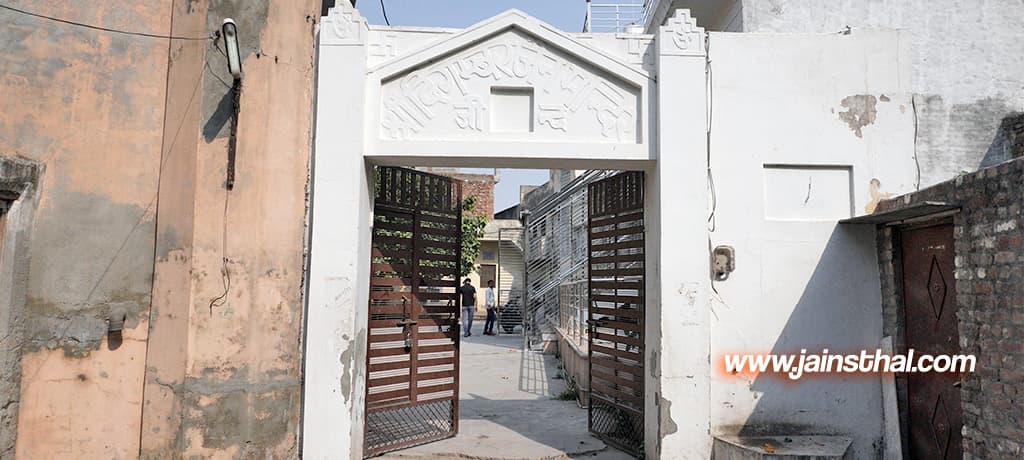
Shri Chandraprabhu Jain Mandir Jind
It is believed that Jind was founded by the Pandavas from the Mahabharata epic, who established a temple here around which the town of Jind (formerly known as Jaintpuri) developed.
The number of families of Digambar Jain community in Jind is very less compared to other communities, but still the temple is managed by Jain families efficiently. The members working for the operation of the temple are as follows :
Introduction
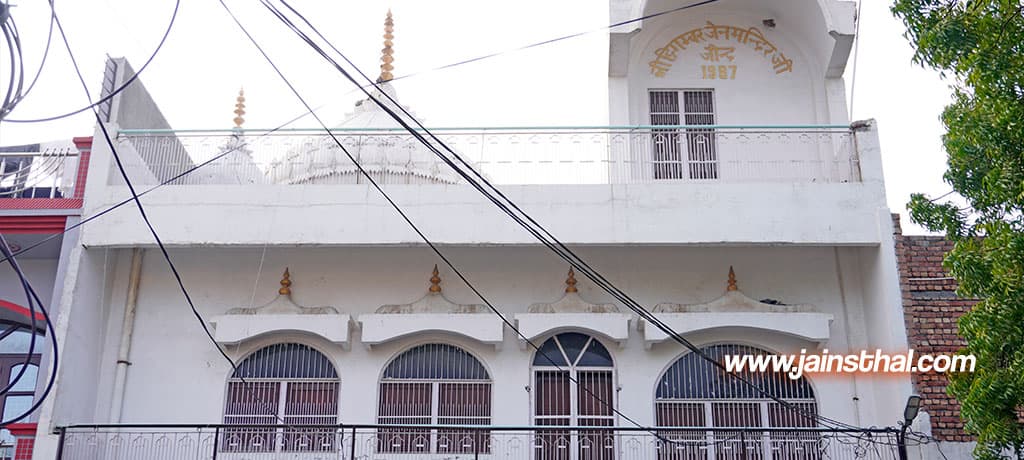
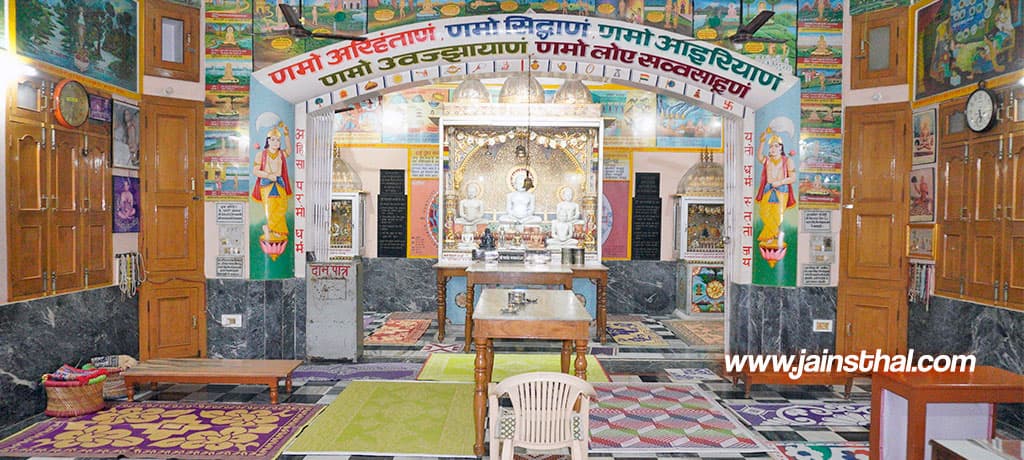
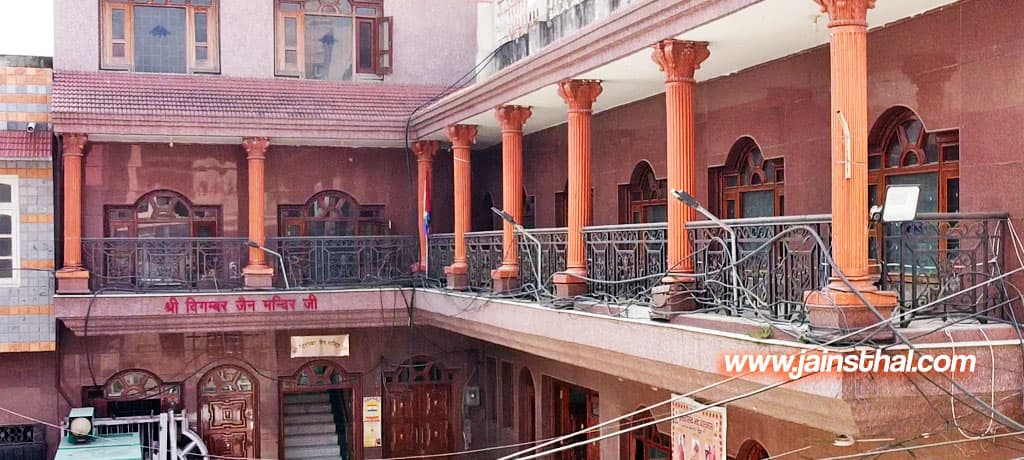
Shri 1008 Chandraprabhu Digambar Jain Mandir is located near Ramrai Gate, Valmiki Chowk in Jind. The temple was constructed by the Jain community after acquiring land from the government. The construction of the temple has brought a new sense of energy to the local Jain community. The Garbh Grah (sanctum sanctorum) of the temple houses three altars (Vedi) dedicated to Jinendra Bhagwan, besides one Vedi for Mata Padmavati, and one for the Kshetrapal Baba Ji. The Mool Vedi (main altar) features the idol of Shri 1008 Chandraprabhu Bhagwan.
This idol appears ancient just by looking at it. It is said that the Jain community acquired this idol from another region, and it is believed to be a thousand years old. The Vedi also features another idol of Chandraprabhu Bhagwan and Munisuvratanath Bhagwan, made of white stone, which is also a thousand years old. Additionally, the Mool Vedi houses an ancient idol of Panchabalyati Bhagwan, which was discovered in the subsoil by a person from another community. Later, after much effort, the Jain community retrieved the idol from that person and enshrined it in the temple's Vedi.
The second Vedi of the temple houses the Moolnayak Pratima (main deity’s idol) of Shri 1008 Parshvanath Bhagwan. The third Vedi features the Moolnayak Pratima (main deity’s idol) of Shri 1008 Mahavir Bhagwan. The fourth and fifth Vedi are dedicated to Mata Padmavati and Kshetrapal Baba Ji. Upon entering the temple, one can feel a distinct energy. All the idols in the Vedi are very attractive and miraculous.
It is said that once, some thieves entered the temple with the intention of stealing. However, as soon as they moved forward to steal, they lost their eyesight due to the miraculous power of the idols. When the Jain community learned of this incident, they caught the thieves and handed them over to the police. In the police station, the thieves confessed to the incident. Thus, the miraculous power of the idols saved the temple from being robbed.
Dharamshala
A priest has been arranged for the temple to ensure regular worship and rituals. Every day, Jalabhishek (auspicious bath of the idol) is done in the temple. If a pilgrim comes from a distant area to visit the temple, accommodations are also provided by the local Jain community.
History
Jind is an ancient city and located in the Indian state of Haryana.
“It is believed that Jind was founded by the Pandavas from the Mahabharata epic, who established a temple here around which the town of Jind (formerly known as Jaintpuri) developed.”
In the 18th century, Jind was one of the princely states of Punjab established by a Sikh ruler. The area is extensively irrigated by canals and tube wells. Jind serves as an important local agricultural market, with wheat and rice being the primary crops, along with millet, oilseeds, chickpeas, and sugarcane. Jind is connected by rail to Panipat via the Delhi-Firozpur railway line and by road to Delhi and other important cities in Haryana. The major national highways in the district are National Highway 352 and National Highway 152.
Know something about this temple?
Spot something missing or incorrect, or have extra info to share? Let us know and our team will take a look.
The number of families of Digambar Jain community in Jind is very less compared to other communities, but still the temple is managed by Jain families efficiently. The members working for the operation of the temple are as follows :