
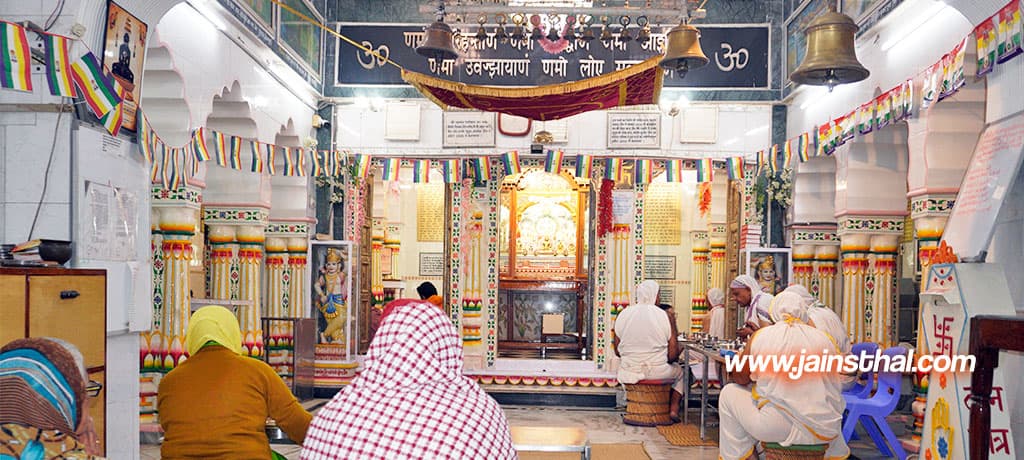
Jharsa Atishya Kshetra Gurugram
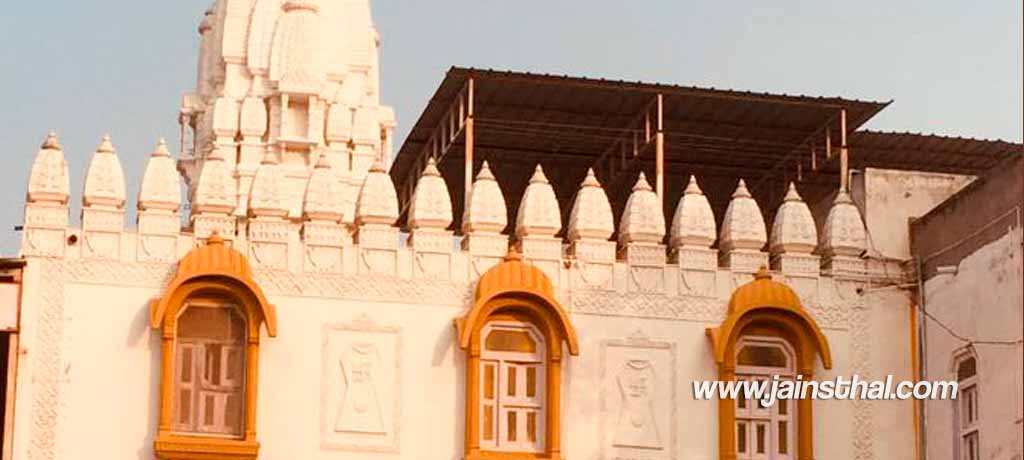
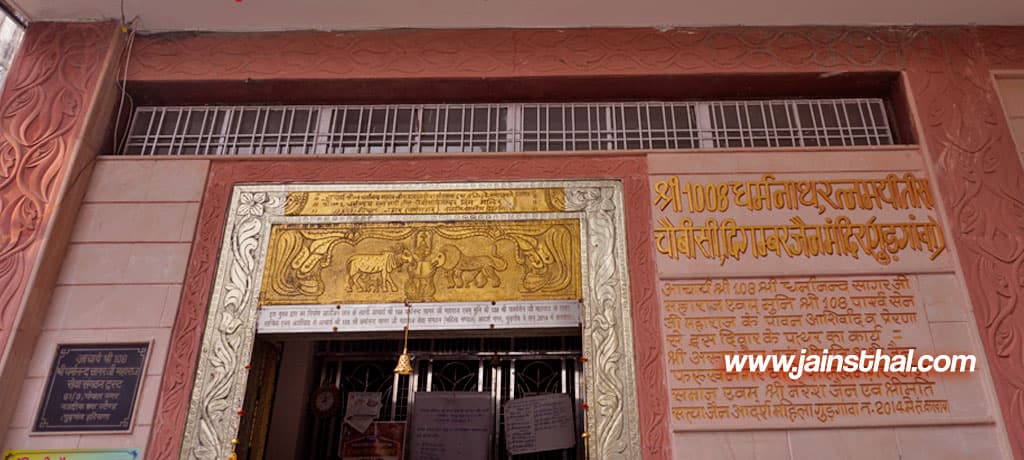
The ancient and sacred site of Shri 1008 Chandraprabhu Digambar Jain Atishay Kshetra in Jharsa village of Gurugram attracts devotees not only from the local vicinity but also from distant areas.
For the smooth functioning of the Shri Digambar Jain mandir, the Shri Digambar Jain Mandir Committee has been established. The active members of the committee are as follows :
Introduction
Shri 1008 Chandraprabhu Digambar Jain Atishay Kshetra is located 4.5 kilometers from Gurugram district in Haryana, and 1.5 kilometers from the Delhi-Jaipur highway. The construction of the temple was commissioned approximately 150 years ago by a revenue officer (patwari) from Palamgaon. It is said that this revenue officer was responsible for the construction of Digambar Jain temples in Palam Gaon, Jharsa, and Badshahpur as well.
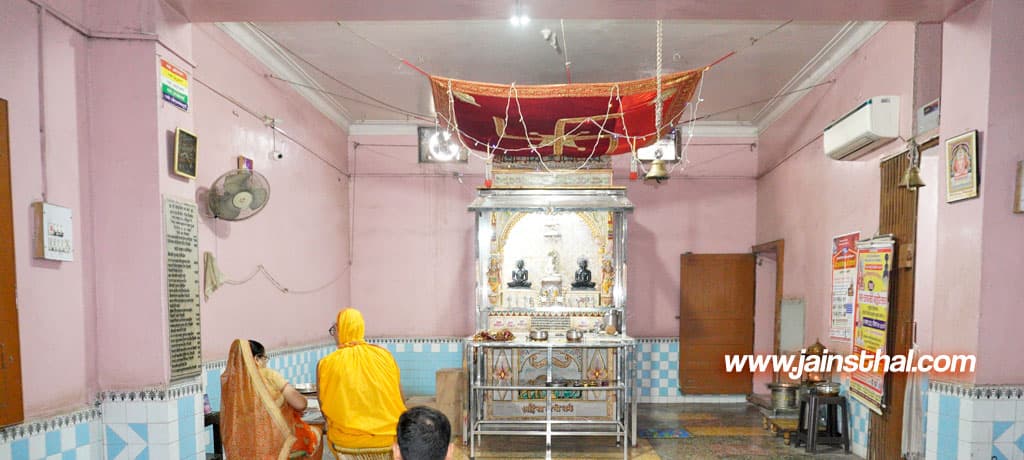
In the year 2005, the revered Shri 108 Bahubali Maharaj declared the Jharsa temple as an Atishay Kshetra. Also in 2005, the Vedi (altar) of the temple was reinstated. Initially, the temple used to have only one Vedi. However, after the reinstatement of the Vedi, two more Vedi were constructed by the Jain community. In the year 2007, Acharya Shri 108 Bahubali Maharaj visited the area once again. Inspired by the Acharya and through the efforts of the local community, a grand Panchkalyanak (consecration ceremony) was organized in the temple.
The temple has a total of three Vedi. The main (Mool) Vedi of the temple is the oldest and most magnificent. In the Mool Vedi, the ancient idol of Shri 1008 Chandraprabhu, as the Moolnayak (primary deity), has been enshrined which is over 500 years old. The significance of this idol in the region is immense. In this Vedi, idols of Shri 1008 Munisuvratnath Bhagwan, Shri 1008 Shantinath Bhagwan and Shri 1008 Parshvanath Bhagwan are also enshrined. These idols are also ancient and significant, dating back over 500 years.
The second Vedi of the temple houses the Moolnayak of the first Tirthankar, Shri 1008 Adinath Bhagwan. This Vedi was constructed in April 2005 in memory of Late Shri Ram Singh Jain (resident of Fardesa, district Hisar), by his wife Smt. Gyan Mala Jain and their sons Shri Kanwar Sen and Rakesh Jain. The third Vedi of the temple contains the Moolnayak Pratima of Shri 1008 Parshvanath Bhagwan. The Garbh Grah (sanctum sanctorum) of the temple depicts the beautiful illustrations of Jain Tirthankars and Jain legends. Additionally, a grand Manastambh has been erected within the temple premises.
Near the temple is situated the Medanta (The Medicity) Hospital, where people come for treatment from various distant areas. Those devotees who are in critical condition also come to the temple to seek blessings of the Shri Ji and are surely healed. It is told by the local Jain community that they always ensure that the patients receive the peaceful aura of the temple. It is the uniqueness of the temple that even patients with serious conditions are cured after coming to the area. The temple committee also operates a homeopathic pharmacy where medicines are provided free of cost to people of all categories.
Dharamshala
Gurugram has evolved into an industrial hub equipped with all kinds of amenities, where people from various communities reside together. There are approximately seven to eight hundred Jain families in Gurugram. Several Jain temples have been established in the area, each with its own committee.
“The ancient and sacred site of Shri 1008 Chandraprabhu Digambar Jain Atishay Kshetra in Jharsa village of Gurugram attracts devotees not only from the local vicinity but also from distant areas.”
The management of the temple is overseen by the local Jain community. All kinds of facilities are provided to the devotees visiting the temple by the committee. Arrangements are made for those pilgrims who come to visit the temple from distant areas to stay at the nearby Jain Dharamshala. The distance from the Dharamshala to the temple is approximately 1.5 kilometers. Since the temple is situated inside lanes, there is also a provision for free e-rickshaws to reach the temple. The committee also advises visitors to park their vehicles at the Dharamshala and either use the free e-rickshaw service or walk to the temple according to their convenience. A homeopathic pharmacy has also been established in the Dharamshala where medicines are provided free of cost.
History
Gurugram, also known as Gurgaon, is a city in the state of Haryana, situated adjacent to the national capital region of Delhi. It is located in the southwest of Delhi and is part of the National Capital Region (NCR). Gurugram is a commercial, economic, and modern city that is rapidly developing. It is the second most populous city in Haryana after Faridabad. Gurugram is one of the major satellite cities of Delhi and is considered a part of the national capital region. It is the third-highest per capita income city in India after Chandigarh and Mumbai. According to folklore, during the Mahabharata era, King Yudhishthira of Indraprastha (present-day Delhi) gifted this village to his Guru Dronacharya. It was named Gurugram after him, which later evolved into Gurgaon. Gurugram is located 32 kilometers away from the national capital, New Delhi.
Moreover, Gurugram is also a significant technological hub with major IT companies, banks, financial institutions, and more. The modern urban development of Gurugram includes residential projects, shopping malls, restaurants, hotels, as well as social and cultural institutions. The city is surrounded by various historical sites such as Sheshadri, Sultanpur Lake, and Sultanpur National Park, which encapsulate natural beauty.
Know something about this temple?
Spot something missing or incorrect, or have extra info to share? Let us know and our team will take a look.
For the smooth functioning of the Shri Digambar Jain mandir, the Shri Digambar Jain Mandir Committee has been established. The active members of the committee are as follows :