
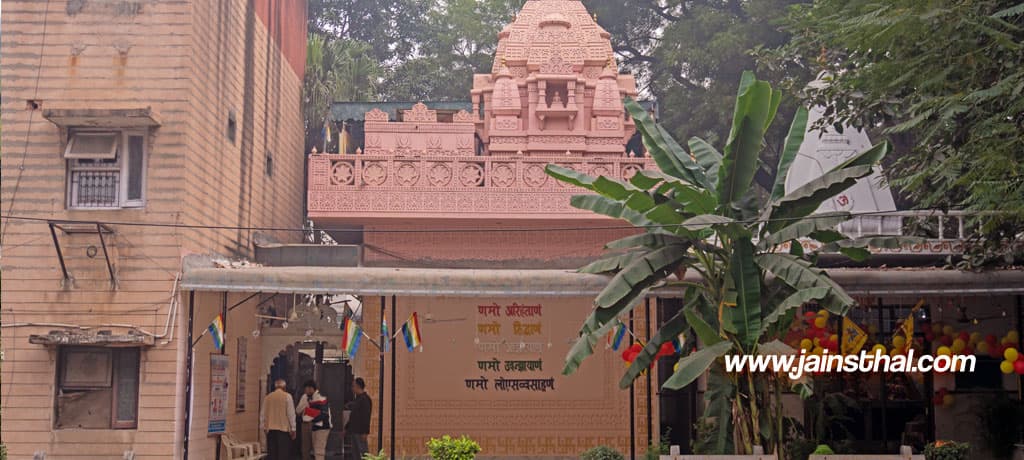
Shri 1008 Parshwanath Digambar Jain Temple, Jaina Apartments
It is believed that the idol of Lord Parshwanath holds immense divine power, drawing people from far and wide to seek its blessings.
The temple is run by the local Jain community, with the following active members contributing to its management :
Introduction
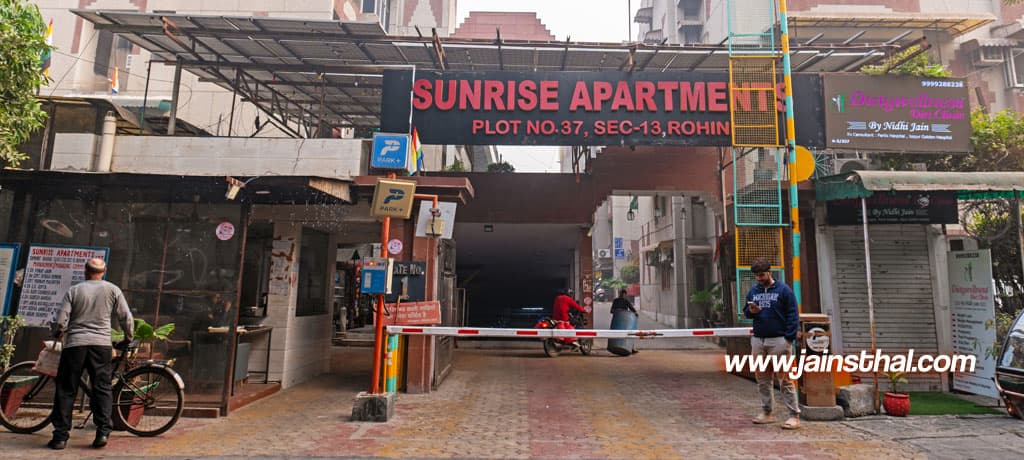
The Shri 1008 Parshwanath Digambar Jain Temple, located in Jaina Apartments, Delhi, was founded under the guidance and inspiration of Acharya Shri 108 Sanmati Sagar Maharaj and Aryika 105 Swasti Bhushan Mata Ji, with the collective efforts of the local Jain community. The foundation stone was laid on 30th November 2008. With the approval of the Jaina Apartments Society, both the Jain and Vedic communities were granted permission to build temples on a shared 40x40 square yard plot, leading to the establishment of both a Jain temple and a Vedic Hindu temple in close proximity. After the temple's completion, a Laghu Panchkalayanak (consecration ceremony) was held from 5th to 7th June 2009, under the blessings of Aryika 105 Swasti Bhushan Mata Ji. The completion of the temple has brought renewed energy to the Jain community, fostering deep reverence and devotion among its members. As devotees enter the temple's Garbh Grah (sanctum sanctorum), they are greeted by the sight of the Moolvedi, where the black stone idol of Shri 1008 Parshwanath, seated in Padmasana with 108 hoods, is enshrined. The darshan of this idol brings a profound sense of tranquility to the devotees.
“It is believed that the idol of Lord Parshwanath holds immense divine power, drawing people from far and wide to seek its blessings.”
Many Jain families residing in the nearby Veer Apartments also visit the temple regularly to offer their prayers and worship. In addition to the main idol, the temple also enshrines idols of Shri Chandraprabhu, Shri Shantinath, Shri Mahavir, and Shri Munisuvratanath. The second Vedi in the temple is dedicated to Mata Padmavati. Each day, 150 to 200 devotees visit for darshan, and 15 to 20 individuals regularly participate in the Shanti Dhara . The temple has also hosted the Siddh Chakra Vidhan twice. Rather than being managed by a formal committee, the temple is overseen by the local Jain community. The community also contributes to a gaushala (cow shelter) as an act of compassion and organizes Jain Pathshala (Jain school) to promote awareness of Jain Values. Additionally, the temple organizes periodic religious pilgrimages, offering devotees the opportunity to visit various sacred sites and deepen their spiritual connection. Whenever a Jain saint visits the Rohini area, they also come to this temple, as it holds a special place in the hearts of the local Jain community. The presence of these revered saints at the temple further enhances its spiritual significance and inspires greater faith and devotion among the devotees. Despite its modest size, the temple radiates a divine energy that is deeply felt by all who visit.
Jain Samaj
Initially, there were 10 to 12 Jain families residing in Jaina Apartments, but over time, some moved to other locations, leaving only 5 families behind. However, nearby Veer Apartments is home to more than 100 Jain families. As a result, over 150 devotees visit the temple daily for worship and prayers. Each day, 40 to 50 people come together for collective puja and the evening aarti. The temple has become a vibrant cultural and spiritual hub for the community, where people gather regularly to worship and engage in religious practices. Beyond being a place of spiritual devotion, the temple fosters unity and collaboration within the Jain community.
History
The National Capital Region (NCR) of Delhi is the capital of India and a Union Territory. As the capital, it hosts the headquarters of all three branches of the Indian government: the Executive, Parliament, and Judiciary. Delhi, located along the Yamuna River, has a rich historical legacy, with particular significance in ancient texts and scriptures. It is one of India’s oldest cities, with its history dating back to the Indus Valley Civilization, as evidenced by archaeological findings around Haryana. With the rise of the Delhi Sultanate, Delhi emerged as a major political, cultural, and commercial hub, and it is home to many ancient and medieval buildings and their remains.
The earliest reference to Delhi is found in the Mahabharata, where it is mentioned as the ancient city of Indraprastha, the capital of the Pandavas during the Mahabharata era. Delhi is not only the capital of India but also a major tourist center. Due to its status as the capital, it houses several government offices, the President’s Residence, Parliament House, and other modern architectural landmarks. As an ancient city, it also boasts a rich historical legacy, with notable structures like the Old Fort, Safdarjung Tomb, Jantar Mantar, Qutub Minar, and the Iron Pillar, which are major attractions. Delhi is home to religious sites for various faiths, including Birla Mandir, Katyayani Shaktipith, Red Jain Temple, Bangla Sahib Gurudwara, Bahá'í Lotus Temple, Akshardham Temple, and Jama Masjid. The India Gate, built in memory of India’s martyrs, is located on Rajpath in this city. Today, Delhi has become the main center for trade and commerce in India.
Know something about this temple?
Spot something missing or incorrect, or have extra info to share? Let us know and our team will take a look.
The temple is run by the local Jain community, with the following active members contributing to its management :