
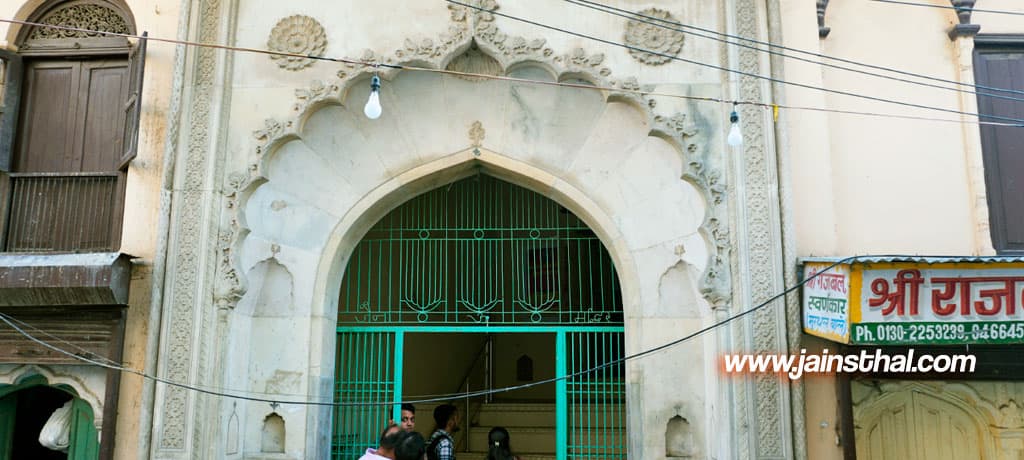
Sonipat Halwai Hatta Chota Jain Mandir
As soon as they tried to pick up the valuable items of the temple, they became blind due to Atishay (divine occurrence) of Jinendar Bhagwan.
For the efficient management of Shri 1008 Parshvanath Digambar Jain Chota Mandir Ji, the Shri Digambar Jain Mandir Committee has been established. The active members of the committee are :
Introduction
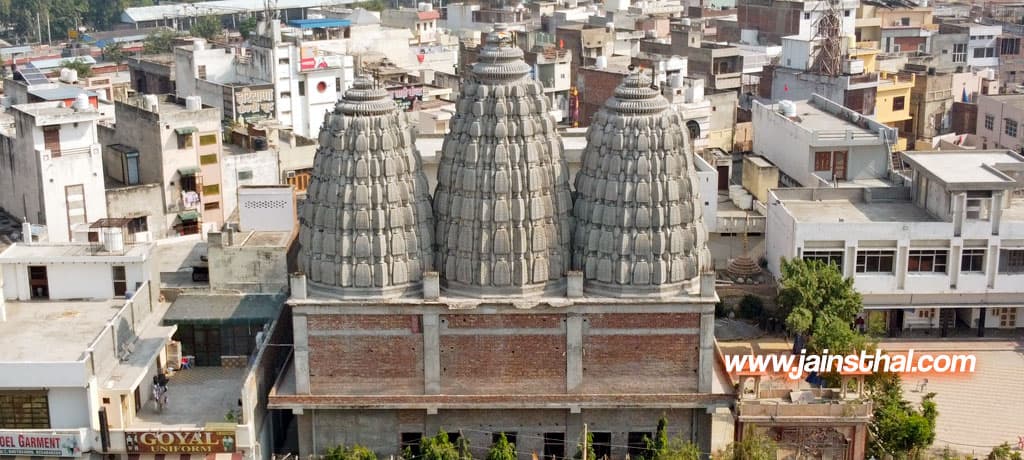
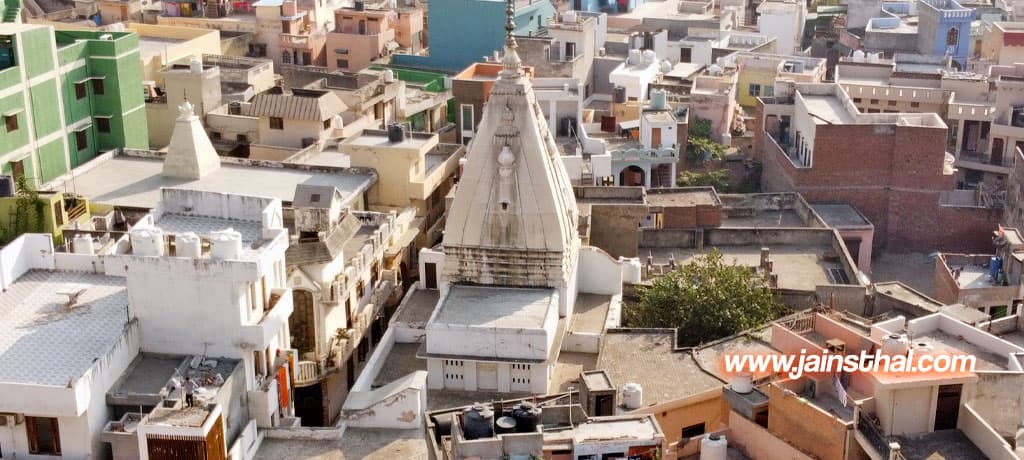
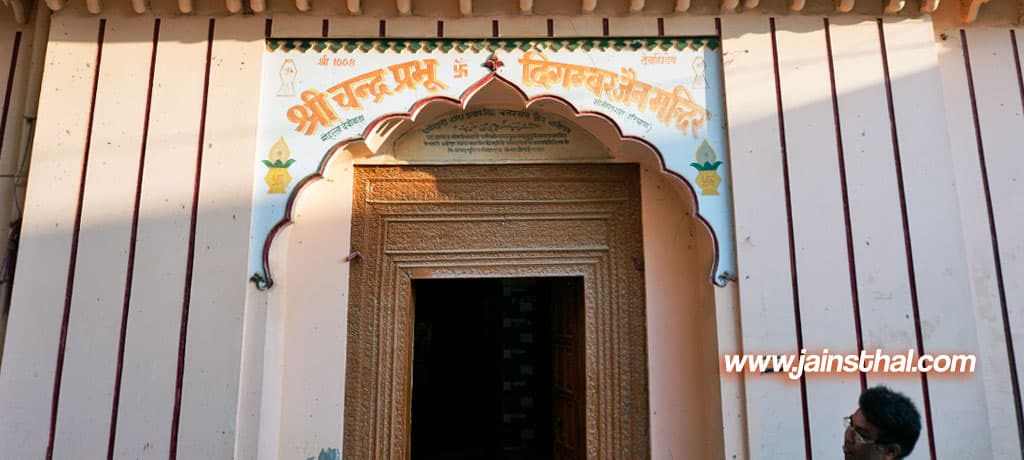
Shri 1008 Parshvanath Digambar Jain Mandir, also known as Chota Jain Mandir Ji, is situated a short distance from the main temple i.e Bada Jain Mandir in Halwai Hatta, Sonipat. The construction of the temple was undertaken by the Jain community around 500 years ago. The architectural style of the temple resembles a chariot, when viewed from the outside. The temple consists of three floors, with a chamber located in the Garbh Grah (sanctum sanctorum) and two floors built above it. Despite ongoing construction work at times, the ancientness of the temple is still preserved. Inscriptions in Urdu on the temple walls indicate that it was built during the Mughal period. Gold work has been done on the inner part of the temple’s Shikhar (spire). Inside the Shikhar, Tirthankar’s paintings are depicted.
At present, the temple has three Vedi (altars). The mool (main) Vedi of the temple houses the Moolnayak Pratima (main deity’s idol) of Shri Parshwanath Bhagwan. Additionally, there is a Siddhakoot Jin Mandir made of Ashtadhatu (eight metals), enshrined in the Mool Vedi. The idol of Jain Dev Shastra Guru is also established in the temple, which is rare to find. On the right and left sides of the Mool Vedi, Vedi for Shri Adinath Bhagwan Ji have been established. All these idols are approximately 800 to 1000 years old. Whenever Jain Saints visit the area, they make sure to visit Chota Mandir Ji for the darshan of the idols of Bhagwan Jinendra Ji.
Atishay Katha
Once upon a time, some thieves entered the temple with the intention of theft. As in every temple, there were valuable items and donation boxes. Similarly, valuable items and donation boxes were kept in the temple.
“As soon as they tried to pick up the valuable items of the temple, they became blind due to Atishay (divine occurrence) of Jinendar Bhagwan.”
After some time, the members of the Jain community suspected somebody to be in the temple. When they reached the temple, they saw the thieves sitting outside the temple stairs. The Jain community handed over the thieves to the local police, where the thieves described the whole incident. It was truly a divine intervention that even upon entering the temple, the thieves couldn't take anything from the temple.
Dharamshala
Approximately 45 kilometers away from Delhi, the capital of India, lies the Shri 1008 Parshvanath Digambar Jain Mandir in Halwai Hatta, Sonipat. Surrounding the temple, there are about a hundred Digambar Jain families in the area, and there are a total of five Digambar Jain Mandir. The administration of all the temples is managed by the Bada Jain Mandir in Halwai Hatta. Arrangements for accommodation are made for pilgrims visiting the temple. The lodging arrangements for pilgrims are made at Seth Chetan Lal Jain Dharmashala and Paras Das Jain Dharamshala. Both dharamshala have arrangements for ten rooms each.
When Jain Saints visit the temple, arrangements for their accommodation are made at Tyagi Bhavan. A school constructed within the premises of the Bada Jain Mandir provides education up to the fifth grade to children at a nominal fee. Jain Vidya Mandir School has also been constructed by the Jain community, that provides education up to the twelfth grade to both Jain and non-Jain children in Sonipat.
History
The name Sonipat is derived from the Sanskrit word, meaning "the place of gold." This city, located approximately 43 kilometers north of New Delhi, was likely founded around 1500 BCE by early Aryans. Situated on the banks of the Yamuna River, the city flourished, but it has since been shifted about 15 kilometers eastwards. Sonipat district is predominantly a plain area, with about 83% of its land used for agriculture. Wheat and rice are the main crops, while other crops such as barley, pulses, sugarcane, maize, sesame, and vegetables are also cultivated.
Know something about this temple?
Spot something missing or incorrect, or have extra info to share? Let us know and our team will take a look.
For the efficient management of Shri 1008 Parshvanath Digambar Jain Chota Mandir Ji, the Shri Digambar Jain Mandir Committee has been established. The active members of the committee are :