
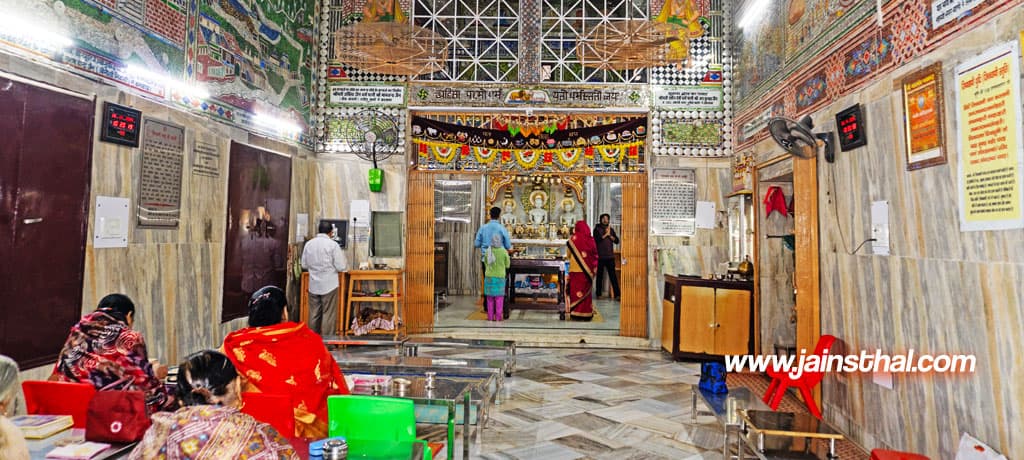
Shri 1008 Shantinath Digambar Jain Mandir, Shastri Nagar
Shri 1008 Shantinath Digambar Jain Temple, located in Shastri Nagar, North-East Delhi, is a unique symbol of Jain religious faith and cultural heritage.
The temple is managed by a dedicated committee consisting of 21 members, including 7 administrators and 14 general members. The primary goal of the committee is to ensure the smooth execution of religious and social activities associated with the temple. The current members of the committee are as follows :
Introduction
“Shri 1008 Shantinath Digambar Jain Temple, located in Shastri Nagar, North-East Delhi, is a unique symbol of Jain religious faith and cultural heritage.”
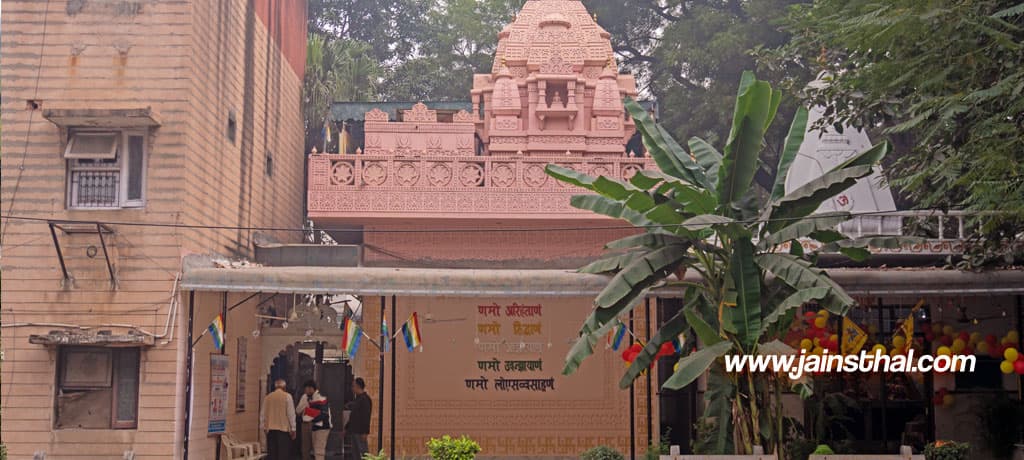
The temple holds not only religious significance but is also historically and spiritually important, making it a distinguished landmark within the Jain community. Conveniently situated near Shastri Nagar Metro Station, it is easily accessible to devotees. The temple was initially established as a small Chaityalaya in 1971, thanks to the efforts of then-president Shri Keshoram Jain, who played a crucial role in bringing it to life. Later in 1984, under the guidance of Acharya Shri Darshan Sagar Ji Maharaj, the temple's foundation stone was laid with the collective efforts of the Jain community. The construction of the temple was made possible through the wholehearted support of the Jain society. In 1993, under the guidance of Mohanpriya Upadhyay Shri Anand Sagar Ji Maharaj, the Panchkalyanak Mahotsav was organized, marking the transformation of the temple into a grand Shikharbandh structure. The architecture of Shri 1008 Shantinath Digambar Jain Temple is a magnificent example of Jain artistry. The temple's Garbh Grah (sanctum sanctorum) houses the principal deity of Bhagwan Shantinath, whose idol was relocated from Shantinagar, Trinagar. This idol is renowned for its divine presence, and devotees believe that prayers offered here with true devotion are always fulfilled. The main altar consists of a total of 11 idols, including a grand idol of Bhagwan Mahavir and Bhagwan Chandraprabhu, which are particularly revered by devotees. Additionally, eight smaller idols are enshrined, featuring Bhagwan Adinath, Bhagwan Padmaprabhu, two idols of Bhagwan Shantinath, Bhagwan Munisuvratanath, Bhagwan Neminath, and Bhagwan Parshvanath. Outside the sanctum, a smaller altar is dedicated to Goddess Padmavati, where devotees offer prayers seeking the fulfillment of their wishes. Daily rituals at the temple include puja, Abhishek, and Shantidhara, performed with great devotion. Around 15-20 devotees participate in the daily Abhishek, reflecting their deep religious faith. A special register is maintained to document the names of devotees who partake in worship and Abhishek. Additionally, an initiative has been introduced to encourage children to develop an interest in spirituality and devotion. The birth anniversaries of Bhagwan Shantinath and Bhagwan Mahavir, along with other significant Jain festivals, are celebrated with immense enthusiasm and devotion. Events like the Dashalakshan Parva and annual processions contribute to the spiritual vibrancy of the community. The temple sees a daily footfall of approximately 100-120 devotees, while around 200-250 Jain families from the surrounding areas actively participate in religious activities. The presence of atishaykari idols, regular worship, and grand religious celebrations make Shri Shantinath Jain Temple an exceptional place of worship. Thus, this temple in Shastri Nagar is not only a site for prayer but also a center for preserving Jain religious, cultural, and ethical values.
Jain Samaj
A grand guest house, spread over 100 square yards, has been constructed within the temple premises to provide accommodation for devotees and Jain Saints. The facility is fully air-conditioned and equipped with modern amenities. This guest house serves not only religious pilgrims but is also available for various social activities organized by the Jain community.
The temple management organizes numerous social welfare initiatives, including medical and moral education camps. In 2002, a medical camp was conducted to raise awareness about Hepatitis B. Additionally, moral education camps are held for children, where they are taught the principles of Jainism and ethical living. These social and educational programs significantly contribute to the awareness and well-being of the community.
History
The National Capital Territory of Delhi serves as the capital of India and a Union Territory. Being the seat of the Indian government, Delhi houses the headquarters of the executive, legislative, and judicial branches. Situated along the banks of the Yamuna River, the city has a rich mythological and historical heritage, with references in ancient scriptures. Archaeological evidence suggests that the region has been inhabited since the Indus Valley Civilization.
With the rise of the Delhi Sultanate, the city emerged as a significant political, cultural, and commercial hub. The city is home to numerous ancient and medieval structures, including historic monuments and ruins. The earliest references to Delhi can be found in the Mahabharata, where it is identified as Indraprastha, the capital of the Pandavas.
Delhi is not only the political capital of India but also a major tourist destination. As the nation's capital, it hosts key government offices such as the Rashtrapati Bhavan (Presidential Palace), Parliament House, and Central Secretariat. The city's historical significance is highlighted by its many famous landmarks, including the Old Fort, Safdarjung’s Tomb, Jantar Mantar, Qutub Minar, and the Iron Pillar. Delhi also boasts places of worship for various faiths, including the Birla Mandir, Katyayani Shakti Peeth, Lal Jain Temple, Bangla Sahib Gurudwara, Lotus Temple, Akshardham Temple, and Jama Masjid. The India Gate, a war memorial for Indian soldiers, stands prominently on Rajpath. In modern times, Delhi has become the commercial epicenter of India.
Know something about this temple?
Spot something missing or incorrect, or have extra info to share? Let us know and our team will take a look.
The temple is managed by a dedicated committee consisting of 21 members, including 7 administrators and 14 general members. The primary goal of the committee is to ensure the smooth execution of religious and social activities associated with the temple. The current members of the committee are as follows :