
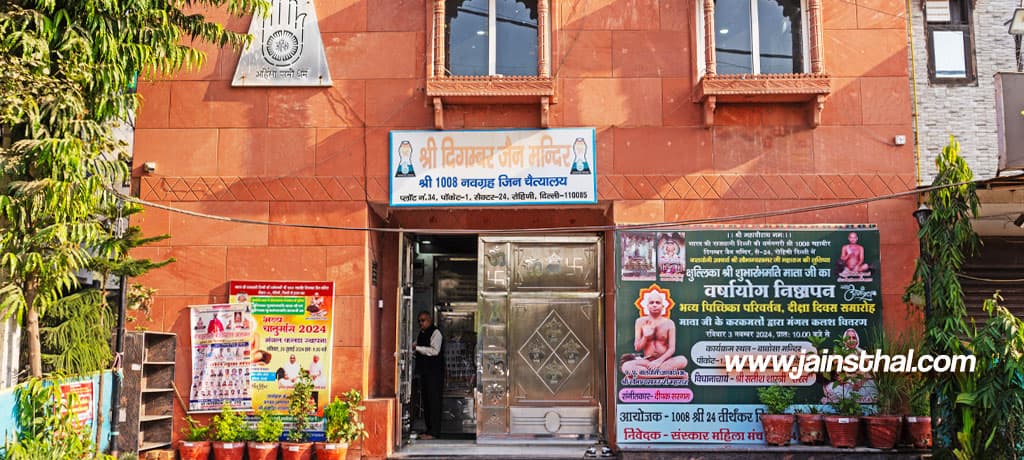
Shri Digambar Jain Temple, Sector 24 Rohini
Approximately 125 Jain families live in Sector 24, where this sacred temple is located.
The temple’s executive and management board comprises several experienced and dedicated members who play a crucial role in the smooth functioning of its operations. These esteemed individuals have been associated with the temple since its inception. The key contributors to the temple committee include:
Introduction
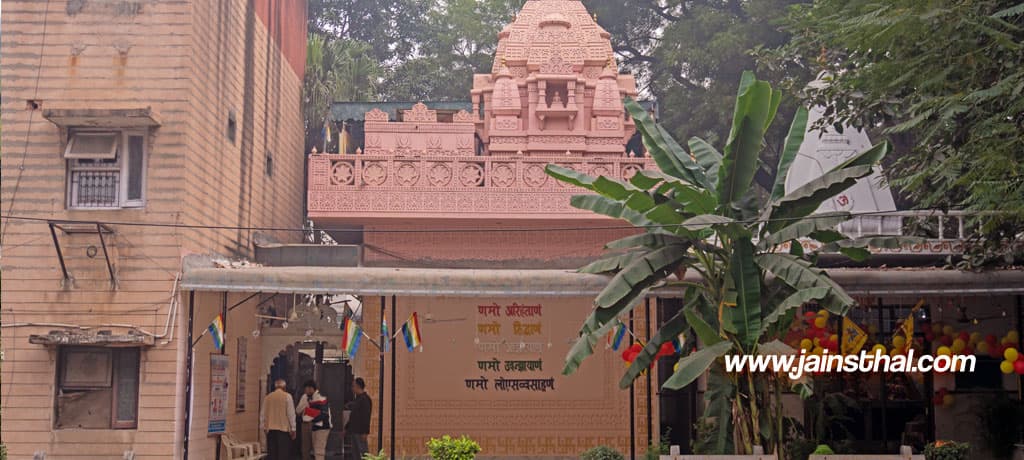
Located in Sector 24, Rohini, the capital city of India, Delhi, Shri Digambar Jain Temple, despite being constructed in a compact 28-meter area, appears grand due to its remarkable architecture. The foundation stone of the temple was laid on November 12, 2017, under the guidance of Acharya Shri Saubhagya Sagar Ji Maharaj. Subsequently, from June 18, 2018, to June 23, 2018, the Panch Kalyanak Mahotsav of the temple was ceremoniously completed under the guidance of Acharya Shri Ji. The temple is primarily constructed using red stone, with devotees intending to model it entirely with red stone similar to the historic Lal Mandir. The temple is open from three sides, giving it an even more expansive appearance. Its intricate craftsmanship and architectural brilliance further enhance its grandeur. Notably, the main entrance and open framework lend it an impressive and dignified appearance.
The temple houses a magnificent Vedi (altar) of Shri Jinenedra Bhagwan, with the principal deity being the 24th Tirthankar, Bhagwan Mahavir. This idol is inspired by the original deity at Shri Mahavir Ji Atishay Kshetra, Alwar. It is believed that the sculptor was specially taken to Shri Mahavir Ji Digambar Jain Temple to meticulously study the original idol and create an exact replica. Along with Bhagwan Mahavir Idol, the temple enshrines eight other divine idols, including Bhagwan Chandraprabhu, Bhagwan Adinath, Bhagwan Parshvanath, Bhagwan Munisuvratanath, Bhagwan Vasupujya, Bhagwan Neminath, Bhagwan Pushpadanta, and Bhagwan Padmaprabhu. Additionally, the temple complex houses altars of Goddess Padmavati and Kshetrapal Baba, which serve as focal points of devotion for the worshippers.
A mere visit to the temple instills a sense of spiritual tranquility and divine energy in devotees. The serene and holy atmosphere is believed to alleviate suffering. Daily rituals, prayers, and religious discourses are performed, maintaining a deeply devotional ambiance. All major Jain festivals, especially Das Lakshan Parva and Mahavir Jayanti, are celebrated with great enthusiasm and devotion. Furthermore, the temple frequently hosts revered Jain Saints, under whose divine presence special religious ceremonies and discourses are organized, enriching the devotees with spiritual benefits.
Jain Samaj
A devoted and close-knit Jain community resides around the temple.
“Approximately 125 Jain families live in Sector 24, where this sacred temple is located.”
Among them, nearly 50 families actively participate in daily rituals and religious ceremonies conducted at the temple. The temple not only serves as a spiritual center but also exemplifies community service and humanitarian efforts. It has successfully hosted two to three free medical camps so far. Additionally, a community feast (Bhandara) is organized every month, fostering a spirit of service and dedication. Adequate arrangements have been made in the temple for the accommodation of visiting Saints, with special rooms built on the second and third floors. Separate dining areas within the temple complex are also designated for their meal arrangements, ensuring their needs are well taken care of.
History
The earliest mention of Delhi is found in the epic Mahabharata, where it is described as the ancient city of Indraprastha, the capital of the Pandavas. Delhi is not only the capital of India but also one of the country’s most prominent tourist destinations. As the political hub of the nation, it hosts several key government institutions, including the Rashtrapati Bhavan (Presidential Palace), the Parliament House, and the Central Secretariat, which exemplify modern architectural excellence. Moreover, Delhi carries immense historical significance, preserving many ancient heritage sites.
From an archaeological perspective, Delhi boasts world-renowned historical monuments such as Purana Qila, Safdarjung’s Tomb, Jantar Mantar, Qutub Minar, and the Iron Pillar, which are major tourist attractions. The city also serves as a remarkable symbol of religious diversity, housing renowned religious sites of various faiths, including the Birla Temple, Katyayani Shakti Peeth, Lal Jain Mandir, Bangla Sahib Gurudwara, Bahai Temple, Akshardham Temple, and Jama Masjid. Among its prominent landmarks, India Gate, situated on Rajpath, stands as a memorial dedicated to the martyrs of the nation.
Economically, Delhi holds immense significance and has evolved into a major commercial hub of India. Additionally, the city is home to approximately 200 to 250 Jain temples, reflecting the rich religious and cultural heritage of the Jain community.
Know something about this temple?
Spot something missing or incorrect, or have extra info to share? Let us know and our team will take a look.
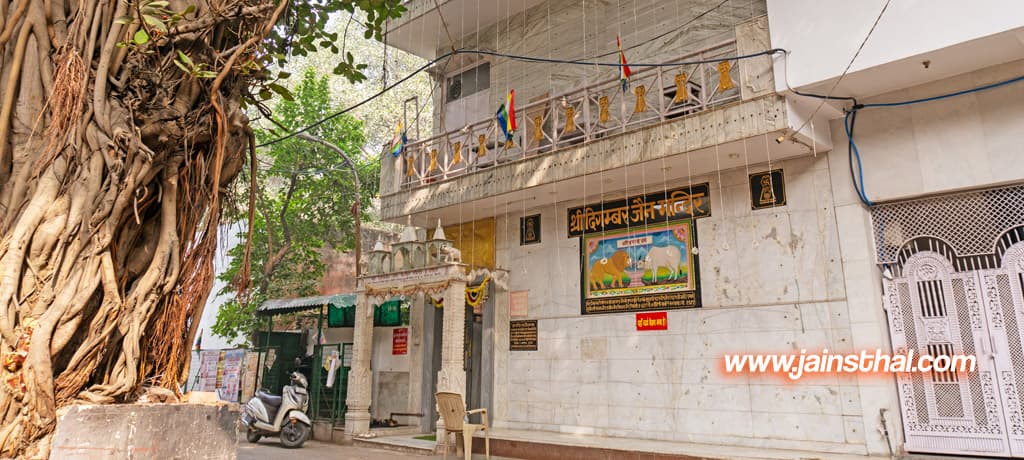
The temple’s executive and management board comprises several experienced and dedicated members who play a crucial role in the smooth functioning of its operations. These esteemed individuals have been associated with the temple since its inception. The key contributors to the temple committee include: