
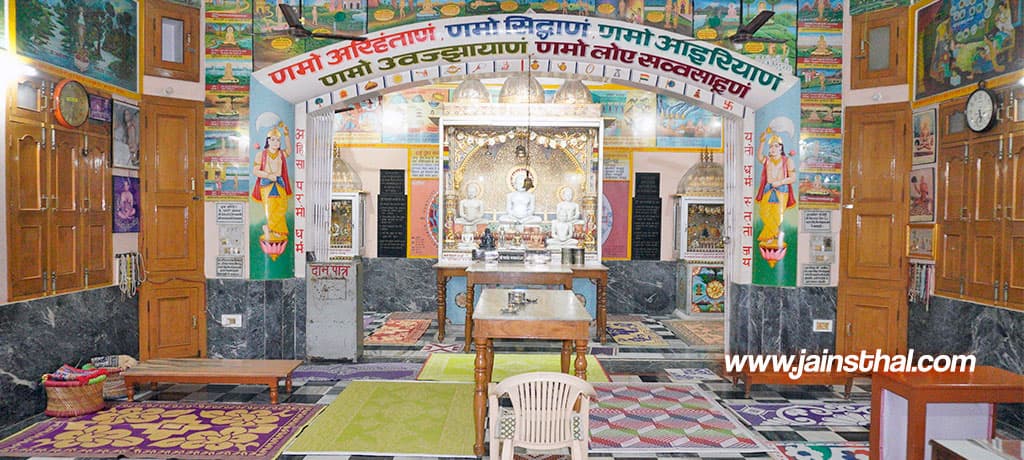
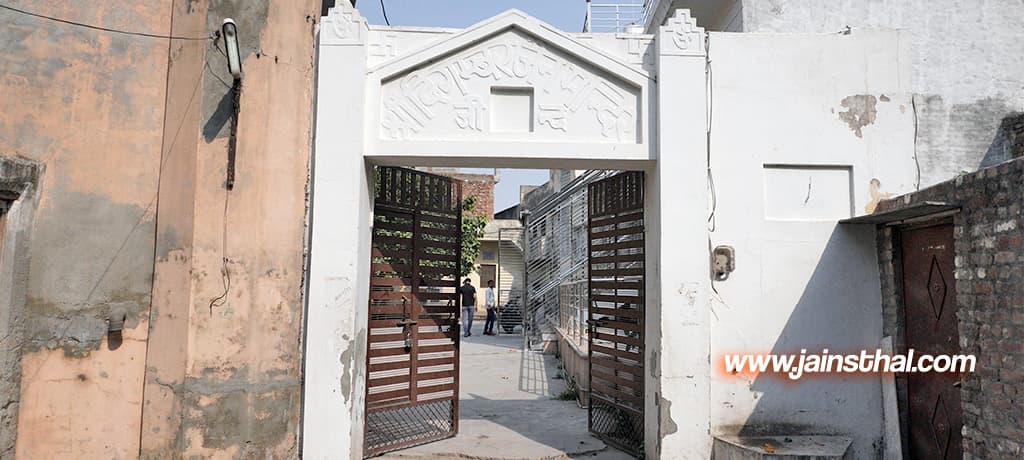
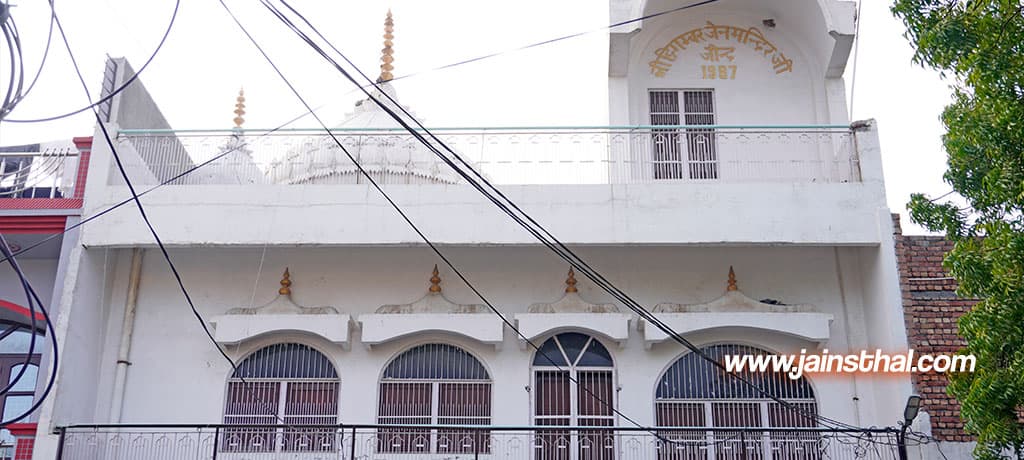
Safido Digambar Jain Mandir
Around the same time, the General Secretary of the temple, Shri Chandraprakash Jain, had a dream that some Jain idols were present in the nearby Vaishnav temple.
Shri Digambar Jain Temple Committee has been formed for the smooth functioning of the temple. The members working in the committee are as follows -
Introduction
Shri 1008 Mahavir Digambar Jain Mandir is located near the old Anaj Mandi in Safidon, approximately thirty kilometers away from Jind district in Haryana. The construction of the temple began in the year 1983 and was completed in 1989. It is said that before the construction of this temple, there was no other Jain temples in the area. People had to visit temples located in other regions for Darshan. Once, Mrs. Shantidevi Ji, a resident of Gohana, visited Safidon. She was a devout follower of Jainism and observed its practices with great sincerity. She used to not eat anything until she had done the Darshan of the temple. After witnessing the condition of the area, she conveyed to the community the necessity of having a Jain temple in the region. She emphasized that without it, future generations would be deprived of spiritual benefits. Following her advice, all members of the local Jain committee decided to construct the temple.
The donation of the land for the construction of the temple was also made by Mrs. Shantidevi Ji. The construction work of the temple was initiated by her eldest son, Mr. Sheetal Prakash Jain Ji, along with the local Jain community. The renowned Jain scholar, Kshullak Kulbhushan Ji Maharaj, who later became Acharya Shri 108 Dharmabhushan Ji Maharaj, also contributed to the construction of the temple. His inspiration played a significant role in the construction process. The Panch Kalyanak (consecration ceremony) of the temple took place in 1989 in the presence of Acharya Shri 108 Shantisagar Ji Maharaj's foremost disciple, Jain Ratna Shri 108 Gyanbhushan Ji Maharaj, Muni Shri 108 Chandrasagar Ji Maharaj, and Muni Shri 108 Suryasagar Ji Maharaj. Following the construction of the temple, the Vedi (altar) was established by Mr. Nemchand Jain, the son of Mrs. Shantidevi Jain Ji. In 2005, during the arrival of Acharya Shri 108 Shrutsagar Ji Maharaj in Safidon, the Jain community constructed two additional Vedi in his presence. In the Mool Vedi of the temple, the Moolnayak Pratima (main idol) is of Shri 1008 Mahavir Bhagwan. Along with the idol of Shri Mahavir Bhagwan, the idols of Shri Chandraprabhu Bhagwan, Shri Shantinath Bhagwan, Shri Parshvanath Bhagwan, Shri Bahubali Bhagwan, Shri Neminath Bhagwan, Shri Adinath Bhagwan, Shri Vasupujya Bhagwan, and Shri Mahavir Bhagwan are also seated in the Vedi. The idol of Shri Mahavir Bhagwan holds great significance in the region. According to Jain tradition, due to pratima’s Atishay (numinous presence), the Jain community in the area is endowed with all kinds of facilities.
In the second Vedi of the temple, the Moolnayak Pratima is of Shri Shantinath Bhagwan. Along with the Moolnayak Pratima, the Ratanmay idols of Shri Kunthunath Bhagwan, Shri Arhannath Bhagwan, and Shri Shitalnath Bhagwan are seated in the Vedi. In this Vedi, Acharya Shri 108 Shrutasagar Ji Maharaj enshrined the idol of Shri Parshvanath Bhagwan after performing the Panchkalyanak in Delhi. In the third Vedi of the temple, the Moolnayak Pratima is of Shri Adinath Bhagwan. Along with the Moolnayak Pratima, there are also idols of Shri Padmaprabhu Bhagwan and Shri Munisuvratnath Bhagwan seated in the Vedi. The Garbh Grah (sanctum sanctorum) of the temple features Jain paintings depicting Jain narratives. Jain Saints frequently visit the temple. With time, Acharya Shri 108 Gyanabhushan Ji Maharaj, Acharya Shri 108 Shrutsagar Ji Maharaj, Acharya Shri 108 Saurabh Sagar Ji Maharaj, Aryika Shri 105 Gyanmati Mata Ji, and Aryika Shri 105 Nangmati Mata Ji have graced the temple with their presence. Daily worship and rituals are conducted with great care. Local Jain families organize various religious events from time to time and also look after the maintenance of the temple.
Atishay Katha
During the year 2005, the construction of two additional Vedi in the temple was underway.
“Around the same time, the General Secretary of the temple, Shri Chandraprakash Jain, had a dream that some Jain idols were present in the nearby Vaishnav temple.”
In the dream, he saw the layout of the place where the temple was located. When members of the Jain community visited the Vaishnav temple upon seeing the idols in their dream and to their surprise they saw five Jain idols there. Efforts were made by the Jain community to bring those idols from the Vaishnav temple to the Jain temple. At that time, along with the Jain community, Muni Shri 108 Saurabh Sagar Ji Maharaj, who later became Acharya Shri 108 Saurabh Sagar Ji Maharaj, also made relentless efforts to bring the idols. The priests of the Vaishnav temple said that these idols have been present in the temple since the time of our ancestors. We perform worship rituals for these idols, and if you wish to take these idols, you may do so. In this manner, with the consent of the priests, the Jain community brought the idols to the temple. After bringing the idols to the temple, they were enshrined by the priests themselves. In the year 2005, the Jain community, under the guidance of Acharya Shri 108 Shrutasagar Ji Maharaj, performed the Panchkalyanak and enshrined the idols in the Jain temple. As people from distant areas started coming to the temple to see the idols, a rumor spread among them that these idols were not only ancient but also worth of crore rupees. This caused anger among the Hindu community members, questioning how these idols were given away without the permission of the Hindu community. This led to considerable controversy at that time. One night, Shri Chandraprakash Ji's wife had an ominous dream in which she saw shrouds placed all over the people. Upon sharing this ominous dream with her husband, she suggested returning the idols. With the consent of the Jain committee and to calm down the anger, the idols were returned to the Hindu community under the guidance of the Jain Saints, and they remain present in the Vaishnav temple to this day.
Dharamshala
The number of Jain families in Safidon is relatively fewer compared to other communities. The Digambar and Shwetambar Jain communities collaborate and support each other's activities in the area. Adequate arrangements have been made in the temple premises for the Jain devotees who visit. Periodically, Jain saints visit the area, which instills a unique energy among the Jain community members. Arrangements for their stay are made in the specially constructed Tyagi Bhawan. Jain families actively participate and contribute to the activities of the temple. If any pilgrim comes from distant areas to visit the temple, arrangements for their stay are also made by Jain families.
History
Safidon is a city and municipal committee in the Jind district of Haryana state in India. Safidon serves as a tehsil headquarters in the Jind district. It is situated on the Hansi branch of the Western Yamuna Canal, approximately 35 kilometers away from Jind. Safidon is also accessible via the Panipat-Jind railway line. This area was initially inhabited during the Early-Harappan and Mature-Harappan periods, with archaeological remains of the Harappan civilization found at various sites near Safidon, including Hatt, Harigarh (Hathkeswar), Anta, Morakhi, and Beri Kheda. According to scriptures, Safidon was referred to as Sarpadevi or Sarpdadhi, a name also mentioned in the Mahabharata. The historic fort located in Safidon was constructed by the rulers of Jind state in the 18th century. Later, it was used as a military cantonment for the state. The fort contains bastions to strengthen fortification and ensure security.
Know something about this temple?
Spot something missing or incorrect, or have extra info to share? Let us know and our team will take a look.
Shri Digambar Jain Temple Committee has been formed for the smooth functioning of the temple. The members working in the committee are as follows -