
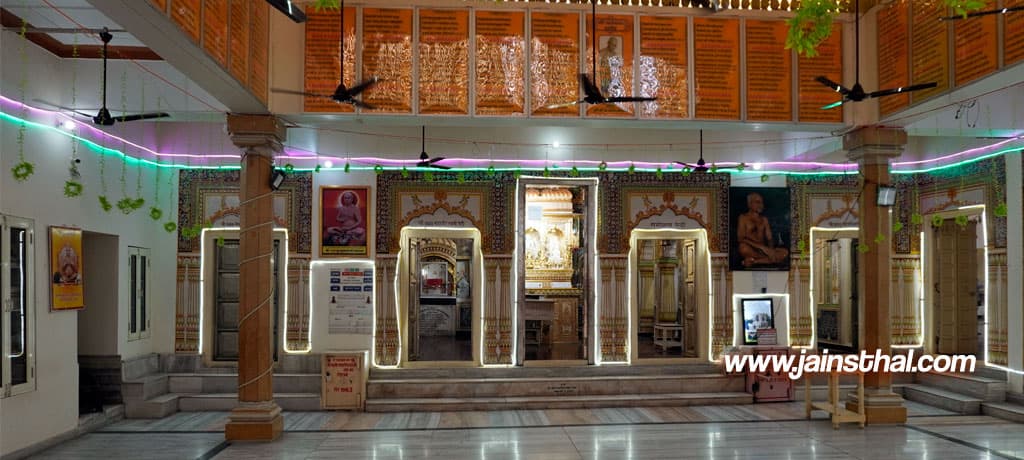
Rohtak Sarai Mohalla Jain Mandir
It is believed that the idol was consecrated in Nepal based on the date inscribed on it.
The committee has been formed for the efficient management of the temple. The active members of the committee are as follows:
Introduction
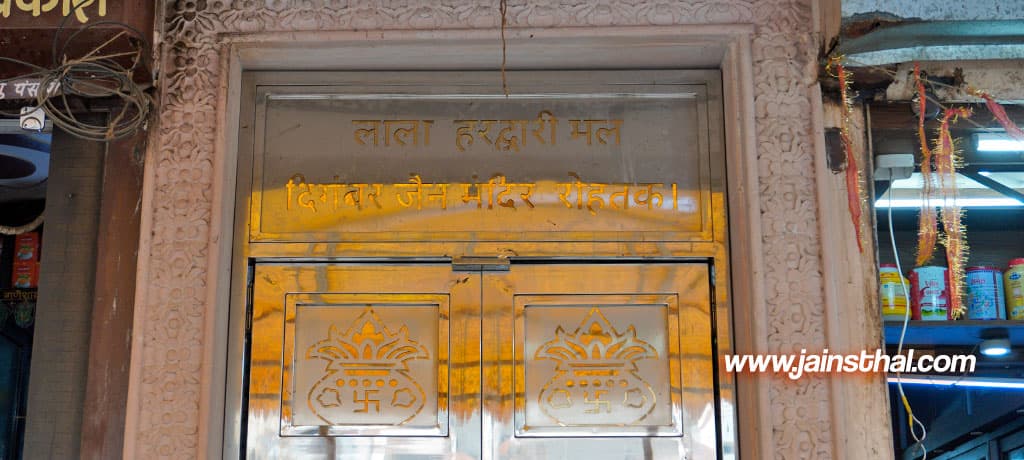
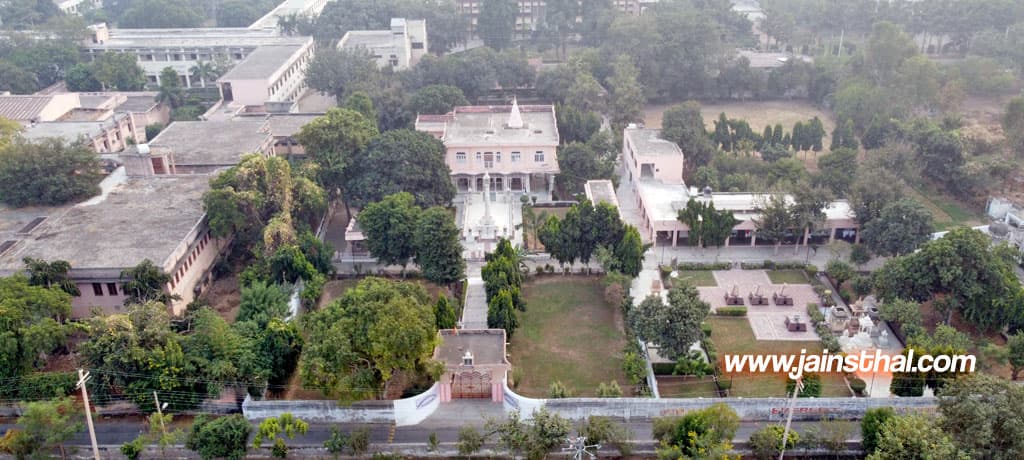
Shri 1008 Digambar Jain Mandir is located in Sarai Mohalla near the railway station in Rohtak. It is approximately one kilometer from the railway station and about two kilometers from the bus stand. The temple was constructed by the Jain community over 400 years ago. At that time, the temple had only one Vedi (altar), but later, after the Panchkalyanak (consecration ceremony) in the temple, other Vedi were also established. In the Mool (main) Vedi of the temple, along with the Moolnayak Pratima (main deity’s idol) of Shri Mahavir bhagwan ji, other idols are also enshrined. The second Vedi of the temple belongs to Shri Neminath Bhagwan ji, where a 739-year-old Chaubisi Pratima of Neminath Bhagwan is enshrined.
“It is believed that the idol was consecrated in Nepal based on the date inscribed on it.”
In the third Vedi of the temple, idols of Shri Parshvanath Bhagwan ji along with Chaubisi Pratima made of stone and Ashtadhatu (eight metals) are established. The fourth Vedi of the temple belongs to Shri Bahubali Bhagwan, whose Panchkalyanak took place in 1971 under the presence of Acharya Shri Surajmal Ji Maharaj. In 1983, under the presence of Acharya Shri Surajmal Ji Maharaj, the fifth Vedi of Shri Parshvanath bhagwan ji was consecrated. This idol of Shri Parshvanath Bhagwan ji was brought from the Jain temple in Charkhi Dadri. In the sixth Vedi of the temple, idols of Shri Mahavir bhagwan and in the seventh Vedi, idols of Shri Parshvanath Bhagwan are enshrined. The temple also houses Vedi of Mata Padmavati Ji and Kshetrapal Baba Ji. The name of each Vedi and the deity enshrined therein is inscribed on the outer door of each Vedi. Inside the Shikhar (spire) of the temple, there is a magnificent depiction of Jinendra Bhagwan, which is both ancient and beautiful. The temple's Garbh Grah (sanctum sanctorum) is adorned with exquisite Jain artwork depicting various religious and historical narratives such as Emperor Chandragupta's dreams, Bharat Chakravarti's dreams, and the renunciation of Shri Neminath Bhagwan. Such artwork helps preserve the Jain cultural heritage and aids people in experiencing spiritual and cultural enrichment. Within the temple premises stands a 31-foot tall Manastambh. Devotees visit the temple daily to perform worship rituals and offer Abhishek (auspicious bath of the idol). Located approximately one kilometer from the temple is the Shri Mahavir Park and Library. The acquisition of land for the library was spearheaded by the respected Shri Rajesh Jain. The struggle for acquiring the land began about 17 to 18 years ago when construction had already commenced on the site. However, the land was forcibly acquired by the municipal corporation. Shri Rajesh Jain filed a case against the municipal corporation, claiming rightful ownership of the land he had purchased. After fighting the legal battle for about 11 to 12 years, Shri Rajesh Jain finally gained possession of the land. In 2014, the construction of the Mahavir Library was completed on the site. The library houses over eight thousand Jain, non-Jain, political, economic, encyclopedic, and other books. The library membership fee is Rs. 1500 per year. For the convenience of readers, the library is equipped with air conditioning, Wi-Fi, and computers. Every day, 250 to 300 readers visit the library to acquire invaluable knowledge.
Atishay Katha
Shri Jati Ji arrived in Rohtak in 1854 and began practicing asceticism and meditation. He was well-versed in tantra and mantra. He used his spiritual knowledge to benefit society. One day, a dispute arose between two children from the Jain and Muslim communities over the sighting of the Eid moon. The dispute escalated to the point where both parties agreed to a condition of religious conversion. The Jain child then explained the situation in detail to Baba Hukamchand Ji. In response, Jati Ji, with great skill, placed a brass pot and a plate in the sky to reveal the moon, thereby affirming the victory of the Jain faith. After this incident, he instructed both children never to impose such conditions in the future.
During a plague outbreak in Rohtak, Shri Jati Ji meditated in front of the idol of the protector deity Shri Kshetrapal Ji at Shri 1008 Digambar Jain Mandir, Sarai Mohalla, and prevented the spread of the plague. While deeply immersed in meditation, Jati Ji attained nirvana on the auspicious day of Tritiya Veer Nirvana in Samvat 2399, Vikram Samvat 1928 (1873 AD). Shri Jati Baba Hukamchand Jain Ji is highly revered by the local community, and the Digambar community has constructed a Chhatar (brolly) and Charan Paduka in the Dharamshala. His presence ensures smooth social arrangements in this place.
Dharamshala
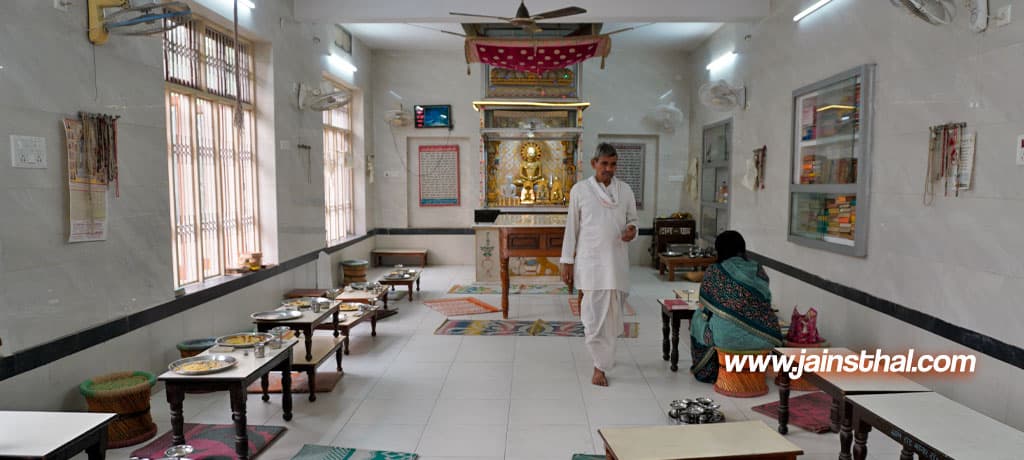
In Rohtak, there is a community of 300 Digambar Jain families. The management of the temple is overseen by the Jain community. Jain saints occasionally visit Rohtak. Adequate arrangements are available for those who come to the temple for darshan. If a pilgrim contacts the temple, arrangements are made for their stay and meals by the Jain community. A Jain library has been established in the area. The Jain community-run girls' and boys' schools provide education to students from all communities. One day a week, a Jain pathshala is organized for children of lower age groups so that they can become familiar with Jain principles and lead their lives accordingly.
History
Rohtak is a district in the state of Haryana, India. It was founded by Raja Rohitas, the ruler of Rohtasgarh (Rohtas Fort). Rohtak district is surrounded by five districts of Haryana from all sides. To its north lies Jind, to the east lies Sonipat, to the west lies Bhiwani, to the south lies Jhajjar, and to the northwest lies Hisar, while southwest lies Bahadurgarh. Rohtak is a major market for grains and cotton. Notably, the industrial activities here include food production, cotton ginning, and textile weaving mills for sugar and electricity.
Know something about this temple?
Spot something missing or incorrect, or have extra info to share? Let us know and our team will take a look.
The committee has been formed for the efficient management of the temple. The active members of the committee are as follows: