
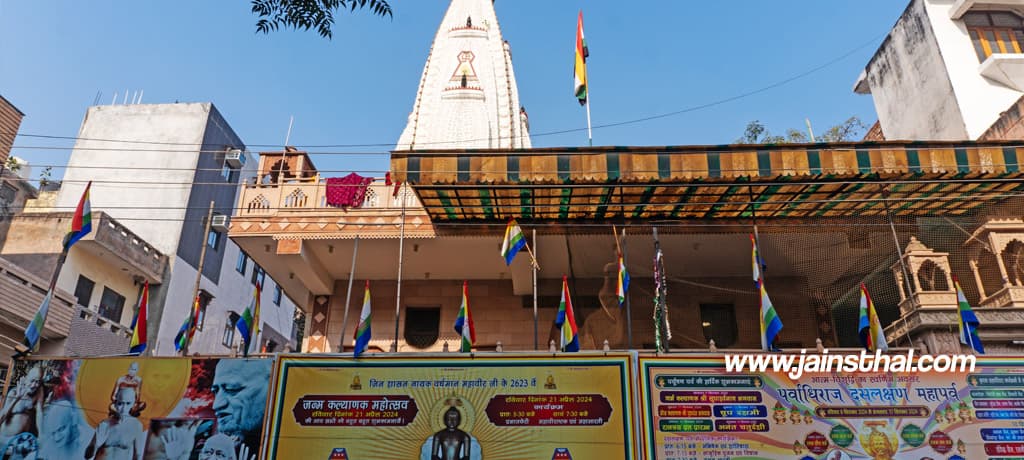
Shri 1008 Adinath Digambar Jain Temple, Sector-8 Rohini
To ensure smooth operation and efficient management, a 16-member committee has been constituted. These individuals serve with full dedication, competence, and integrity. The current members are:
Introduction
Located in the heart of Delhi’s Rohini area, Shri 1008 Adinath Digambar Jain Temple stands as a beacon of spirituality, cultural heritage, and community service. Attracting hundreds of devotees daily, the temple offers a tranquil space for prayer, reflection, and Jain religious observances. With its origins dating back to the year 2000, the temple has gradually evolved into a significant center for Jain religious and cultural activities. Its convenient location—just a short distance from Madhuban Chowk and the Rohini East Metro Station—makes it easily accessible for devotees and visitors alike.
However, the foundation of this sacred site was laid much earlier in 1995 with the acquisition of land, led by the dedicated efforts of the “Digambar Jain Sabha.” Visionaries like Shri Naveen Chand Jain, Shri Atul Jain, Shri Kailash Chand Jain, Shri Lala Mahesh Chand Jain (Kolkata wale), and many other committed members played a pivotal role in realizing this spiritual mission. Through their unwavering dedication and the collective support of the Jain community, the temple emerged as a striking architectural and spiritual landmark. In 2005, the temple hosted a grand Panchkalyanak Pratishtha Mahotsav under the divine guidance of Acharya Shri 108 Bahubali Maharaj Ji, marking a milestone in its spiritual journey and strengthening its place in the religious life of the community.
Crafted using exquisite Jodhpur Kota stone and designed in a traditional architectural style, Shri 1008 Adinath Digambar Jain Temple radiates a sense of grandeur and artistic elegance. At the heart of the temple lies the main sanctum, enshrining the revered idol of Shri 1008 Adinath Bhagwan, affectionately known as the "Bade Baba of Rohini." Complementing this divine presence are the idols of Bhagwan Chandraprabhu, Bhagwan Shantinath, and Bhagwan Munisuvratanath, which together create a serene and spiritually uplifting environment for worshippers.
The temple features two distinct Garbh Grah (sanctum sanctorum): the main sanctum is located on the ground floor, while the upper sanctum on the first floor houses the idols of Bhagwan Adinath, Bhagwan Parshvanath, and Bhagwan Mahavir Swami. Daily rituals such as Abhishek and Shantidhara are performed with deep devotion, and the temple actively celebrates all major Jain festivals. Among these, the annual Rath Yatra held on February 12th—marking the Panchkalyanak Pratishtha Day—is a highlight, drawing large gatherings of devotees and showcasing the community’s strong religious spirit and unity.
Jain Samaj
Approximately 125 Jain families reside in the surrounding area, many of whom actively engage in the temple’s daily rituals and pooja, fostering a vibrant and spiritually connected community. On a daily basis, the temple welcomes around 70–80 devotees, including men, women, and children, who gather for worship and reflection. Beyond serving as a center for spiritual devotion, the temple also extends its role into social service through the Adinath Charitable Trust—an initiative dedicated to the welfare of the broader community.
The Trust regularly organizes free medical camps, where experienced doctors provide essential healthcare services to those in need. In addition, the temple complex houses a well-maintained "Sant Niwas" for visiting Jain saints and their accompanying devotees. This facility includes 12 air-conditioned rooms equipped with all necessary amenities, exemplifying the temple’s commitment to hospitality, service, and deep respect for the ascetic tradition.
History
The National Capital Territory (NCT) of Delhi is India's capital and a Union Territory. It is home to all three pillars of the Indian government—the Executive, the Legislature, and the Judiciary. Nestled along the banks of the Yamuna River, Delhi boasts a rich mythological and historical legacy, with references in ancient scriptures and connections to the Indus Valley Civilization supported by archaeological findings in Haryana and surrounding areas. Delhi gained prominence during the Delhi Sultanate, emerging as a key political, cultural, and commercial center. It is frequently mentioned in the Mahabharata as Indraprastha, the capital of the Pandavas.
Modern Delhi is not only the seat of political power but also a major tourism hub, home to iconic landmarks such as Rashtrapati Bhavan, Parliament House, and Central Secretariat. Historic monuments like Purana Qila, Safdarjung Tomb, Jantar Mantar, Qutub Minar, and the Iron Pillar add to its cultural richness. A melting pot of faiths, Delhi houses prominent religious sites like Birla Mandir, Katyayani Shaktipeeth, Lal Jain Mandir, Bangla Sahib Gurudwara, Bahai Lotus Temple, Akshardham Temple, and Jama Masjid. Another iconic structure is India Gate, built in honor of India's fallen soldiers. Today, Delhi stands as a dynamic center of politics, culture, commerce, and spirituality.
Know something about this temple?
Spot something missing or incorrect, or have extra info to share? Let us know and our team will take a look.
To ensure smooth operation and efficient management, a 16-member committee has been constituted. These individuals serve with full dedication, competence, and integrity. The current members are: