
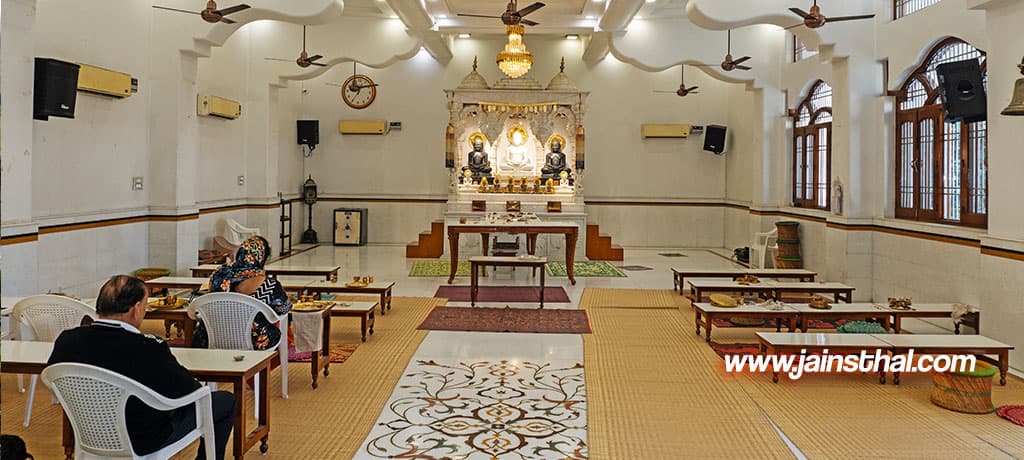
Rohini Sec 16 Jain Mandir
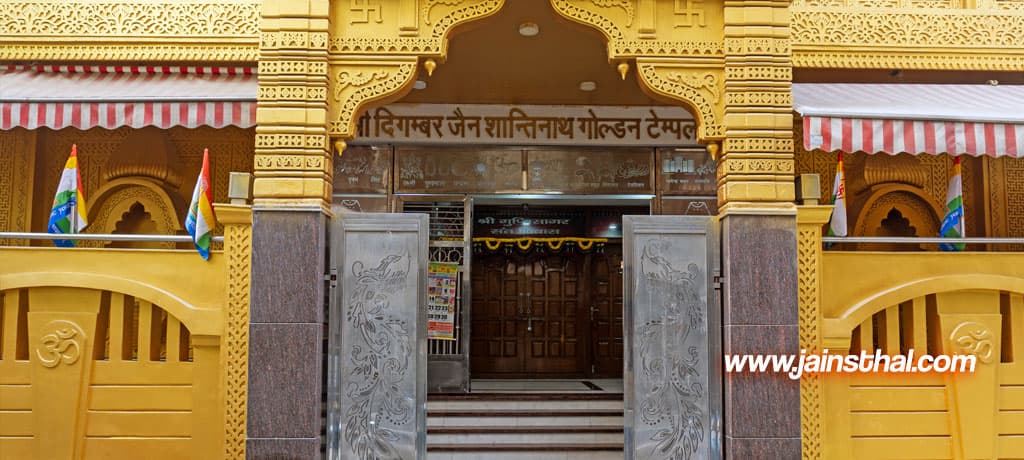
The temple's main entrance is adorned with sacred symbols such as "Om," "Hrim," and "Swastik." Upon entering, devotees experience a deep sense of peace and spiritual bliss.
The vision and leadership behind the construction of the temple came from Shri Arihant Kumar Jain, who played a pivotal role in bringing this sacred project to reality. Currently, his son, Shri Deepak Jain, serves as the temple's treasurer. A dedicated committee of 14 members oversees the temple’s operations, with each member holding a designated role. The key office bearers of the committee are:
Introduction
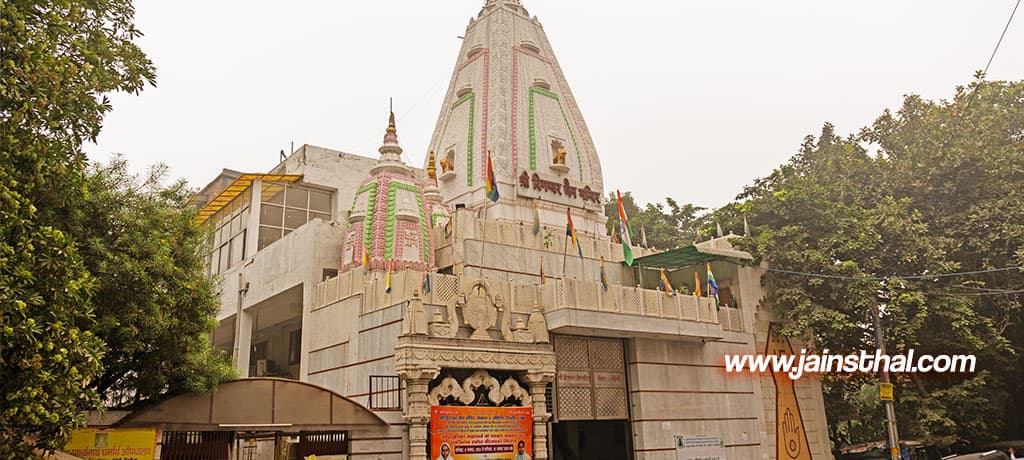
The Rohini and Pitampura areas in the capital city of India, Delhi, house approximately 24 Jain temples. However, the Shri 1008 Shantinath Digambar Jain Temple, located in Sector 16, Rohini, stands out as a prominent religious site for Jain followers. Presently, the temple complex spans an area of 400 square yards and features a magnificent four-story structure built from pristine white marble.
“The temple's main entrance is adorned with sacred symbols such as "Om," "Hrim," and "Swastik." Upon entering, devotees experience a deep sense of peace and spiritual bliss.”
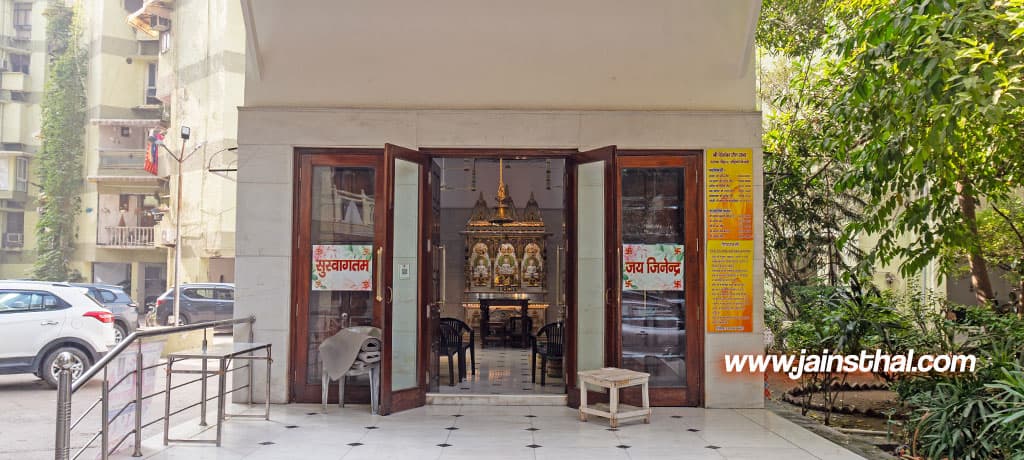
The temple's grand Panch Kalyanak Pratishtha ceremony was conducted in 2016. However, the journey leading to its construction is a remarkable tale of dedication and community coordination. Before 1998, there were no Jain temples in Sectors 15, 16, 17, and 18 of Rohini. As a result, the Jain community members had to visit the Ahimsa Vihar temple in Sector 9 for worship. Some prominent Jain residents of the area took the initiative to spread religious awareness and brought an idol from the Shastri Nagar Jain Temple to organize the first-ever Prabhat Pheri (morning procession) in the locality. This initiative fostered a stronger connection among Jain families. Subsequently, during the Daslakshan festival, the idol was placed at a different location for ten days and later relocated for a month. As religious enthusiasm grew, the desire for a dedicated temple intensified, leading to the formation of a committee. This effort resulted in the construction of a temple in 1998 on a 26-meter plot, which housed a Jain Sthanak on the lower floor and a Digambar temple on the upper floor, representing a unique blend of Shwetambar and Digambar traditions. Eventually, a larger 400-square-yard plot was acquired for the temple’s expansion. Initially, a 100-square-yard temple was built, and over time, it was further reconstructed. The grand Panch Kalyanak Pratishtha ceremony was held from January 24 to January 29, 2016, under the guidance and blessings of Acharya Shri Shrut Sagar Ji Maharaj, Acharya Shri Saurabh Sagar Ji Maharaj, Shri Pramukh Sagar Ji Maharaj, and Shri Praman Sagar Ji Maharaj. Designed with modern architectural principles, the temple exudes such elegance and charm that it captivates visitors instantly. Today, the Shri 1008 Shantinath Digambar Jain Temple has become a prestigious religious center for the Rohini Jain community. Every day, around 100 to 150 devotees visit for Shantidhara Poojan and darshan, while this number rises to 400-500 during major religious events. Upon entering the temple’s Garbh Grah (sanctum sanctorum), the first sight that catches the eye is the Mool Nayak Vedi. The temple has a single Vedi, featuring a total of eleven idols. The primary deity is Shri 1008 Shantinath Bhagwan, sculpted from white stone, flanked by idols of Shri Munisuvratanath and Shri Neminath Bhagwan, made of black stone. Additionally, the Vedi houses two white stone idols and five miniature idols crafted from Ashtadhatu (a blend of eight metals), representing Shri Parshvanath, Shri Chandraprabhu, Shri Adinath, Shri Pushpadant, and Shri Vasupujya Bhagwan. The temple’s Shikhar (spire on the top) features intricate carvings, with four statues of Shri Shantinath Bhagwan positioned in each cardinal direction. Important Jain festivals such as Dashalakshan Parva, Mahavir Jayanti, and Ashtanhika Parva are celebrated with great devotion, along with grand ceremonies honoring the Moksha Kalyanaks of the revered Tirthankaras.
Jain Samaj
The Shri 1008 Shantinath Digambar Jain Temple, located in Sector 16, Rohini, is equipped with all essential facilities for devotees. The four-story temple building includes a basement with three spacious halls used for religious gatherings and events. The temple committee actively participates in various social initiatives. The temple serves as a spiritual hub for nearly 100 Jain families residing in the nearby sectors of 15, 16, 17, and 18. Additionally, a dedicated Saint Residence has been constructed within the temple premises, featuring 12 air-conditioned rooms to accommodate visiting Jain Saints (Muni Maharaj Ji). For devotees who find it difficult to climb stairs, the temple is equipped with an elevator. The temple committee also organizes religious camps to propagate Jain values and teachings. The premises witness a constant influx of devotees, and a well-managed parking facility ensures a hassle-free experience for visitors. The nearest metro station to the temple is Rithala.
History
Delhi, the National Capital Territory of India, is the country's capital and a union territory. As the administrative hub, it houses all three branches of the Indian government: the executive, legislative, and judiciary. Situated on the banks of the Yamuna River, Delhi boasts a rich historical and cultural heritage. It is one of the oldest cities in India, with historical connections tracing back to the Indus Valley Civilization, as evidenced by archaeological findings in Haryana and surrounding regions. The city rose to prominence with the establishment of the Delhi Sultanate and has since evolved into a major political, cultural, and commercial hub. Delhi is home to numerous ancient and medieval architectural marvels.
References to Delhi can be found in the Mahabharata, where it is identified as Indraprastha, the capital of the Pandavas. Besides being India's political capital, Delhi is also a major tourist destination. The city showcases modern architectural wonders such as Rashtrapati Bhavan, Parliament House, and Central Secretariat, while its historical significance is highlighted by sites like Purana Qila, Safdarjung Tomb, Jantar Mantar, Qutub Minar, and the Iron Pillar. Delhi is also a center for diverse religious faiths, housing prominent temples and monuments such as Birla Mandir, Katyayani Shakti Peeth, Lal Jain Temple, Bangla Sahib Gurudwara, Lotus Temple, Akshardham Temple, and Jama Masjid. The iconic India Gate, built in honor of India's martyrs, stands as a tribute to the nation. Presently, Delhi has emerged as a major commercial and trade hub for the entire country.
Know something about this temple?
Spot something missing or incorrect, or have extra info to share? Let us know and our team will take a look.
The vision and leadership behind the construction of the temple came from Shri Arihant Kumar Jain, who played a pivotal role in bringing this sacred project to reality. Currently, his son, Shri Deepak Jain, serves as the temple's treasurer. A dedicated committee of 14 members oversees the temple’s operations, with each member holding a designated role. The key office bearers of the committee are: