
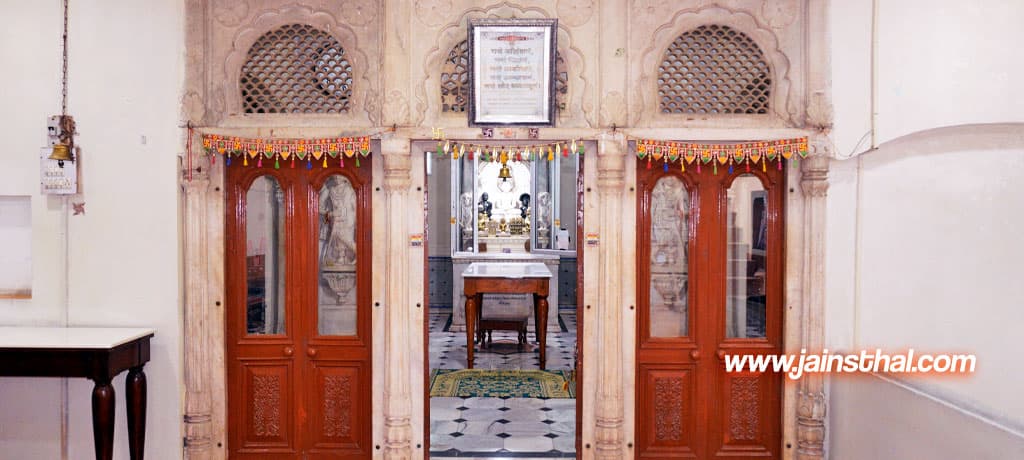
Pataudi Hailey Mandi Jain Mandir
There are only seven to eight families of Jain community around Shri 1008 Digambar Jain Mandir, Hailey Mandi. Instead of forming a committee for the temple, the Jain families together handles the management of the temple smoothly. The members working in the temple are as follows -
Introduction
Shri 1008 Digambar Jain Mandir located in Hailey Mandi is at a distance of 69 kilometers from Delhi and 3.6 kilometers from Pataudi (Gurugram). This temple was constructed by the Jain community 80 years ago. For the construction of the temple, at that time 600 yards of land was purchased from the Nawab, Mansoor Ali Khan, for Rs 2500. It is said that he was a Muslim by religion but he followed all types of Hindu customs. When the construction of the temple was completed, only a small Vedi (altar) was established in the temple.
At present there are three Vedi enshrined in the temple. In the Mool (main) Vedi of the temple, the Moolnayak Pratima (main deity idol) of Shri 1008 Mahavir Bhagwan Ji was brought from the Rewari Panchkalyanak (consecration ceremony) and enshrined in the temple. Along with Moolnayak Pratima, other Jain idol of Shri 1008 Adinath Bhagwan, Shri 1008 Parshvanath Bhagwan, Shri 1008 Munisuvratnath Bhagwan and Chaubisi Pratima of Parshvanath Bhagwan are seated. A Vedi of Mata Padmavati ji is also enshrined in the temple. This Vedi was constructed by Mrs. Kamlesh Jain, wife of Mr. Vijay Kumar Jain, resident of Hailey Mandi, under the guidance of respected Mr. Dharam Chand Shastri ji between the years 2008 and 2009. The statue of protector deity Shri Kshetrapal Baba Ji is enshrined in the third Vedi of the temple. This Vedi was built by Mrs. Madhu Jain, wife of Mr. Dinesh Jain, resident of Hailey Mandi, also between the year 2008 and 2009. From time to time Jain Saints going towards Jaipur from Delhi keep coming to the temple. The first Chaturmas happened of Gayanini Aryika Shri 105 Nangmati Mata Ji in the temple.
Dharamshala
The number of Jain families in Hailey Mandi (Pataudi) is only seven to eight families. Despite being less in number, the Jain community actively participates in all types of social activities. The temple is smoothly handled by the local Jain families. Between the years 2001 to 2002 Bhagwan Mahavir Jain Vatika was constructed in 600 yards of land lying in front of the temple. Earlier there used to be a park in place of Jain Vatika. It is now used for all types of auspicious ceremonies. Like a Dharamshala, all types of facilities are available in Jain Vatika. If any Pilgrim comes from a distant area to visit the temple, arrangements for their stay are also made available in Jain Vatika. In Hailey Mandi, the Jain community collaborates to provide assistance in the marriages of girls from families of financially weaker sections. If a girl from an economically disadvantaged family gets married at Jain Vatika, a voucher of eleven thousand rupees is issued, which is given to the bride as part of the Kanyadaan (dowry) by the community.
Nasiya ji is established in Todapur at a distance of three kilometers from the temple. The land of Nasiya Ji located in Pataudi Chowk was donated to Shri 1008 Digambar Jain Mandir by Shri Mitter Sain Jain Nambardar and Shri Ram Kumar Jain Nambardar, son of Shri Gulab Singh Jain, resident of Gurugram. Nasiya ji is used for the annual Rath Yatra. After the Rath Yatra, food arrangements are made for two to two and a half thousand people.
History
The city of Pataudi is located just sixteen kilometers away from Gurgaon. The establishment of the Pataudi princely state was done by the British East India Company in 1804. When an Afghani Pathan, Faiz Talab Khan, assisted the British government against the Maratha Empire during the Second Anglo-Maratha War, the British government, pleased with his support, declared him the first Nawab. However, this family traces its origins back to the 16th century in India, when their ancestors migrated from present-day Afghanistan to India during the Lodhi dynasty era. At the end of British rule and with the political integration of India in 1948, the Pataudi princely state was merged into the new territories of India. In 1971, based on the 26th Amendment to the Constitution of India, the Indian government abolished all official symbols of princely India, including titles, privileges, and allowances.
Know something about this temple?
Spot something missing or incorrect, or have extra info to share? Let us know and our team will take a look.
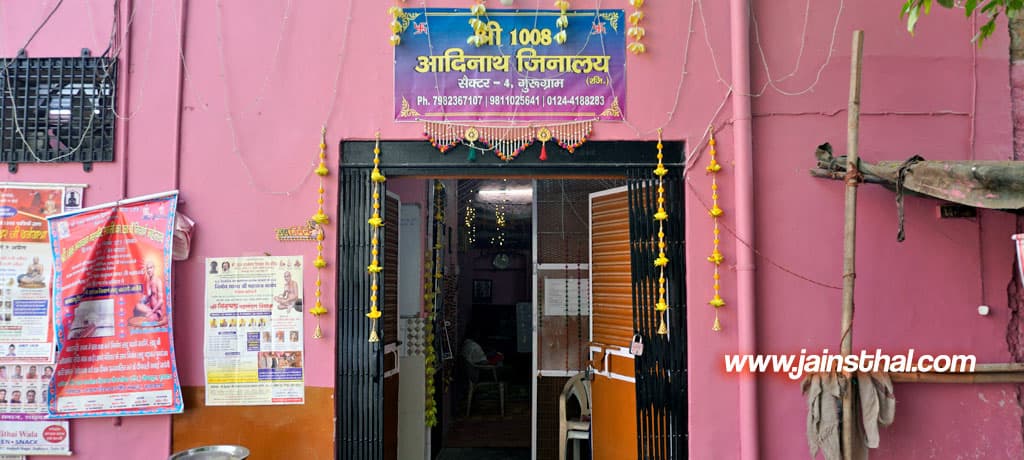
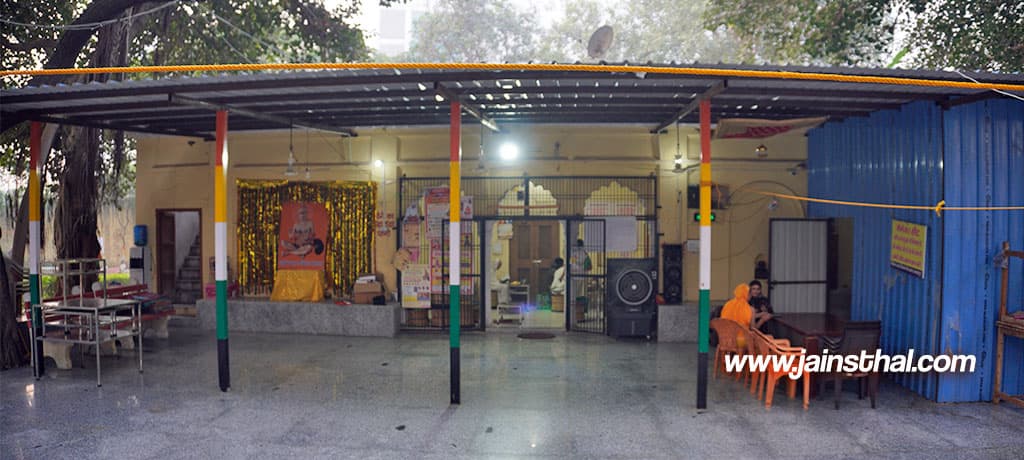
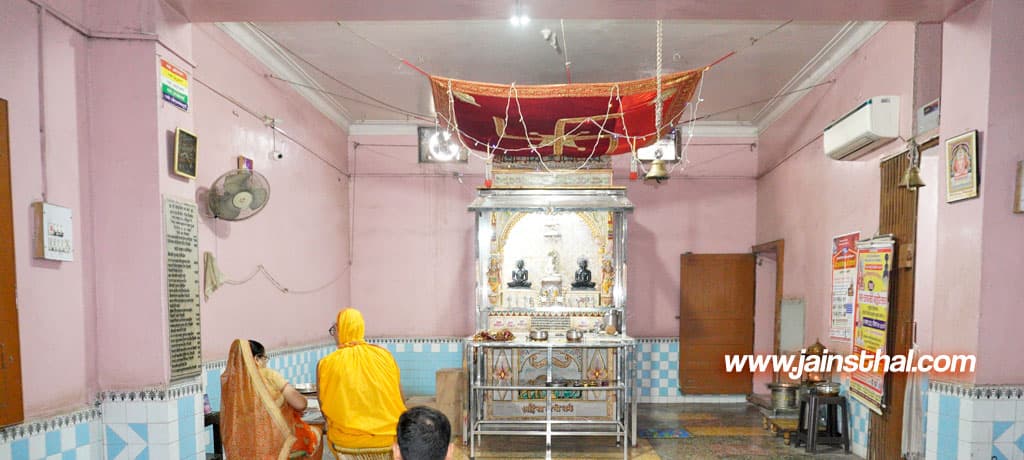
There are only seven to eight families of Jain community around Shri 1008 Digambar Jain Mandir, Hailey Mandi. Instead of forming a committee for the temple, the Jain families together handles the management of the temple smoothly. The members working in the temple are as follows -