Parshvasthali Jain Mandir Gurugram
According to legend, during the Mahabharat era, King Yudhishthira gave this village to his guru Dronacharya, hence it was called Gurugram, which later evolved into Gurgaon.
Introduction
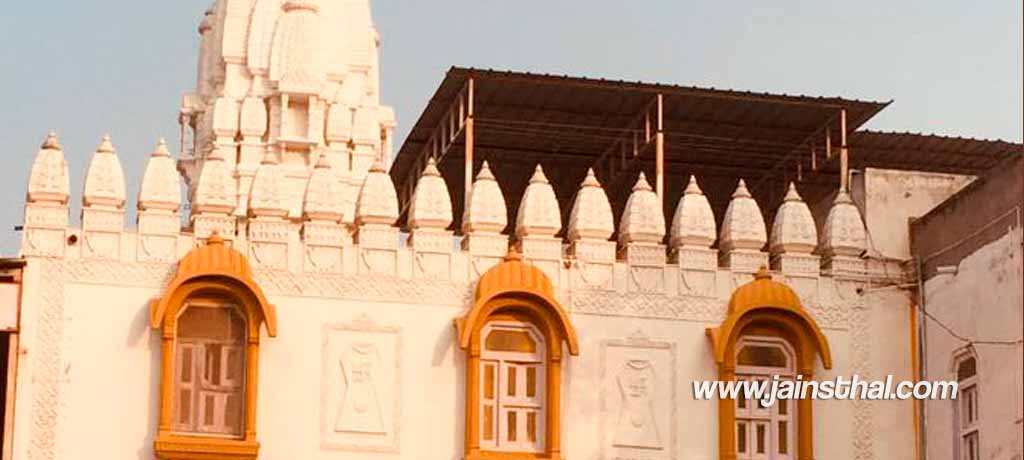
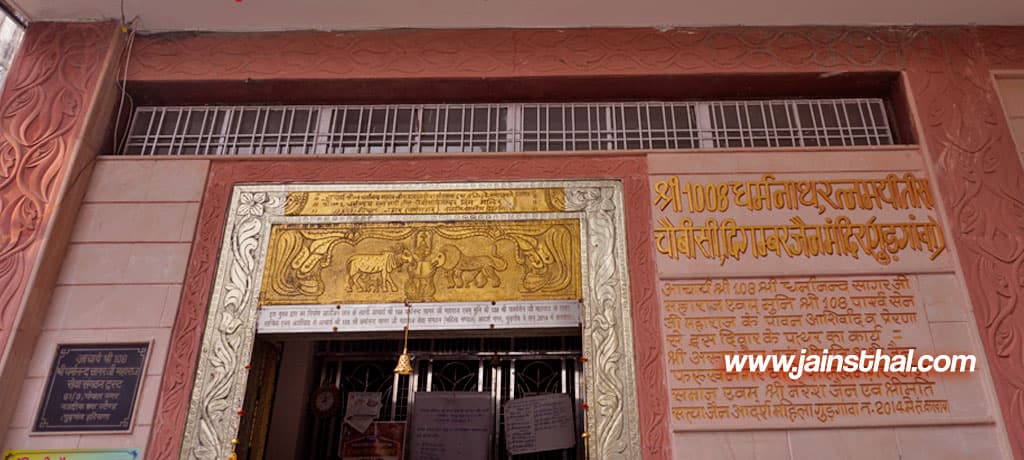
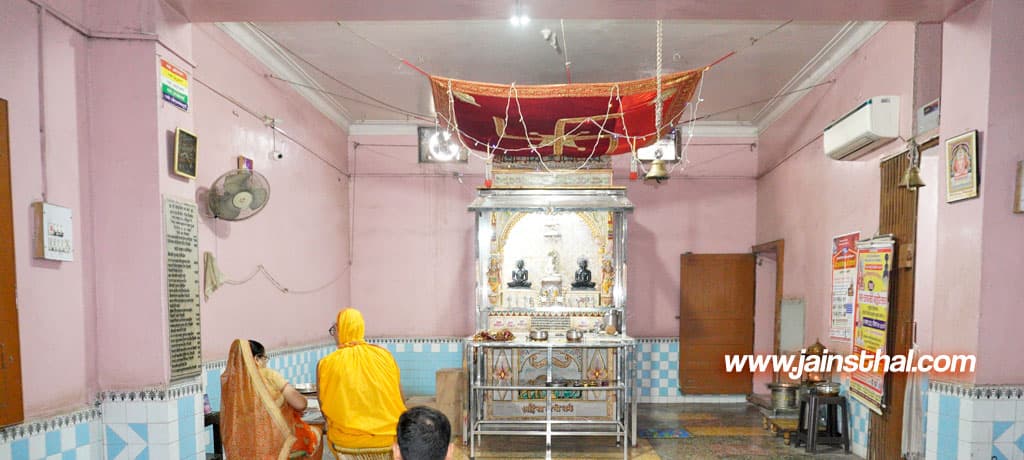
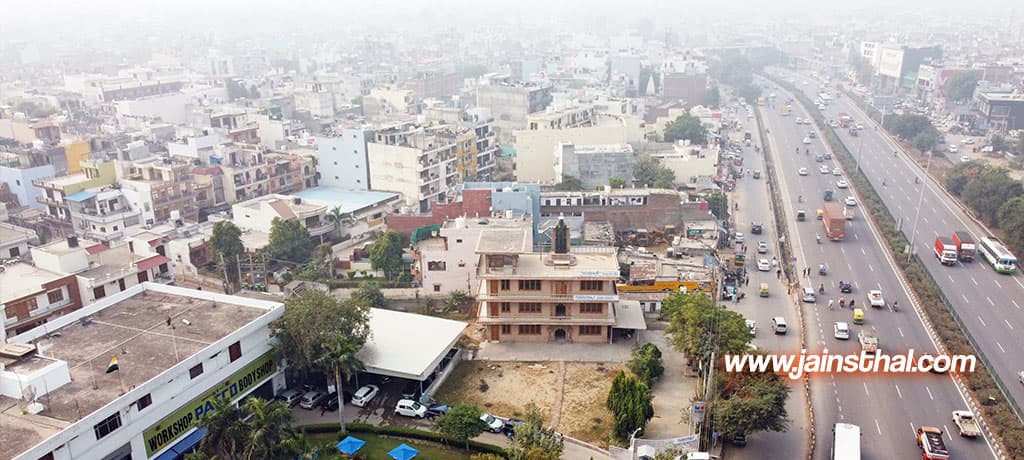
Parsvasthali Digambar Jain Mandir in Gurugram is located on the Delhi-Jaipur Highway Road. This grand three-story temple attracts pilgrims' attention from afar. The main attraction of the temple is the massive Khadgasana statue of Shri 1008 Parshvanath Bhagwan, which is established on the topmost floor. This statue is visible from the Delhi-Jaipur Highway as you pass by. Upon entering the temple, you will see an altar (Vedi) with statues of Shri Shantinath Bhagwan, Shri Arhanath Bhagwan, Shri Kunthunath Bhagwan, Shri Parsvanath Bhagwan, and the Chaubisi Pratima, all made of Ashtadhatu (eight metals). On reaching the upper floor of the temple, you will find the Vedi of Panchbalayati Bhagwan, where the Moolnayak Pratima (main deity’s idol) of Shri 1008 Parsvanath Bhagwan is enshrined. And at the topmost floor of the temple, the Moolnayak idol of Shri 1008 Parshvanath Bhagwan in the Kayotsarga posture is enshrined.
Dharamshala
Currently, Gurugram has become an industrial hub equipped with all kinds of amenities, where people from various communities live together. There are approximately seven to eight hundred Jain families in Gurugram. Several Jain temples have been established in the area, each managed by its own committee. Just three kilometres away from this temple, in Gurugram's Sadar Bazaar, is the Shri 1008 Parsvanath Digambar Jain Mandir. Next to the Sadar Bazaar’s temple, is a Jain Dharamshala (pilgrim rest house). If any pilgrim comes from a distant place to visit the temple, accommodation is provided at the Dharmshala. Jain Muni Maharaj ji also frequently visits the area. Arrangements for Maharaj ji’s stay are made in the Tyagi Bhavan, which is part of the Dharmshala. Additionally, a Bhagwan Parshvanath Charitable Medicare Center operates next to the Dharmshala, offering services such as homoeopathy, physiotherapy, an eye centre, dentistry, paediatric specialisations, and dermatology.
History
Gurugram, also known as Gurgaon, is a city in the state of Haryana, situated adjacent to the national capital region of Delhi. It lies southwest of Delhi and is a part of the National Capital Region (NCR). Gurugram is a commercial, economic, and modern city experiencing rapid development. It is the second most populous city in Haryana after Faridabad. Gurugram is one of the major satellite cities of Delhi and a part of the National Capital Region. After Chandigarh and Mumbai, it is the third highest per capita income city in India.
“According to legend, during the Mahabharat era, King Yudhishthira gave this village to his guru Dronacharya, hence it was called Gurugram, which later evolved into Gurgaon.”
Gurugram is located 32 kilometres away from the national capital New Delhi. It is also a significant technological hub, hosting major IT companies, banks, financial institutions, etc. Gurugram's modern urban development includes modern residential projects, shopping malls, restaurants, hotels, as well as emerging as a social and cultural hub. Gurugram boasts several historical sites such as Sheshadri, Sultanpur Lake, and Sultanpur National Park, which encapsulate natural beauty. The city has good educational institutions, hospitals, and other amenities for the community. Additionally, Gurugram houses various religious sites. Furthermore, Gurugram's cultural life is rich and diverse, with numerous art galleries, dance, and music centres presenting the city's cultural heritage. Overall, Gurugram is a multifaceted city in terms of commerce, technology, culture, and society, situated in the Indian state of Haryana.
Know something about this temple?
Spot something missing or incorrect, or have extra info to share? Let us know and our team will take a look.