
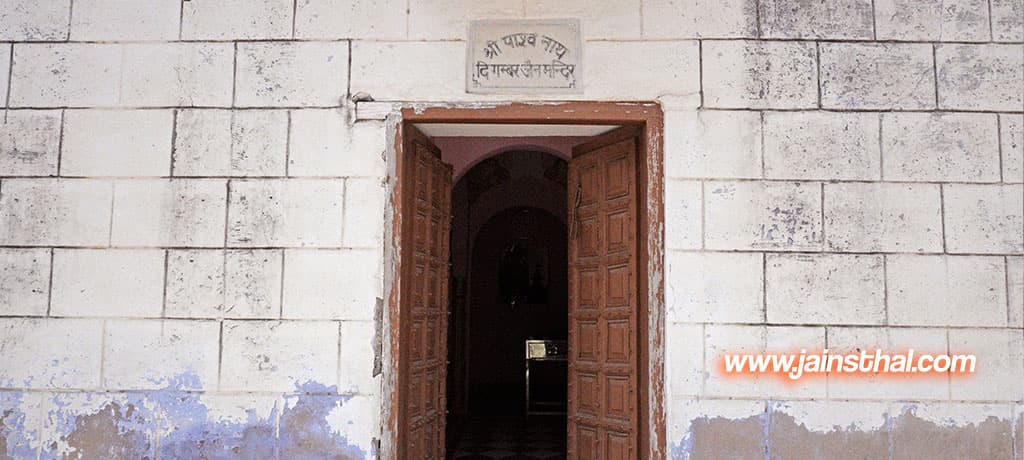
Parshvanath Jain Mandir Mandikhera
During the night, a member of the Jain community had a dream in which it was revealed that the idol was not willing to be moved from its place and should therefore remain where it was.
The members working for the smooth functioning of the temple are as follows -
Introduction
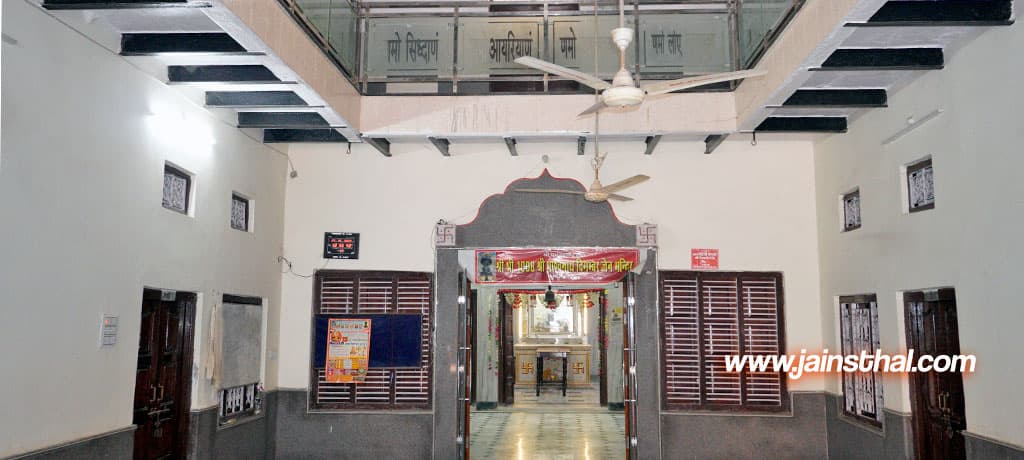
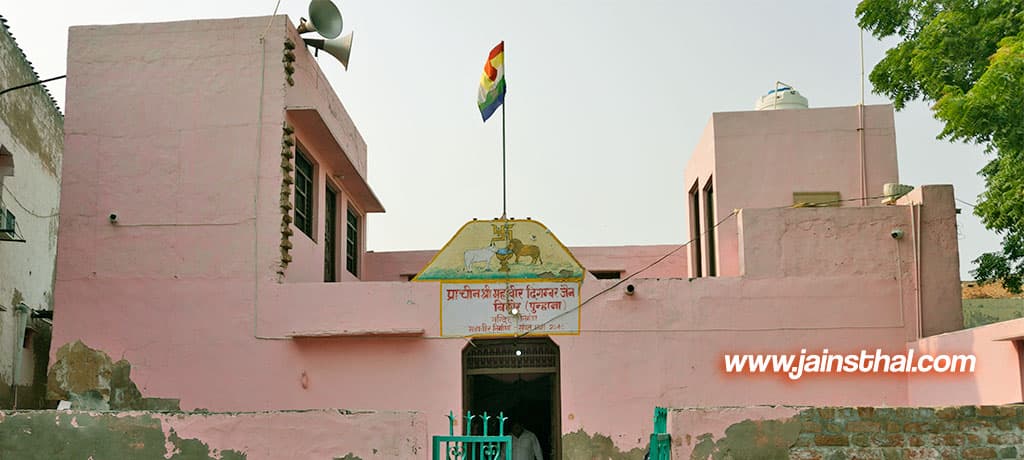
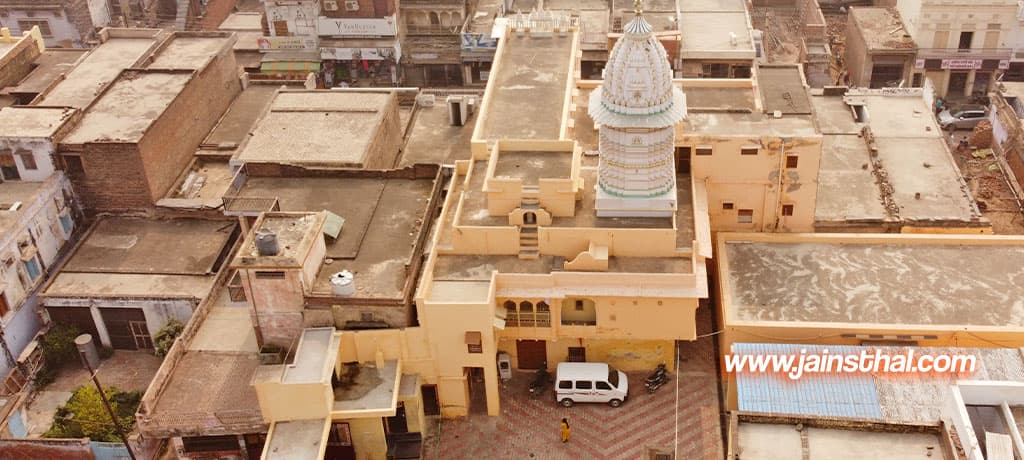
Shri 1008 Parshvanath Digambar Jain Mandir is located in Mandikhera village, 25 kilometers from Nuh district in the state of Haryana. The temple was constructed 300 years ago by the Jain community. The temple originally has one altar (Vedi), with the Moolnayak Pratima (main deity’s idol) being a small idol of Shri 1008 Parshvanath Bhagwan. At one time, there were a total of seven idols in the Vedi. However, during the partition of India in 1947, due to the violent atmosphere, all the idols were gradually moved to Nagina, a region three kilometers away from the Temple, where the idols are still enshrined today. But when the Jain Community attempted to move the idol of Shri Parshvanath Bhagwan, it did not budge from its place, so the idol was left in the temple where it remains to this day.
According to the Samvat of the idol, it is believed to be over 900 years old. There was once a significant Jain community in this area, but over time, many families gradually moved to the cities. Currently, there is only one Digambar Jain family left in Mandikhera, and this family is responsible for the temple's upkeep. The families that left have not returned, and those who know about the Atishay (numinous presence) of the idol are the only ones who visit the temple sometimes. There used to be a Bhaunyara (secret chamber) in the temple, but it has been closed over time. It is said that a serpent deity was often seen emerging from the Bhaunyara and never caused harm to anyone.
Atishay Katha
In the 1947 partition of India and Pakistan, violence was widespread across the country. At that time, there were a total of seven idols of Jin Bhagwan enshrined in the Vedi of the temple. For safety reasons, the Jain community decided to relocate the idols to another location. One by one, all the idols were moved to Nagina, a place three kilometers away from the Temple, where they remain to this day. However, when they attempted to lift the idol of Shri Parshvanath Bhagwan, it could not be moved. Despite the idol being only four to five inches in size, no one was able to lift it. Evening approached as they continued their efforts, but the idol did not budge from its place. The Jain community then decided to resume the task the next day.
“During the night, a member of the Jain community had a dream in which it was revealed that the idol was not willing to be moved from its place and should therefore remain where it was.”
The next morning, the community attempted once again to lift the idol, but they were still unable to do so. The person then shared his dream with the Jain community. Ultimately, the Jain community decided to leave the idol in its place and, for safety reasons, closed the doors of the temple. The idol was left enshrined in the temple, and the doors were locked. The temple remained closed for a long time, though occasionally, members of the Jain families in the area would open the doors to clean the temple. As time passed and things returned to normal, the temple doors were once again opened for devotees.
Dharamshala
Even though there is a single Jain family in Mandikhera today, the temple is still being regularly maintained. The idols in the temple are worshiped regularly. The temple complex also includes two large halls and rooms. If any pilgrim comes from another area to worship at the temple, arrangements for their stay are also available.
History
Nuh is one of the 22 districts in the Indian state of Haryana. Nuh is also commonly known as Satyamev Puram and Mewat. The name Satyamev Puram was given by Gandhi Ji, and it is called Mewat due to the large number of Mewati people. The district covers an area of 1,860 square kilometers (720 square miles) and has a population of 1.09 million. It is bordered by Gurgaon district to the north, Rewari district to the west, and Faridabad and Palwal districts to the east. The area is predominantly Muslim and forms the modern southern part of Haryana and northeastern Rajasthan. The main economic activity in the district is agriculture-based.
Know something about this temple?
Spot something missing or incorrect, or have extra info to share? Let us know and our team will take a look.
The members working for the smooth functioning of the temple are as follows -