
Palwal Prachin Jain Mandir
It is said that the temple has been subject to theft three times, yet each time the stolen pratima were returned to the temple.
For the efficient management of the temple, a temple committee has been formed. The active members of the committee are as follows :
Introduction
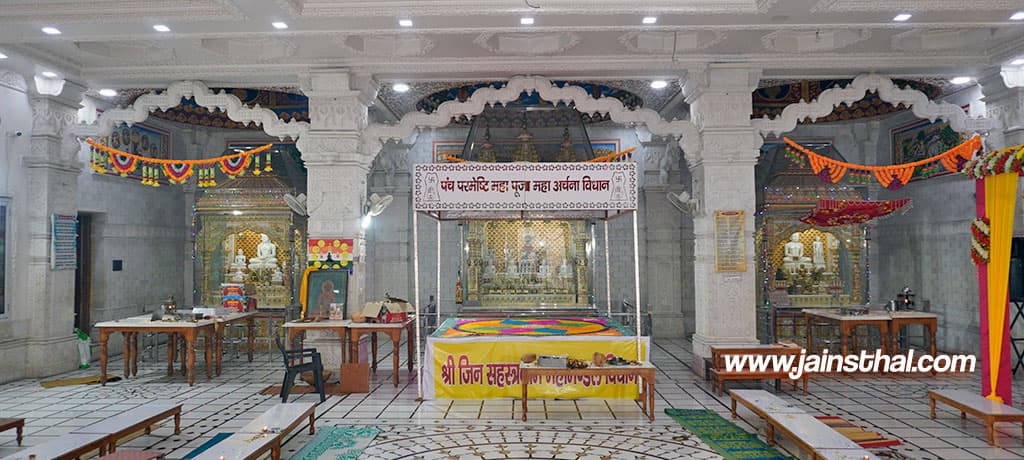
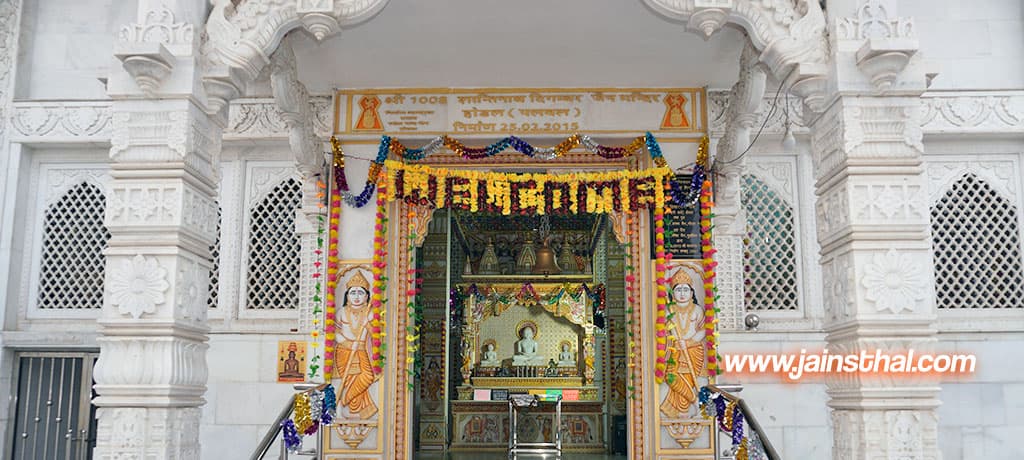
Shri 1008 Parshvanath Digambar Jain Prachin Mandir is located at a distance of 50 meters from the Darbar Kuan Chowk in Palwal, around 70 kilometers away from Delhi. The construction of the temple was initiated by the Jain community 300 years ago. Over time, changes occurred in the condition of the temple, prompting the present Jain community committee to undertake its renovation and purification activities. The reconstruction work of the temple commenced in 2015 under the inspiration of Acharya Shri 108 Vasunandi Ji Maharaj and was completed in 2019. The Panchkalyanak (consecration ceremony) took place in 2019 in the presence of Acharya Shri 108 Guptisagar Ji Maharaj.
The temple is constructed using white marble stone, which adds to its beauty and charm. It boasts a Shikhar (spire) on top that stands 71 feet tall, making it the tallest Shikhar among all the temples in the region. The interior of the temple's Shikhar is adorned with gold and artistic paintings, enhancing its aesthetic appeal. The temple’s Garbh Grah (sanctum sanctorum) is situated within a spacious hall, where the walls are adorned with colorful paintings depicting Jain narratives through the medium of vibrant artistry.
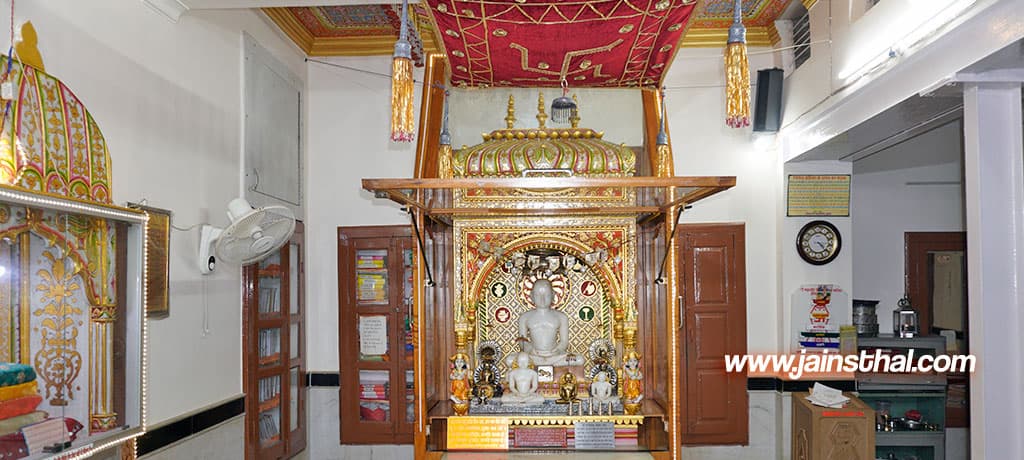
The main hall of the temple is constructed with three Vedi (altars). The Mool (main) Vedi of the temple belongs to Shri 1008 Parshvanath Bhagwan, featuring a idol that is more than 300 years old, making it exceedingly ancient and precious. Alongside the Moolnayak Pratima (main deity’s idol), there are idols of Shri 1008 Adinath Bhagwan, Shri 1008 Pushpadant Bhagwan, Shri 1008 Shantinath Bhagwan, Shri 1008 Mahavir Bhagwan, and Shri Siddh Bhagwan, as well as other Jain idols.
In the right Vedi within the hall, the Moolnayak pratima is of Shri 1008 Shantinath Bhagwan. In this Vedi, there are also idols of Shri Parshvanath Bhagwan, Shri Mahavir Bhagwan, Shri Adinath Bhagwan, Shri Bharat and Bahubali Bhagwan, Shri Chandraprabhu Bhagwan, and others. In the left Vedi within the hall, the Moolnayak pratima is that of Shri 1008 Anantnath Bhagwan. In this Vedi, there are idols of other Tirthankaras made of stone and Ashtadhatu (eight metals). From time to time, Jain Saints visit the temple, and the first Chaturmas of Shri 108 Anandsagar Ji Maharaj was held in the temple in 1995. Following him, Acharya Shri 108 Gyanbhushan Ji Maharaj, Shri 108 Kulbhushan Ji Maharaj, Shri 108 Vishuddh Sagar Ji Maharaj, and Shri 108 Vijnan Sagar Ji Maharaj have also visited the temple. There is a special faith and devotion among people towards the temple. Devotees visit the temple daily to perform rituals, prayers, and Abhishek (auspicious bath of the idol) to attain spiritual benefits.
Atishay Katha
The ancient and highly revered Shri 1008 Parshvanath Digambar Jain Mandir located in Palwal is known for its remarkable history.
“It is said that the temple has been subject to theft three times, yet each time the stolen pratima were returned to the temple.”
In June 2006, thieves entered the temple premises with the intention of stealing. They took four Chhatar (brolly), four Singhasan (thrones), and three Jain Tirthankar idols, thinking them as made up of gold. When the Jain community became aware of the incident, they immediately reported it to the police. Despite prolonged efforts, the police were unable to track down the thieves. After nearly a year had passed, the thieves themselves placed the idols back at the temple entrance. The rediscovery of the idols, filled the Jain community with a renewed sense of energy and enthusiasm. To prevent such incidents in the future, the idols were securely placed within the temple premises, and security measures were enhanced. It is remarkable that despite being stolen three times, the idols were returned to the temple on each occasion, highlighting the reverence and significance attached to the temple and its artifacts within the community.
Dharamshala
The total population of Palwal is approximately 1.5 million, with around 200 to 250 families belonging to the Digambar Jain community. Despite such a small population, the Jain community makes significant contributions to the area. They actively participate in various programs and events organized by the community. The committee ensures cleanliness and purity for the devotees visiting the temple. Arrangements for bathing facilities are made available for the devotees. From time to time, Jain Saints visit the temple and arrangements are made for their accommodation in Tyagi Bhavan. Additionally, a dining hall, known as Bhojan Shala, has been constructed to provide Satvik meals for the Saints.
History
Palwal is a major district in the state of Haryana (India). It is located approximately 90 kilometers away from the capital city, Delhi. Palwal shares its borders with Gurugram and Faridabad, two other districts of Haryana. In terms of history, Palwal has contributed significantly to India independence. It is known for being the site of Mahatma Gandhi's first political arrest during the freedom struggle. Netaji Subhas Chandra Bose laid the foundation for a room with his own hands in Palwal.
During the fight for independence, the freedom fighters of Palwal played a crucial role alongside Mahatma Gandhi and Netaji Subhas Chandra Bose. Lala Govind Ram Bedhak, Deepchand Satyagrahi, Lallu Bhai Patel, Laxminarayan, Lachman Das Bansal, Yogendra Pal Bharti, and Lala Bhanuamal Mangla were among those who actively supported the struggle for independence. They also accompanied Gandhi Ji on several jail journeys. Palwal is renowned for its historical sites such as Baba Udas Temple, Panchvati Temple, Pandav Vana, Raja Nahar Singh Fort, and the Dargah of Saiyad Sharif, which attract visitors from all around for sightseeing.
Know something about this temple?
Spot something missing or incorrect, or have extra info to share? Let us know and our team will take a look.
For the efficient management of the temple, a temple committee has been formed. The active members of the committee are as follows :