
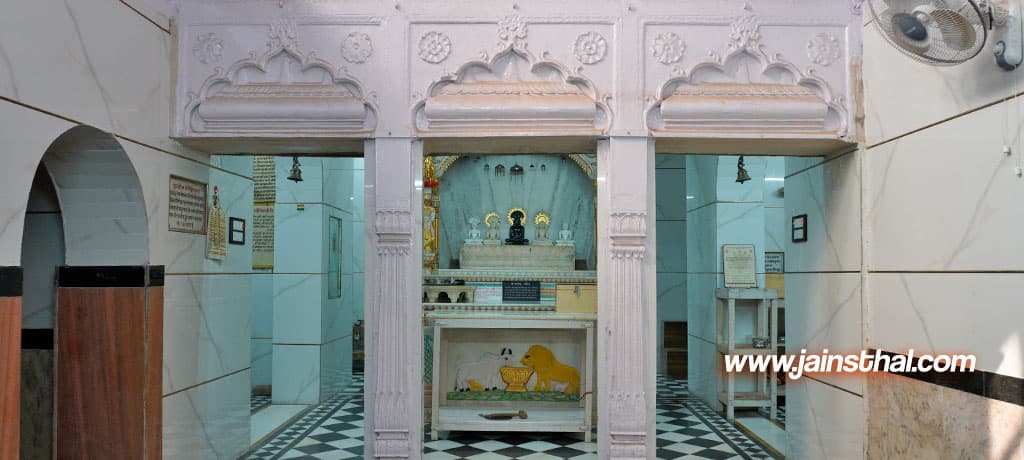
Nuh Digambar Jain Mandir
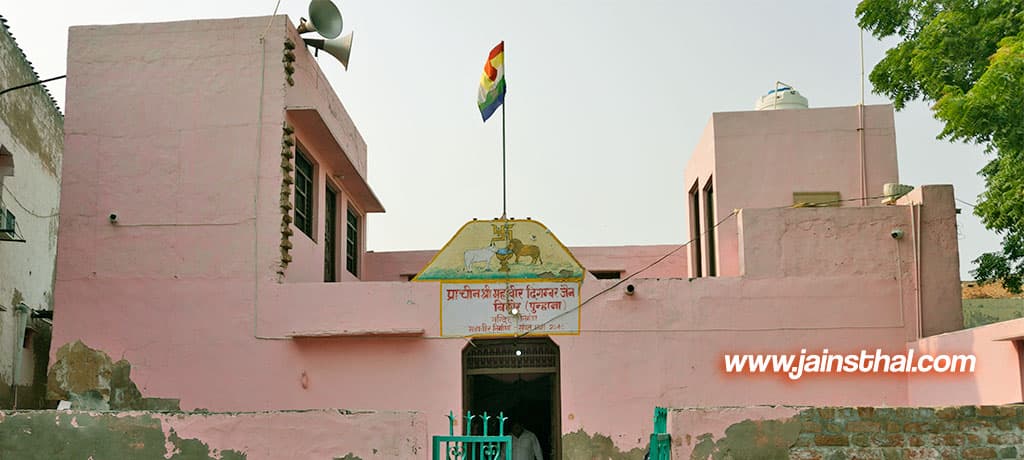
Nuh Digambar Jain Mandir holds great Atishay (numinous presence) of Shri Parshvanath Bhagwan within the local Jain community.
Despite the small number of Jain families in the area, the temple is run smoothly by the Jain community. The members working in the operation of the temple are as follows :
Introduction
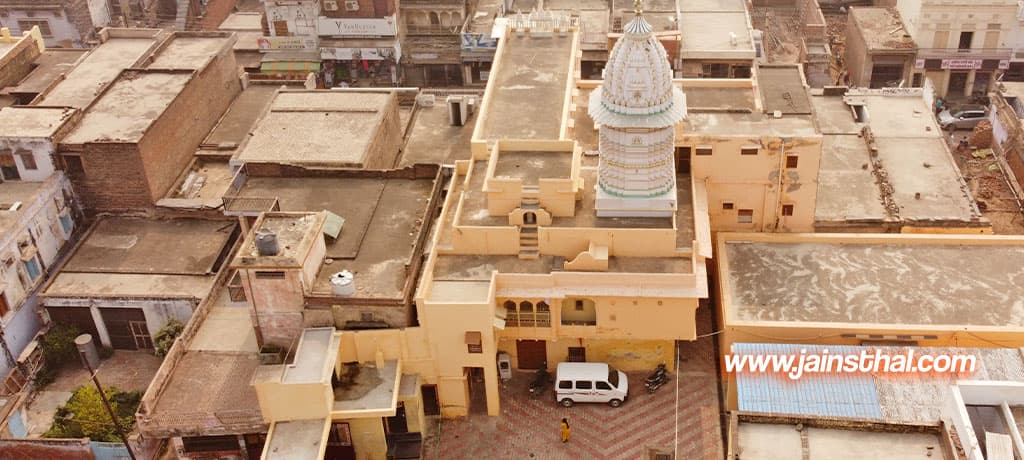
The temple was built by the Jain community around 150 years ago. Initially, there was a Vedi (altar) in the temple where the Moolnayak (main idol) was a black stone idol of Shri Parshvanath Bhagwan ji seated along with a white stone idol of Shri Munisuvratnath Bhagwan and another white stone idol of Shri Parshvanath Bhagwan. A well was constructed within the temple premises for the Abhishek (auspicious bath of the idol) of the idols. However, due to the brackish water in the well, all the idols deteriorated over time. In 2001, during the auspicious occasion of Panchkalyanak (consecration ceremony) at the Pahadi village of Rajasthan, few more idols were enshrined and established in the temple's Garbh Grah (sanctum sanctorum) by the local Jain community. Among these were the white stone idols of Shri Chandraprabhu Bhagwan and Shri Parshvanath Bhagwan that were brought and enshrined in the Mool (main) Vedi of the temple, where they remain to this day.
Prior to 2001, there was only one Vedi with idols in the temple, while two more Vedi spaces also existed within the Garbh Grah. Therefore, new idols brought by the Jain community were placed in these Vedi. This occasion was celebrated with great pomp and enthusiasm by the people, including a shower of flowers from a helicopter. Currently, in the second Vedi of the temple, the Mool idol is of Shri Shantinath Bhagwan seated along with the idol of Shri Adinath Bhagwan. Besides these idols, there is an ancient idol of black stone enshrined, and which is believed to date back to the period of construction of the temple, around 150 years ago or even prior. Due to the erasure of the symbol on this ancient idol, it is difficult to ascertain which deity it represents. In the third Vedi, the main idol is of Shri Mahavir Bhagwan.
Atishay Katha
“Nuh Digambar Jain Mandir holds great Atishay (numinous presence) of Shri Parshvanath Bhagwan within the local Jain community.”
One such incident came to our notice. As every day for performing the Abhishek of the Pratima Ji there was a small well within the temple premises. One day, a child accidentally fell into that well. All the people standing around became frightened and began attempting to rescue the child. The mouth of the well was very narrow, making it very difficult to pull the child out. After strenuous efforts, the child was rescued from the well. Due to the blessings of Bhagwan, the child remained unharmed. All the people present there considered this incident to be an Atishay of Shri Parshvanath Bhagwan, as even after falling into the well, the child emerged safely.
Dharamshala
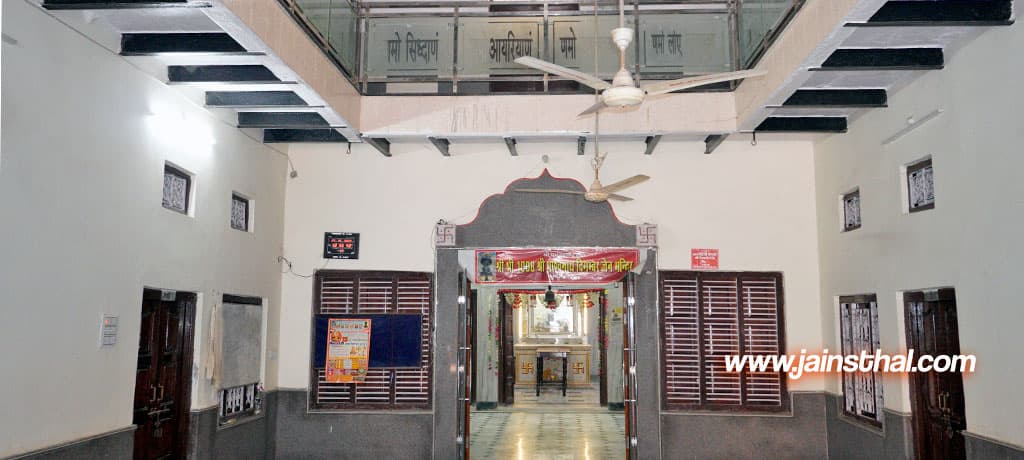
There are only ten to fifteen Jain families in the area. The responsibility of managing the temple is undertaken by these Jain families. Daily rituals such as Puja Prakshal (worship) and Abhishek are meticulously carried out in the temple. Special attention is paid to ensuring cleanliness for the Jain devotees who visit the temple daily. Whenever Jain Saints arrive in the area, arrangements are made for their stay in the temple. The Jain community is currently constructing a dharamshala too.
History
Nuh district is one of the 22 districts in the Indian state of Haryana. It is also known by the names Satyamev Puram and Mewat. The name Satyamev Puram was given by Mahatma Gandhi, and due to the larger population of Meos Muslims, it is also called Mewat. It covers an area of 1,860 square kilometers (720 square miles) with a population of 1.09 million. It is bordered by Gurugram district to the north, Rewari district to the west, and Faridabad and Palwal districts to the east. It is a region with a significant Muslim population. It constitutes the modern southern part of Haryana and northeastern Rajasthan. The primary economic activities in the district are agriculture-based.
Know something about this temple?
Spot something missing or incorrect, or have extra info to share? Let us know and our team will take a look.
Despite the small number of Jain families in the area, the temple is run smoothly by the Jain community. The members working in the operation of the temple are as follows :