
Nagina Digambar Jain Mandir
A committee has been formed for the smooth functioning of the temple. The members working in the committee are as follows :
Introduction
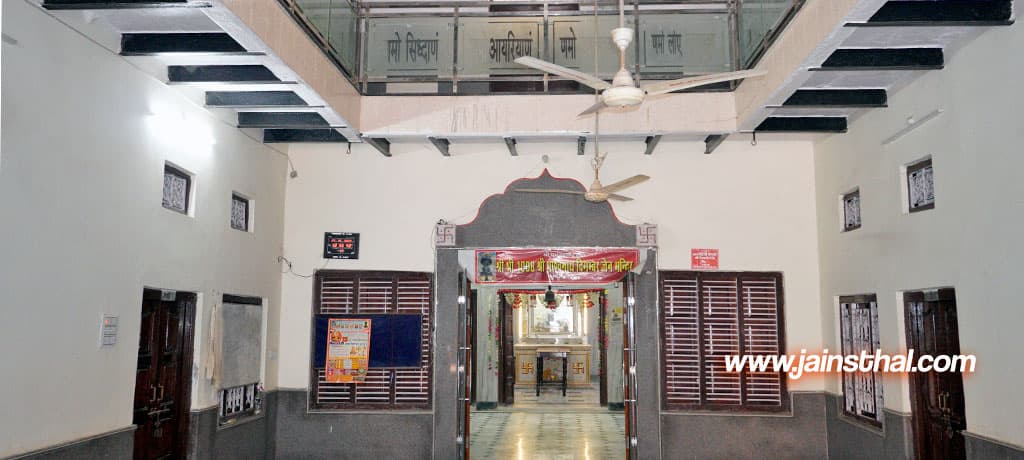
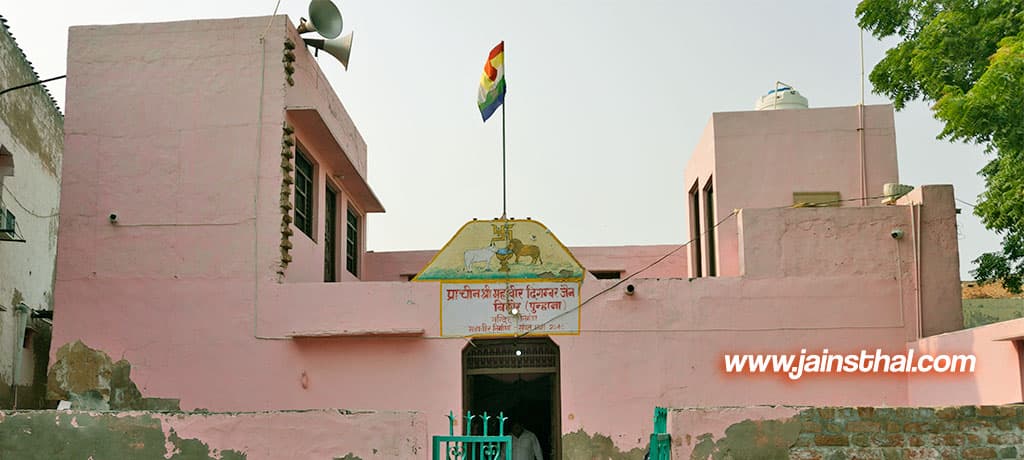
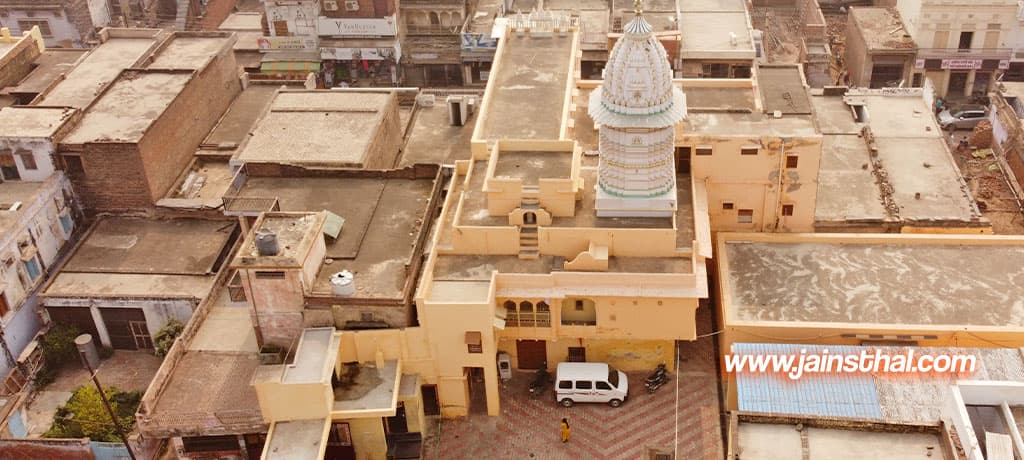
Shri 1008 Digambar Jain Mandir situated in Nagina of Nuh district, is located 38 kilometers away from Tijara Ji Atishya Kshetra. The construction of the temple was undertaken by the Jain community about 250 years ago. During those times to protect the temple from invaders, another temple was constructed underneath in the Garbh Grah (sanctum sanctorum). Later, with time the underneath Garbh Grah was closed and the idols were placed in the upper temple. Though renovation work has been done from time to time in the temple. Jain Saints also regularly keep visiting the area.
In 2011, when Acharya Shri 108 Gyanbhushan Ji Maharaj visited the area, upon seeing the direction of the temple's Vedi, he remarked that it could collapse anytime. Therefore, he suggested to the Jain community to construct a new Vedi. Inspired by Acharya Shri Ji's guidance and with the efforts of the Jain community, the Vedi were renovated, and the idols were reinstalled in the Mool (main) Vedi of the temple. The Moolnayak pratima in the Mool Vedi of the temple is of Shri 1008 Chandraprabhu Bhagwan Ji. Alongside the main idol, pratima of Shri 1008 Pushpadanta Bhagwan, Shri 1008 Shitalnath Bhagwan, Shri 1008 Parshvanath Bhagwan, and Shri 1008 Mahavir Bhagwan, along with other idols, were brought from Mandi Kheda and were established in the Vedi.
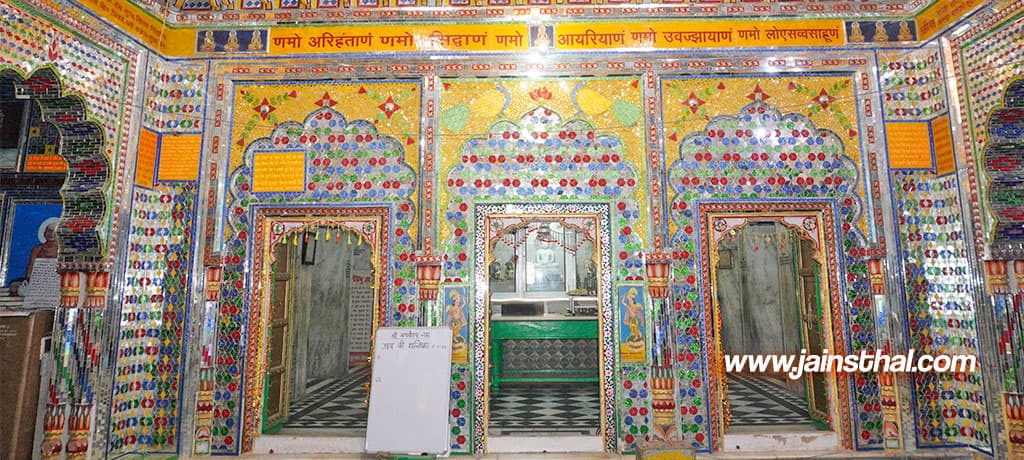
In the second Vedi, the Moolnayak pratima is of Shri 1008 Ajitnath Bhagwan Ji which is seated along with the pratima of Shri 1008 Adinath Bhagwan, Shri 1008 Pushpadanta Bhagwan's Ashtadhatu pratima and a stone pratima, and two Siddha Bhagwan pratima. The third Vedi of the temple houses the idols of Shri 1008 Neminath Bhagwan, along with Jain Tirthankars Shri 1008 Adinath Bhagwan, Shri 1008 Mahavir Bhagwan, Shri Parshvanath Chaubisi, and Shri 1008 Shitalnath Bhagwan. The entire Garbh Grah of the temple has intricate glasswork, which appears very attractive. Daily worship and Abhishek (auspicious bath of the idol) rituals are performed in the temple. The idol of Shri 1008 Chandraprabhu Bhagwan holds great significance in the region, attracting devotees from distant areas for its darshan.
Atishay Katha
According to the local community, the idols of the temple hold great significance in the region. Every sincere wish made at the temple is fulfilled. People visit the temple from time to time for darshan. The local Jain community recounts that there was a Vyas who used to work in the temple. He would receive a silver coin daily from the Vedi. However, one day he disclosed this to someone, and from the very next day, he stopped receiving the coin.
Dharamshala
In Nagina, the Jain community consists of 45 to 50 families. The Jain community collectively participates in the activities of the temple. The temple meticulously maintains the cleanliness for the worshippers. Arrangements are made by the Jain community for the accommodation of ascetics in the Tyagi Bhavan built by them. If any pilgrim comes from distant areas to visit the temple, the Jain community tries to provide free accommodation and pure vegetarian meals.
History
Nuh district is one of the 22 districts in the Indian state of Haryana. Nuh is also known by the names Satyamev Puram and Mewat. The name Satyamev Puram was given by Mahatma Gandhi, and it is also called Mewat due to the large number of Meos inhabitants. It covers an area of 1,860 square kilometers (720 square miles) and has a population of 1.09 million. It is bordered by Gurugram district to the north, Rewari district to the west, and Faridabad and Palwal districts to the east. This area is predominantly inhabited by Muslims. It is the modern southern part of Haryana and northeastern Rajasthan. The primary economic activities in the district are agriculture-based.
Know something about this temple?
Spot something missing or incorrect, or have extra info to share? Let us know and our team will take a look.
A committee has been formed for the smooth functioning of the temple. The members working in the committee are as follows :