
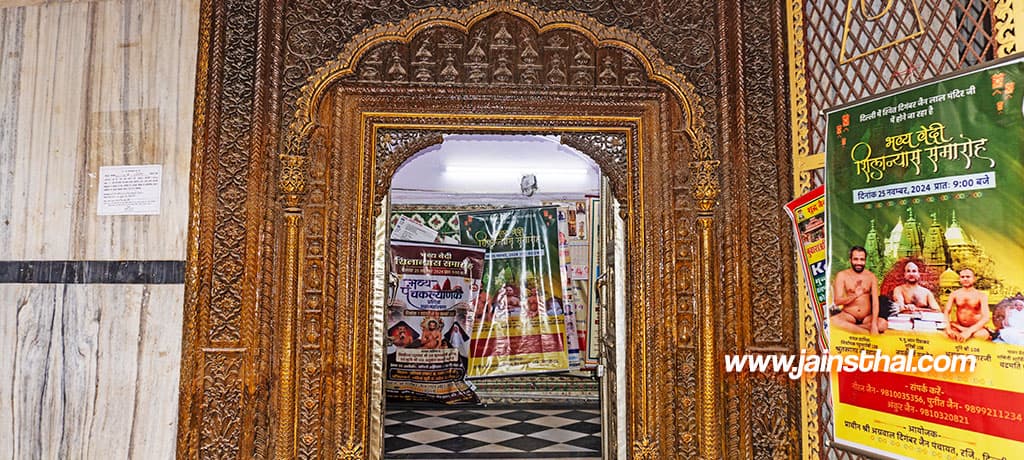
Shri Digambar Jain Bada Mandir, Kucha Seth
The temple's significance deepened during the India-Pakistan partition in 1947 when a miraculous incident occurred.
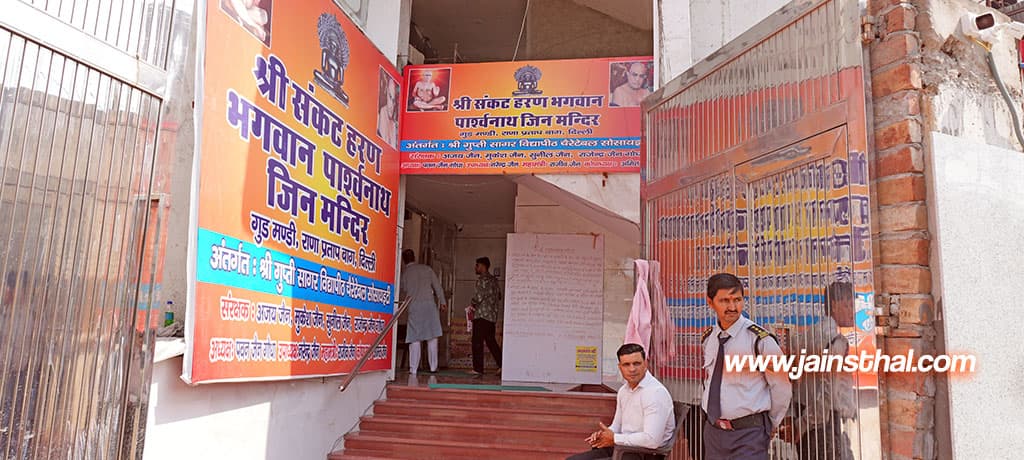
Although the temple is maintained by the Panchayat committee of Chandni Chowk, a dedicated manager has been appointed to ensure its smooth operation and daily activities.
Introduction
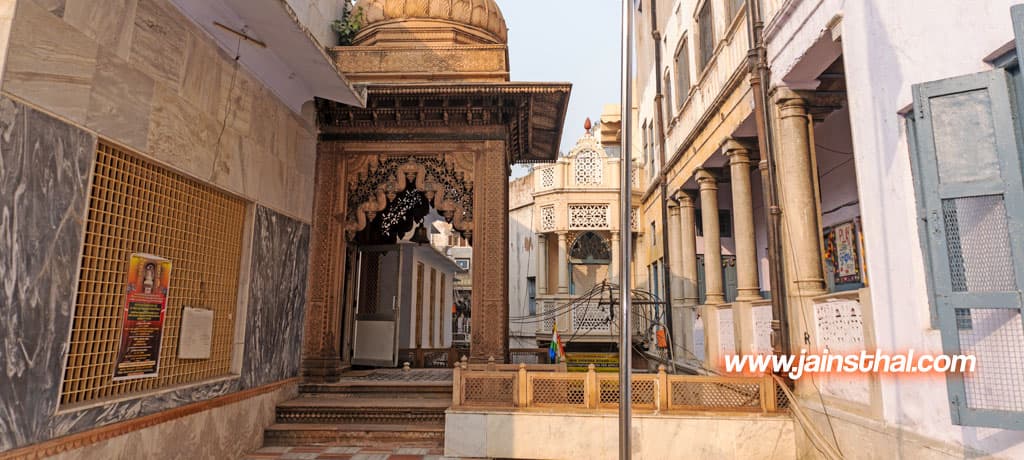
Located in the heart of Delhi, Shri Digambar Jain Bada Mandir, Kucha Seth, is a symbol of historical and religious unity. This temple is a significant center of faith for the Jain community, and its grandeur makes it uniquely distinguished. Nearly 200 years old, the temple was built in 1824, and the same year, the Panch Kalyanak ceremony was performed, elevating its status as a sacred and revered site. Situated in Chandni Chowk, the temple is easily accessible through landmarks such as Dariba Kalan and Haveli, making it convenient for devotees to visit.
The temple's divine splendor is reflected in its magnificent walls, showcasing exquisite craftsmanship and deep religious devotion. The main Vedi (altar) houses the ancient and remarkable idol of Shri 1008 Adinath Bhagwan, crafted from the sacred Kasauti stone. The idol's celestial radiance captivates devotees, and just a glimpse of it brings spiritual tranquility and divine energy. Circumambulating Shri Adinath Bhagwan’s Vedi allows devotees to experience profound inner peace, balance, and positive energy.
This temple is adorned with eight distinct Vedis (altars), including the Vedi of Shri Parshvanath Bhagwan, Shri Shantinath Bhagwan, and multiple Vedis dedicated to Shri Adinath Bhagwan. Additionally, it features the Choubisi Vedhi and the Hreem Vedi, enshrining idols embedded with precious gems. The darshan of these divine Pratimas provides devotees with a blissful and serene experience. The temple is not only a center for spiritual growth but also an ideal place for meditation and ascetic practices.
Atishay Katha
“The temple's significance deepened during the India-Pakistan partition in 1947 when a miraculous incident occurred.”
During a time of extreme unrest and chaos in the country, an astonishing event inside the temple left everyone in awe. The main idol of Shri Adinath Bhagwan trembled continuously for nearly six hours. This spectacle was not only miraculous but also instilled profound emotions and faith among the devotees. They regarded it as proof of the divine presence and extraordinary power of Bhagwan. This miraculous event reinforced the unwavering faith of every devotee present in the temple that day. Many perceived it as a sign of Adinath Bhagwan’s presence and divine protection. Since then, the temple has been recognized not merely as a place of worship but as a hub of divine energy and spiritual consciousness.
Jain Samaj
Daily rituals such as pooja, abhishek, and shantidhara are performed at the temple with great devotion. Around 60 to 70 devotees visit daily to perform abhishek, further enhancing the temple's sacredness and spiritual aura. For the past 70 years, grand religious ceremonies like Shanti Vidhan and Shri Siddhachakra Vidhan have been conducted with immense devotion and enthusiasm, granting participants boundless spiritual merit.
Approximately 200 Jain families reside in the vicinity of the temple, maintaining deep-rooted faith and devotion towards it. The community actively participates in the temple’s religious and social events, fostering unity, cooperation, and religious harmony. During the festival of Mahavir Jayanti, a cold water distribution service (Shital Jal Pyaau) is arranged, providing relief to travelers and pedestrians from the scorching heat. This service not only offers physical comfort but also embodies the values of compassion and benevolence. Additionally, on Akshaya Tritiya, sugarcane juice is distributed, which is particularly beneficial for devotees and ascetics.
Special arrangements are available at the temple for the accommodation of saints and ascetics. Though space is limited, the temple serves as an exceptional center for the service of ascetics and the promotion of religious teachings. Under the guidance of Jain monks, the atmosphere remains filled with divine energy and spiritual vibrancy. This temple is not merely a place of worship but an integral part of the community’s cultural and spiritual identity.
History
The National Capital Territory of Delhi is the capital of India and a union territory. As the nation’s capital, Delhi houses the headquarters of the three branches of the central government—executive, legislative, and judiciary. Situated along the banks of the Yamuna River, Delhi boasts a glorious and historically significant past, with special mention in ancient scriptures.
Delhi is one of India’s oldest cities, tracing its origins to the Indus Valley Civilization. Excavations in Haryana and surrounding regions provide evidence of its ancient history. With the rise of the Delhi Sultanate, the city became a prominent political, cultural, and commercial center. Numerous ancient and medieval structures and ruins can still be seen across the city.
The earliest reference to Delhi is found in the Mahabharata, where it is identified as the ancient city of Indraprastha, the capital of the Pandavas. Besides being India’s capital, Delhi is a major tourist destination. The city features numerous government establishments, including Rashtrapati Bhavan, Parliament House, and the Central Secretariat, showcasing modern architectural marvels. As an ancient city, Delhi also holds immense historical importance, with world-famous sites such as Purana Qila, Safdarjung’s Tomb, Jantar Mantar, Qutub Minar, and the Iron Pillar attracting visitors from around the globe.
Delhi is home to renowned religious sites of various faiths, including Birla Mandir, Katyayani Shakti Peeth, Lal Jain Mandir, Bangla Sahib Gurudwara, the Bahai Lotus Temple, Akshardham Temple, and Jama Masjid. The iconic India Gate, a memorial for fallen soldiers, is located on Rajpath in Delhi. Today, the city has become a central hub for trade and commerce in India.
Know something about this temple?
Spot something missing or incorrect, or have extra info to share? Let us know and our team will take a look.
Although the temple is maintained by the Panchayat committee of Chandni Chowk, a dedicated manager has been appointed to ensure its smooth operation and daily activities.