Khandelwal Bada Jain Mandir Jahazpur
With an area of approximately 10,455 square kilometers, Bhilwara is believed to have been inhabited by the Bhil community, leading to its name.
Introduction
In the town of Jahazpur, located approximately four kilometers from the Swastidham Jain Mandir complex in the Bhilwara district of Rajasthan, stands the of Shri 1008 Neminath Khandelwal Digambar Jain Bada Mandir. Situated amidst the bustling streets of the main bazar of Jahazpur, reaching the temple requires navigating through the streets of the market. Because the path is crowded, one can park their vehicle near the Jahazpur bus stand chowk and walk about 500 meters to reach the temple.
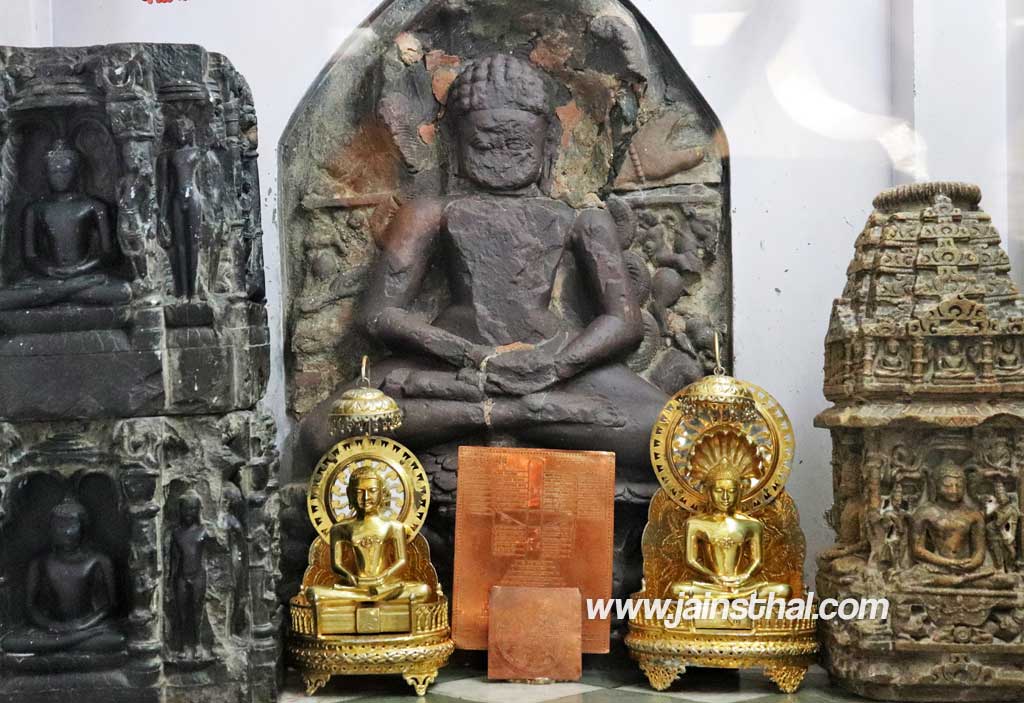
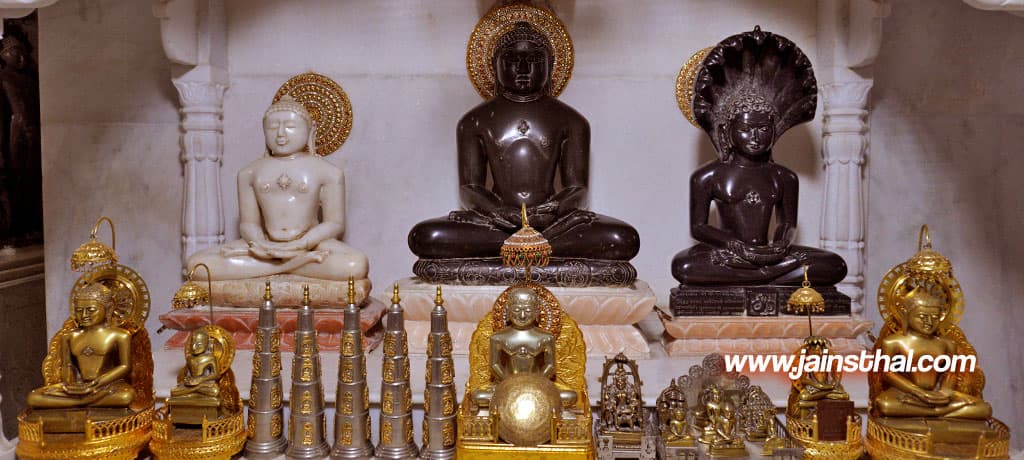
The temple houses the ancient idol of Shri 1008 Neminath Bhagwan as Moolnayak Pratima (main deity’s idol), which dates back to the Chaturth kaal. Apart from the Moolnayak Pratima, the temple is adorned with more than 100 Chaturth kaal idols. Additionally, the temple also features the idol of Shri 1008 Shantinath Bhagwan, adorned with a swastika on the chest and an Om symbol on the navel.
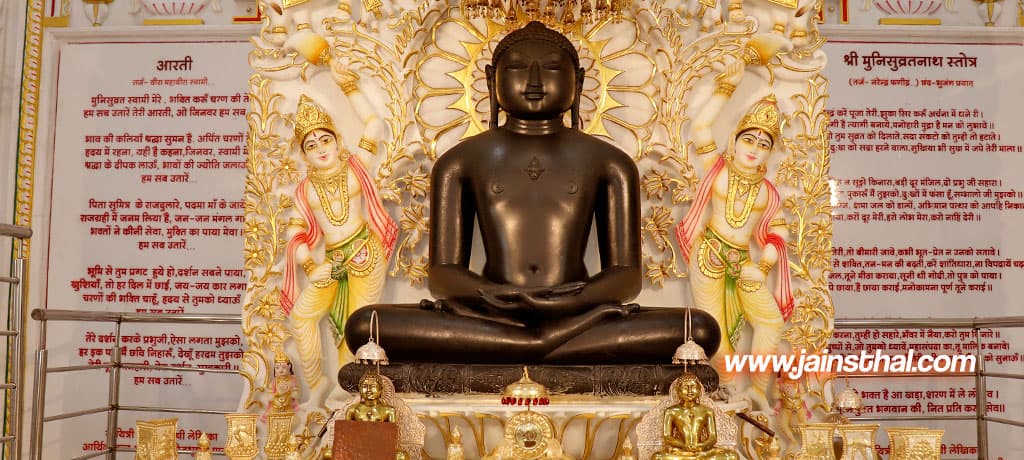
Jahazpur is a locality with a population of approximately 20,000, comprising 40 to 45 Jain families. The region is home to an ancient fort built by Emperor Ashoka's grandson, Samprati, and later reconstructed by Maharana Kumbha. Within the fort of Kumbhalgarh, there are more than 350 temples, out of which 300 are dedicated to Jainism. Since 1984, the manifestation of idols in this sacred area has commenced, and it is not uncommon to witness idols manifesting in the homes of Hindus or Muslims. The idol of Shri 1008 Munisuvratnath Bhagwan Ji, situated at Swasti Dham Atishay, at a distance of four kilometers, was also found from here.
Dharamshala
Located approximately 4 kilometers away from the temple is the Swastidham Atishay Kshetra, where a Jain dharamshala with 108 rooms is situated. The dharamshala offers rooms with deluxe and super deluxe facilities. There is also provision for hot water through geysers for bathing. A large kitchen is built within the dharamshala, known as Tushti Pushti Bhojanshala. Satvik meals are prepared in the dining hall. The dharamshala provides amenities similar to those of a large hotel. Additionally, parking facilities are available for incoming pilgrims.
History
Bhilwara, also known as the Textile City, is famous for its textile industry throughout India. It is situated in the eastern part of Rajasthan, with districts like Bundi and Tonk to the east, Chittorgarh to the west, Ajmer to the north, and Rajsamand to the south.
“With an area of approximately 10,455 square kilometers, Bhilwara is believed to have been inhabited by the Bhil community, leading to its name.”
According to one belief, the establishment of the Mewar textile industry, which used to mint coins called Bhiladi, led to the name Bhilwara. Bhilwara is also known for its rivers, waterfalls, and dams. The confluence of the rivers Banas, Bedach, and Menali can be seen in Bhilwara. The construction of the fort in Jahazpur was originally undertaken by the great Mauryan emperor Ashoka's grandson, Samprati, who was a follower of the Jain religion.
Know something about this temple?
Spot something missing or incorrect, or have extra info to share? Let us know and our team will take a look.