
Kaval Digambar Jain Mandir
The idols enshrined in the temple were discovered during the excavation of a canal in the nearby Khai Kheda area.
Despite the small number of Jain community in Kaval, the temple is run smoothly by the temple committee. The members of the temple committee are as follows :
Introduction
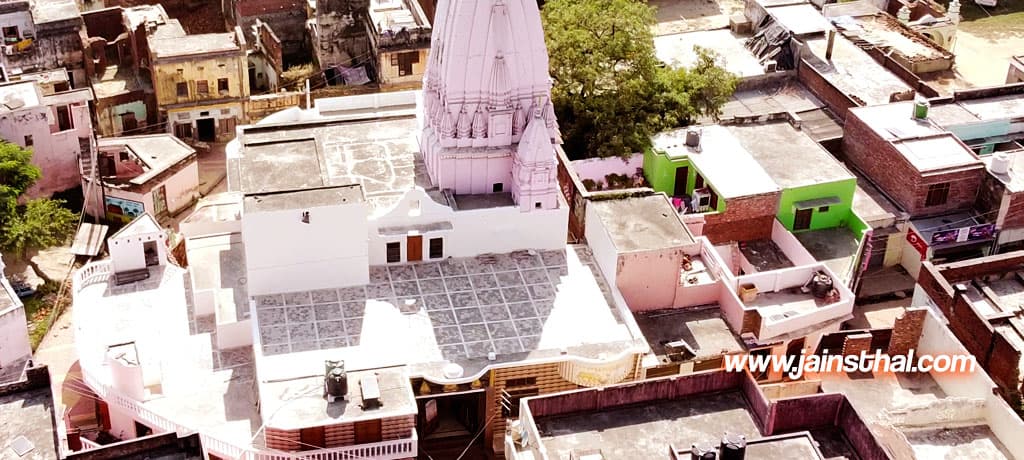
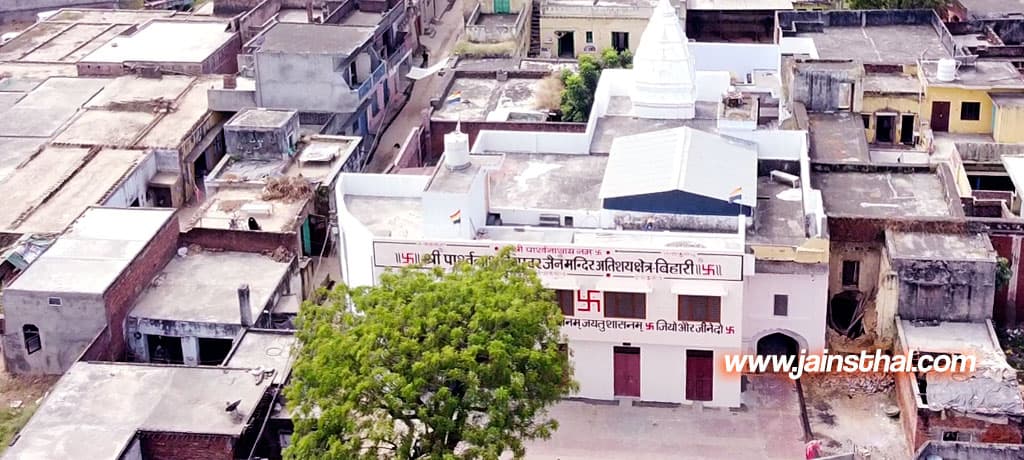
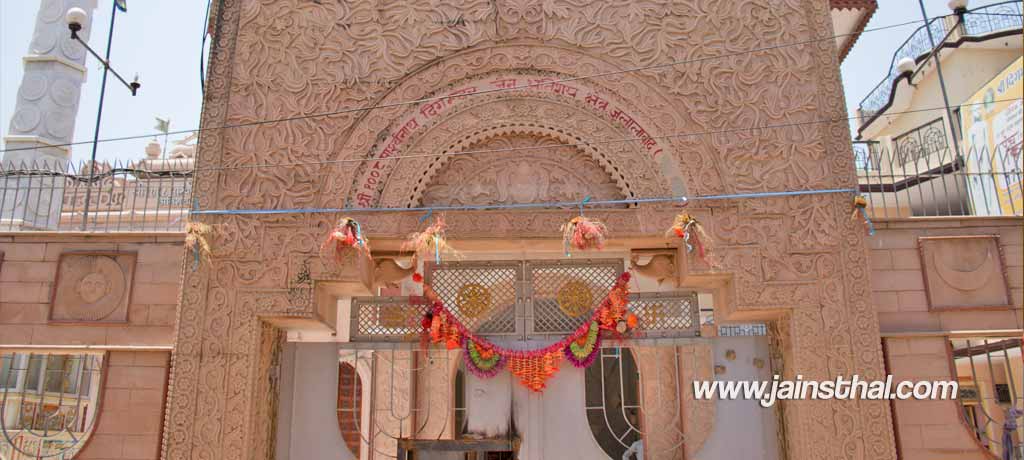
Shri 1008 Parshvanath Digambar Jain Panchayati Mandir is located between Muzaffarnagar and Meerapur, from a distance of 450 meters from National Highway 709 to Kaval village. As we approach the temple from the outer road, we are greeted by the sight of its massive pink Shikhar (spire), which guides us towards the temple. The path to the temple is well marked by this Shikhar. Upon entering through the main door of the temple, we first encounter a large hall used for Jain procession ceremonies, religious events, and discourses by Jain Saints. Following the hall, we enter the Garbh Grah (sanctum sanctorum) of the temple. Inside the temple, there are altars dedicated to three Jain Tirthankar and one to Mata Padmavati. The Garbh Grah of the temple is adorned with intricate glasswork, and the Jain artwork adorning its walls enhances its magnificence even further.
“The idols enshrined in the temple were discovered during the excavation of a canal in the nearby Khai Kheda area.”
The Mool Vedi (main altar) belongs to Shri 1008 Parshvanath Bhagwan, where extremely rare idols are enshrined. In most Jain temples, there is a hooded serpent over the head of the idol of Shri Parshvanath Bhagwan, but the original idol in Kaval does not have a serpent hood, and the idol is made of white marble, which could possibly be from the Gupta period. Along with the Moolnayak Pratima (main deity’s idol), there are other ancient idols of Shri 1008 Shantinath Bhagwan, Shri 1008 Kunthunath Bhagwan and Shri 1008 Adinath Bhagwan. On the right and left sides of the Mool Vedi, there are two other Vedi where ancient idols are enshrined also. In front of the Vedi of Jineshwar Bhagwan, there is also a Vedi of Mata Padmavati Ji, which is extremely ancient. The temple priests explain that extraordinary occurrences are witnessed here from time to time. There was a time when a person used to come to the temple every day and perform Puja-Prakshal (worship). He was very poor. He would come to the temple every day and pray for improvement in his financial condition. After some time, due to the blessings of the temple, an improvement happened in his financial situation. The temple priests themselves, while talking about themselves, say that they named their son Paras after Shri 1008 Parshvanath Bhagwan.
Jain Samaj
Once a region inhabited by 40 to 50 Jain families, today it is reduced to only 3 to 4 families. Despite the decline in population, the temple witnesses the annual procession festival where 200 to 300 Jain devotees gather. The temple also has accommodation for Jain Saints by providing a four-room residence for them, where they receive Ahar and other necessary amenities tailored to their needs.
History
The district of Muzaffarnagar covers an area of 4049 square kilometers. It is located approximately 116 kilometers away from Delhi in the western part of Uttar Pradesh, bordering Haryana and Rajasthan. Situated on National Highway 58, it lies between the Ganga and Yamuna rivers in the doab region, with Meerut to the south and Saharanpur districts to the north. This region is significant for various religious sites. There are several pilgrimage places in this area, such as Shukratal, Tanda, Amba Bara, Bhithauda, and Mandera Ghat, among others. The festivals and fairs of this district are also significant cultural events. Muzaffarnagar boasts many ancient palaces and royal residences that hold historical importance and are popular among tourists. Hindi and Urdu are the primary languages spoken here, but other languages like Haryanvi and Rajasthani are also prevalent.
Muzaffarnagar is an important industrial city known for its sugar, steel, paper, and handloom industries, particularly famous for women's suits made from handwoven fabric. Along with sugarcane, grains are the major agricultural products of this region, with over 70% of the population engaged in agriculture. The sugar market of Muzaffarnagar is the largest in Asia. Muzaffarnagar is also the leading producer of sugarcane in India, with the highest number of sugar mills located here.
Know something about this temple?
Spot something missing or incorrect, or have extra info to share? Let us know and our team will take a look.
Despite the small number of Jain community in Kaval, the temple is run smoothly by the temple committee. The members of the temple committee are as follows :