
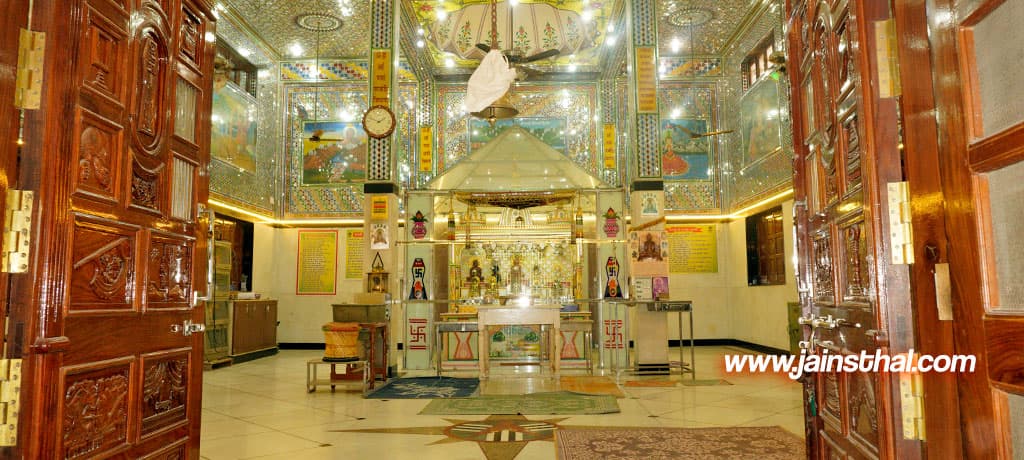
Jhajjar Digambar Jain Mandir
Theft of idols - Before the temple was constructed, when it used to be a Chaityalaya, the Garbh Grah (sanctum sanctorum) housed the idols of Shri Padmaprabhu Bhagwan, Shri Mahavir Bhagwan, and Shri Parshvanath Bhagwan.
Despite the low number of Jain families in Jhajjar, the management of the temple operates smoothly. The active members involved in the temple management are as follows :
Introduction
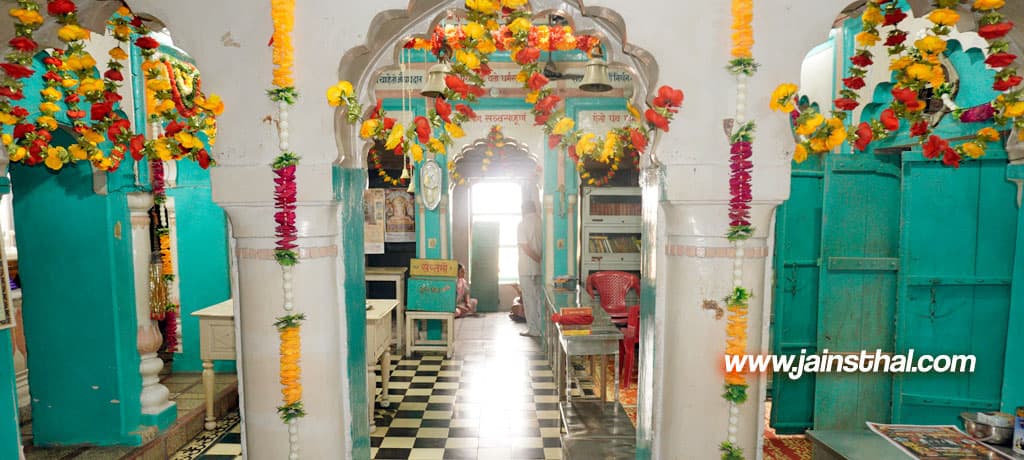
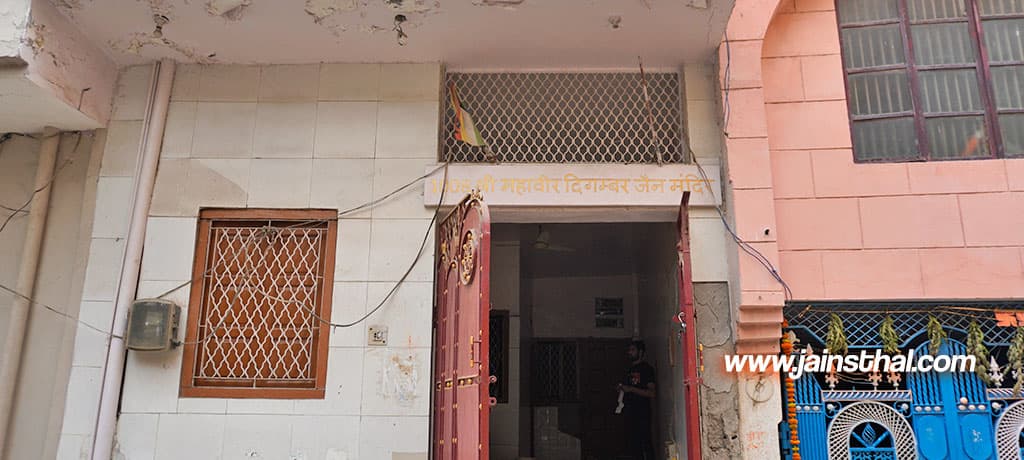
Shri 1008 Padmaprabhu Digambar Jain Mandir is located on Chopta Bazaar Road in Jhajjar. The construction of the temple was completed around a thousand years ago. Over time, the construction work of the temple has been carried out by the local Jain community. Initially, the temple site was a Chaityalaya, which was later transformed into a temple due to the increasing number of devotees. In 2014, a Laghu-Panchkalyanak (consecration ceremony) was held in the temple under the guidance of Brahmachari Shri Rajesh Jain. The temple underwent further renovations in 2014, including the construction of a Shikhar (spire).
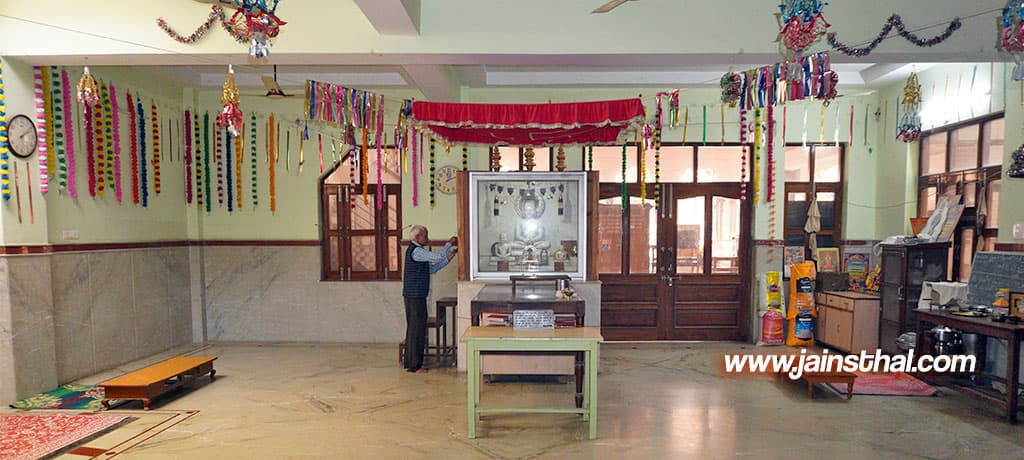
The Vedi (altar) of the temple houses the Prachin Pratima (ancient idol) of Shri 1008 Padmaprabhu Bhagwan as Moolnayak Pratima (main deity’s idol). Along with the Moolnayak Pratima, there are three idols of Shri Parshvanath Bhagwan ji, as well as Chaubisi Pratima and other Jain idols. The idol of Shri Parshvanath Bhagwan, situated to the right of the Moolnayak Pratima in the Vedi, appears extremely ancient. It is said that this idol was discovered by a farmer during excavation in Jharli village. This idol of Shri Parshvanath Bhagwan is exceptionally magnificent. In the year 1978, Jain Muni Shri 108 Kirti Sagar Ji Maharaj performed Chaturmas in the temple. Later, in 1997, Acharya Shri 108 Saurabh Sagar Ji Maharaj also graced the temple premises. Devotees come to the temple daily to perform rituals, worship, and offer Abhishek (auspicious bath of the idol).
Atishay Katha
“Theft of idols - Before the temple was constructed, when it used to be a Chaityalaya, the Garbh Grah (sanctum sanctorum) housed the idols of Shri Padmaprabhu Bhagwan, Shri Mahavir Bhagwan, and Shri Parshvanath Bhagwan.”
In 1983, all the idols were stolen from the temple. When the thief began to sell the idols, a person from the Jain community recognized them as they were the same idols stolen from the temple. That person informed the Jain community about the idols and later the police department returned the idols to the Jain community from the thieves. In 2010, the idols were stolen from the temple again. The thieves entered the Garbh Grah from the temple roof. The Vedi had glass panels all around for maintaining the sanctity of the idols. When the thief was breaking the glass panels, his hand got cut. The entire Vedi was covered in blood, yet the thief managed to escape with the idols. Upon hearing the unfortunate news of idol theft, news spread throughout the Jain community. Since the Vedi was left empty, therefore the Jain community brought other idols and established them in the Vedi. After several days, the police informed the Jain community that the thieves themselves had handed over the idols to the police, citing that they didn't get the appropriate value for the idols. The police returned the idols to the Jain community, who then reinstated them in the Vedi. It's remarkable that even after the idols were stolen twice, they have returned to the temple. Roof Collapse - In 2014, during the Panchkalyanak (consecration ceremony) of the Chaityalaya, the worship rituals were underway. Due to the old age of the Chaityalaya's roof, there was a risk of it collapsing. Approximately seven to eight people were sitting under the roof. After the worship concluded, as everyone started moving forward, the entire roof collapsed, but fortunately, everyone escaped safely.
Dharamshala
In Jhajjar, there used to be more than forty Jain families at one time, but today the Jain community consists of only ten to twelve families. Despite the low population, the Jain community actively participates in every activity in the area. Shri Jain Mahavir High School, established by the Jain community, provides education not only to Jain children but also to non-Jain children. Arrangements are made for pilgrims coming to visit Jain temples from distant areas to stay. Additionally, arrangements for meals are also provided upon prior contact. When Jain Saints visit the area, arrangements for their stay are made in the Tyagi Bhawan.
History
Jhajjar is located in the state of Haryana. It is situated approximately 65 kilometers away from Delhi. The town was founded by a farmer named Chhajju. Initially, it was called "Chhajju Nagar," but later it came to be known as Jhajjar. Despite the popularity of the local pottery (Surahi), the town was named Jhajjar. The two main cities in Jhajjar are Bahadurgarh and Beri. Bahadurgarh was established by the Rathi and Jat. Formerly, Bahadurgarh was known as Sarrafabad.
Know something about this temple?
Spot something missing or incorrect, or have extra info to share? Let us know and our team will take a look.
Despite the low number of Jain families in Jhajjar, the management of the temple operates smoothly. The active members involved in the temple management are as follows :