
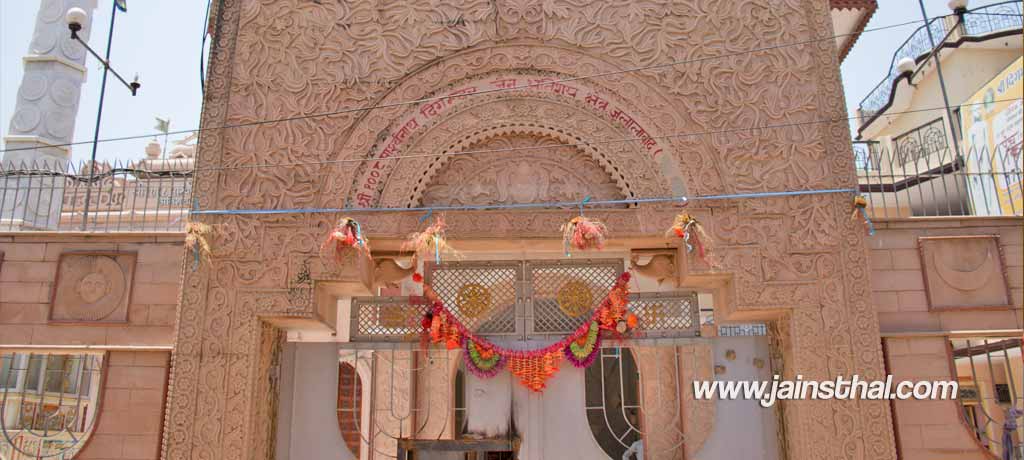
Jalalabad Atishay Kshetra Uttar Pradesh
Among the Atishay Kshetra in North India, Jalalabad is unique as it houses this tiny stone idol of Bhagwan Parshvanath.
Despite the small number of Jain families in Jalalabad, the operation of the temple runs smoothly. The work in the temple is done systematically by the committee. The members of the temple committee are as follows : -
Introduction
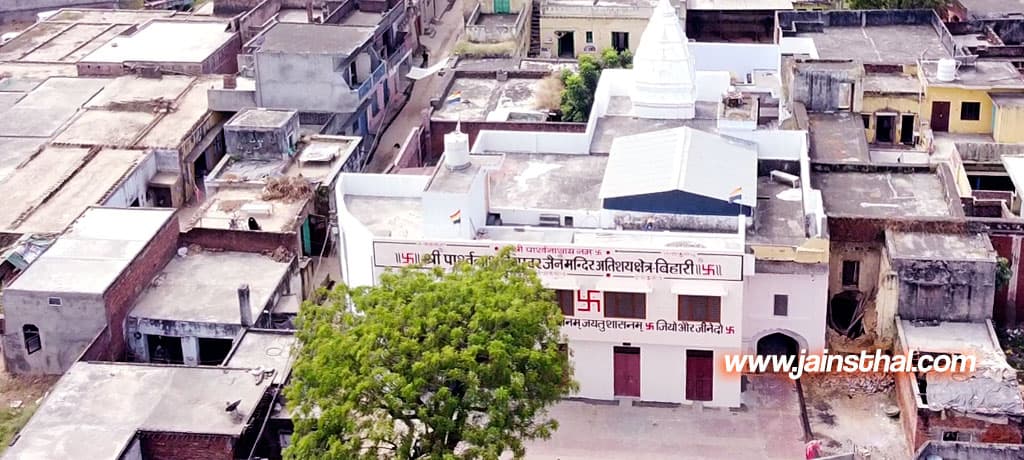
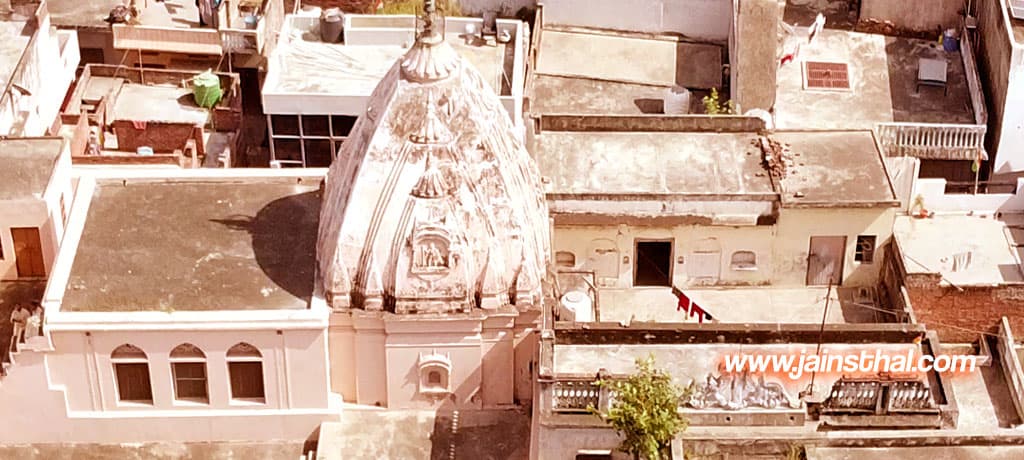
Shri 1008 Parshvanath Digambar Jain Atishya Kshetra, Jalalabad is located in Muzaffarnagar district of Uttar Pradesh. Earlier there was a room only where the idols were kept. In 1970, Jain Saint Acharya Shri Vidhanand Ji Maharaj visited the temple. He declared the area ancient and extraordinary. He advised placing the idols in a suitable place. Inspired by the Maharaj, the Jain community also felt the need for the restoration of the ancient temple. The temple renovation began in 1979. On June 26, 1980, after the Panchkalyanak (consecration ceremony), the idol was reinstated in the Prachin Vedi (ancient altar). In 1983, inspired by Acharya Shanti Sagar Ji Maharaj, a new Shikhar (spire) was constructed during the annual Rath Yatra thus converting the room into a temple. Currently in the temple, the essence of Jainism is depicted on the walls through stone carvings by skilled artisans from Rajasthan. Every year, during the Bhagwan Parshvanath Moksha Kalyanak Mahotsav on the fourth of August, Jain devotees from all over North India come to the Atishay Kshetra. The first grand annual Rath Yatra festival was organized in 1962 and 1963 by the Jain community in Rampur Maniharan and surrounding areas. After the year 1980, the annual Rath Yatra festival saw a grand surge in devotees participation. Currently, hundreds of devotees from various corners of North India come daily to seek the blessings of Bhagwan Parshvanath. During the Moksha Kalyanak Mahotsav organized on August 4, 2022, thousands of Jain devotees visited the temple and attained spiritual fulfillment. The tiny stone idol of Bhagwan Parshvanath, less than five inches in height, is extremely ancient and is located in the Shri 1008 Parshvanath Digambar Jain Atishay Kshetra.
“Among the Atishay Kshetra in North India, Jalalabad is unique as it houses this tiny stone idol of Bhagwan Parshvanath.”
The divine darshan of Bhagwan Parshvanath's extraordinary idol fulfills the devotees' desires. The ancient idols are kept in the Mool (main) Vedi of the temple. It is widely believed that once, the Jain community from Rampur Maniharan and nearby areas took the idols to Rampur Maniharan. However, they received a warning in their dreams to return the idols to Jalalabad. Therefore, the entire Jain community from Rampur Maniharan formally apologized by reinstalling the ancient idols in the temple. Due to the extraordinary stone idol of Bhagwan Parshvanath, this area has become a renowned pilgrimage destination in Jalalabad.
Dharamshala
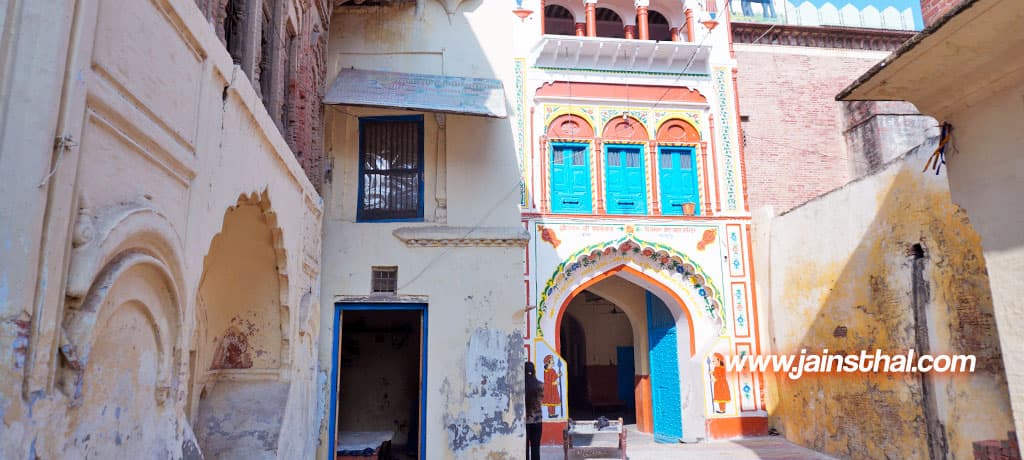
Despite being only one Jain family in the Shri 1008 Parshvanath Digambar Atishay Kshetra in Jalalabad, hundreds of devotees still visit the temple. Outside the temple premises, a Tyagi Bhavan has been constructed for the accommodation needs of Jain Saints on their visit. For the convenience of pilgrims visiting the temple, two Dharamsala have been constructed, one being an ancient dharamshala and the other offering modern amenities with air-conditioned and non-air-conditioned rooms. Additionally, a homeopathic hospital has also been built in the Atishay Kshetra.
History
Jalalabad is a town in the Muzaffarnagar district of western Uttar Pradesh. Its history is rich with various legends and historical events. Its history dates back to ancient times. The region of Ganga-Yamuna Doab has been blessed by nature with immense natural and divine riches, resulting in glorious tales intertwined with its history. Whether viewed from a religious perspective or as historical anecdotes, Jalalabad encapsulates values such as sacrifice, devotion, struggle, and compassion hidden within the soil of the Doab.
Jalalabad was once ruled by Rajput kings and was known as "Manhar Khera" during that time. Mughal emperor Shahabuddin Shah Jahan sent the Afghan Pathan Mir Hazar Khan to fight against the Rajputs. In the battle, Mir Hazar Khan and his fourteen thousand soldiers were defeated. Subsequently, Mir Hazar Khan's son Jalal Khan avenged his father's death and subjugated Manhar Khera, renaming it Jalalabad in 1444. Thus, the city has been known by this name for the past 340 years.
Even during the Mahabharata era, this city existed. The ashram of Rishi Dhaumya was located here. During the Mahabharata period, Dharmaraj Yudhishthira spent his exile along with his brothers and wife Draupadi here. Under the instructions of Rishi Dhaumya, a Yagya was performed for 105 days, and wells were dug. The remnants of many wells can still be found, with exceptionally pure water. Bhagwan Sri Krishna also sanctified this land with his divine presence along with the Pandavas. At that time, there was no river here. When Queen Draupadi expressed her desire to bathe in flowing water, Arjuna shot an arrow into the ground, causing a stream to gush forth. Later, it took the form of a river. Draupadi is also known as Krishna, and this river is called the Krishna River. This river originates near Rampur Maniharan in an open field.
The Jubba Sharif (garment) of the Islamic Prophet Hazrat Mohabbat Sahab remained in Jalalabad for nearly two hundred years. According to Muslim history, Hazrat Muhammad Sahab gifted this garment to Khwaja Uwais Karni as a token of love. Khwaja Sahab placed the garment in the wardrobe of Hazrat Ali. After the death of Hazrat Ali, Muhammad Ghaznavi took the garment to Khurasan. Sultan Ibrahim Lodhi brought it to India. Then, Emperor Jalaluddin Akbar kept it in Panipat. The Jubba Sharif was in possession of Sayyid. Due to unknown reasons and circumstances, it came to Jalalabad. Nawab Dilawar Khan assigned a suitable estate for the care of Jubba Sharif, naming it after the servants of Jubba Sharif. At that time, it was kept for public viewing on the first day of every Rabiu al-awwal month. In 1957, after the theft of Jubba Sharif and its transportation to Pakistan, Jalalabad lost this invaluable heritage of the world.
Know something about this temple?
Spot something missing or incorrect, or have extra info to share? Let us know and our team will take a look.
Despite the small number of Jain families in Jalalabad, the operation of the temple runs smoothly. The work in the temple is done systematically by the committee. The members of the temple committee are as follows : -