
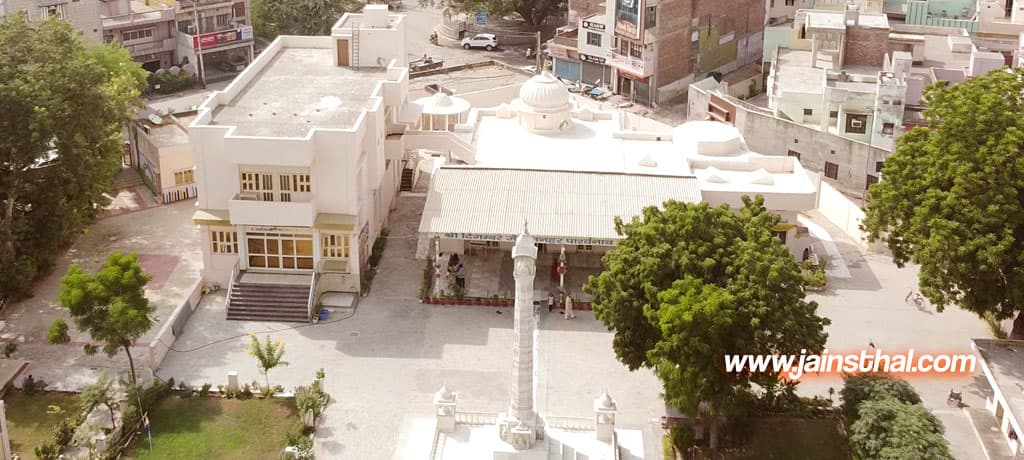
Hisar Manhar Prashvanatha Atishay Kshetra
Following this auspicious event, the city of Hisar in Haryana has now become an Atishay Kshetra.
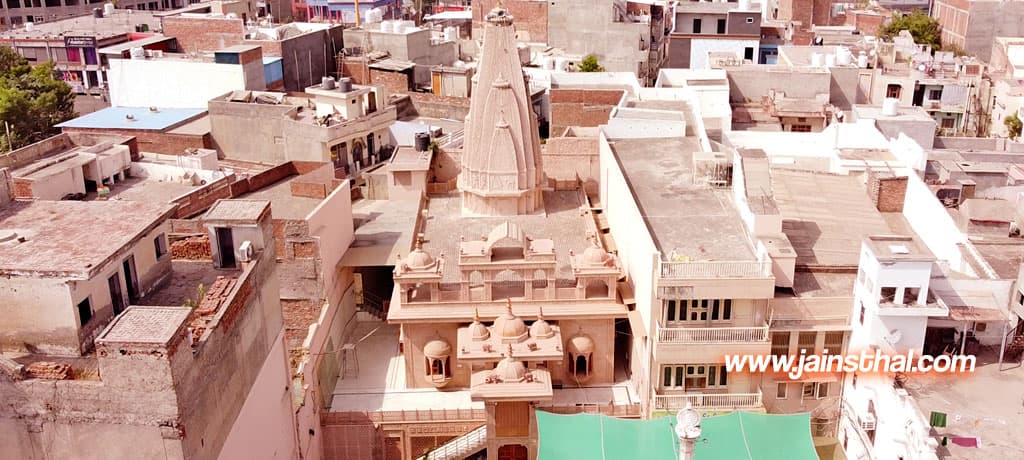
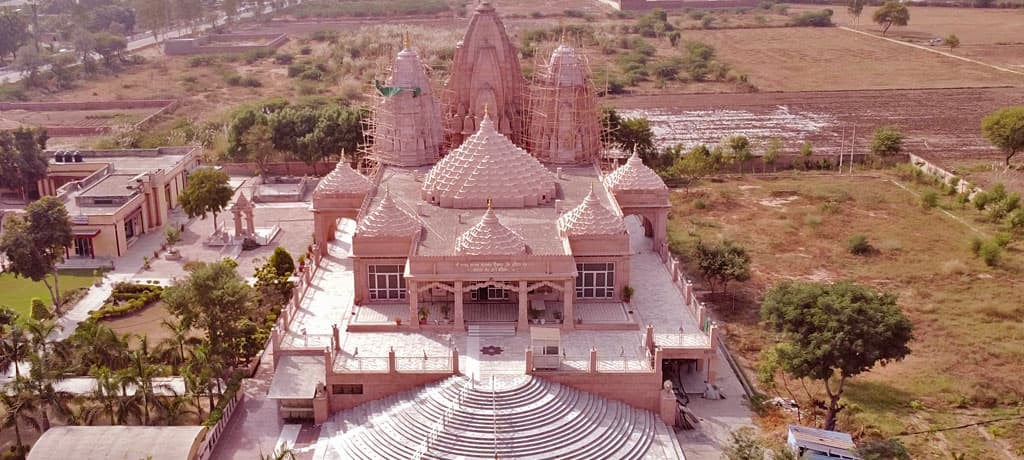
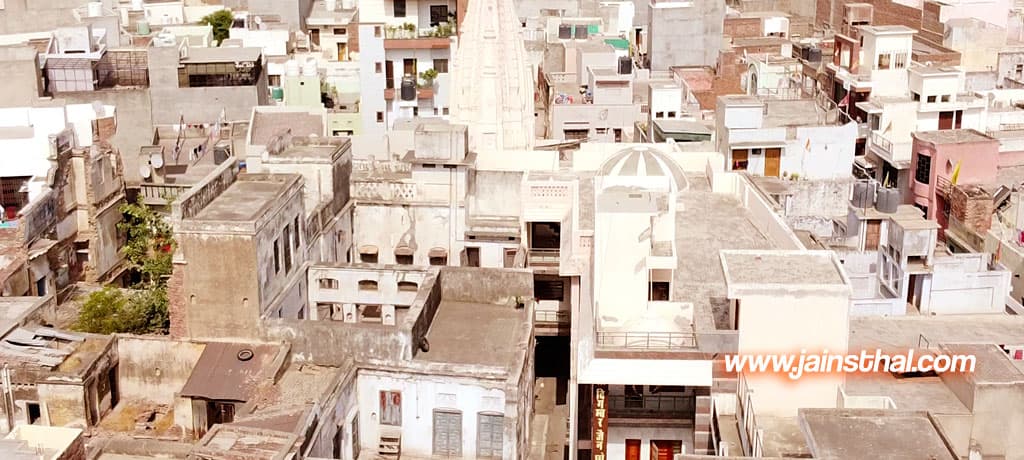
As a significant Jain heritage site, the Shri Digambar Jain Manahar Parshvanath Atishay Kshetra holds a prominent position in the Jain community. For the management of the temple, the Shri Digambar Jain Hisar Committee has been established. It is this committee that oversees the operations of the Bada Jain Mandir in the region. The members of the committee are as follows :
Introduction
This historical Shri Digambar Jain Mandir was built approximately 800 years ago. The history of the temple is quite fascinating. During the Mughal rule, Sultan Firoz Shah used sculpted stones from 10 Jain Temples in the Year 1354, to construct the Gujari Mahal here. Sultan Firoz used to come here to hunt in the forest. He built a fort and palace here, naming it Hisar-e-Firoza. After the partition of the country in 1947, some intellectuals came to see this vast archaeological site on the banks of the Ghaggar river. Upon observation, it seemed that this could be a Jain temple because the symbols of Indra and Indrani were clearly visible on the pillars of the building.
In this area, the office of the Irrigation Department has been functioning since the time of the British. During those days of exploration, Shri Sheekhichand Jain, an executive engineer, and the superintendent of that department were both Jain gentlemen. They mentioned that the ancient ruins seen in the government records of the Irrigation Department are actually of the Digambar Jain Mandir. The existence of this place as an ancient Digambar Jain Mandir is also documented in Jain scriptures. Based on the article from Hisar in 1947, Mahavir Prasad Jain, a renowned advocate and prominent leader of the Jain community, informed the Archaeological Survey of India about the temple. For several years, there have been correspondences with the government and meetings with ministers and senior officials by the Jain community's respectable members regarding the temple.
In this ancient Jain heritage, the Central Government granted permission to the Jain community for worship on June 5, 1962. Formal worship ceremonies began to take place. In 1962, Shri Banwari Lal Bajaj Sonipatiya established the ‘Charan Paduka’ of Shri Mahavir Swami right in front of the premises. In 1964, revered Shri Devendra Kanti Bhattarak of Nagaur visited here. He, through his spiritual knowledge, indicated the presence of the idols of the Tirthankars buried underground in Parikota. Amidst the cheers of thousands of men and women, during excavation, the fourth-century idol of Chandan Rang Parshvanath Bhagwan, which is the Moolnayak Pratima (main deity’s idol) of the temple, along with the idol of Shri Anantnath Bhagwan, dated Samvat 1612, and the idol of Shri Panchbalyati Tirthankar, on which Veer Samvat 1776 is inscribed, along with two copper plates inscribed with the Shrut Sambandhi Rishi Mandal, were discovered, and were established in the temple.
To witness these idols, a large number of both Jain and non-Jain brothers came. In 1964, Shri Mahavir Prasad Jain Saraf Ji constructed the ‘Charan Paduka’ of Shri Parshvanath Bhagwan, Shri Kunthunath Bhagwan, Shri Anantanath Bhagwan, and Panchkumar at the same palace from where the idols were obtained from underground. Following the government's orders, on May 16, 1968, the then Deputy Commissioner Mr. Harphool Singh himself came to the site and formally handed over this religious place to the society. As the Samavasharan was destroyed and there was no Shikkar (spire) also, therefore Mr. Hemchand Jain, General Manager of Delhi Textile Mill, Hisar, got the Shikkar constructed, and Mr. Munisuvratdas Jain established the kalash. The black stone Khadgasan idol of Shri Parshvanath Bhagwan was enshrined by Mrs. Hadkaan Devi, the wife of Mr. Lala Fatehband Jain Rayees. In 2006, the statue of Bahubali Bhagwan was enshrined by Shri Rishi Dev Jain.
In 2007, revered Muni Shri Saurabh Sagar Ji Chaturmas occurred. During the construction of Manastambh under the guidance of Muni Shri, the magnificent idols of Bhagwan Parshvanath (1074 years old), Bhagwan Adinath (978 years old), and Bhagwan Mahavir Swami (952 years old) were revealed during the excavation from the construction site. The idols excavated from underground were consecrated in the temple in 2007 under the inspiration of Muni Shri Saurabh Sagar Maharaj Ji. In 2014, the idols of Kshetrapal Baba and Padmavati Mata Ji were also enshrined on the newly built Vedi (altar) in the temple. Now the city of Hisar is well known with the name of Jahazpul Manhar Parshvanath Atishay Kshetra and it is our responsibility to cooperate in maintaining the antiquity of this historic ancient temple so that the ancient architectural recognition of this Samavsharan remains intact.
Atishay Katha
Due to the auspicious conjunction of circumstances in the city, the presence of Param Pujya Acharya Shri 108 Pushpadant Sagar Ji Maharaj's worthy, influential, and knowledgeable disciple, Pujya Muni Shri Saurabh Sagar Ji Maharaj's Chaturmas in 2007 became a transformative event for Hisar city. One day, Muni Shri Ji visited Jahazpul for sightseeing, observed the courtyard closely, and indicated some places where faults might exist. He inspired the opening of the main gate towards the north and the establishment of Manastambh in the courtyard. On October 29th, a 23-hour uninterrupted recitation of the temple commenced in the presence of Muni Shri. Excavation for the second Manastambh also began. JCB machines were excavating, extracting large stones. Suddenly, during the night, the machines failed to excavate successfully. The work came to a halt, and Muni Shri received an invisible indication of the presence of Trilok Sampada in the Bhu-Garbh. Every corner of the premises was carefully examined, and absorbed in deep contemplation, Muni Shri again immersed himself in his meditation practice. On the morning of October 30th, as the auspicious worship ceremony began at Temple, suddenly precisely at 8:05 am, the incredibly ancient and exquisitely crafted white marble idol of Bhagwan Parshvanath Ji (1074 years old), Bhagwan Adinath Ji (978 years old), and Bhagwan Mahavir Swami Ji (962 years old) manifested. As soon as they emerged from the subterranean realm, the entire pandal reverberated with chants of victory. Pujya Muni Shri paused his meditation and immediately arrived at the pandal. With his lotus-like eyes, he beheld the idols and offered his reverence. Addressing the Jain community, Muni Shri emphasized that when the idols of Bhagwan Jinendra Ji manifest from the subterranean realm, it is imperative for the welfare of that area. Such occurrences lead to spiritual influence and progress, initiating activities for the welfare of people. These ancient treasures are not only attractive but also profoundly significant. This ancient religious site, which remained neglected until now, has transformed into an extraordinary area in Haryana. On this occasion, Muni Shri declared this area as "Manhar Parshvanath Atishay Kshetra'' and in November, during the auspicious Guru Pushya Yoga, devotees performed the Abhishek (auspicious bath of the idol) of the three idols with 1008 silver kalash, displaying deep devotion and reverence.
“Following this auspicious event, the city of Hisar in Haryana has now become an Atishay Kshetra.”
Dharamshala
In Hisar, there is a community of about 250 to 300 Digambar Jain families. The administration of the temple is carried out by the Digambar Jain community itself. The management of the revered Shri Digambar Jain Manhar Parshvanath Atishay Kshetra is overseen by the Bada Jain Mandir committee established within the administrative area. Arrangements for the accommodation of pilgrims visiting the temple are also facilitated by the committee. Additionally, arrangements for dining facilities are available within the area. Parking facilities for vehicles visiting the temple are also provided within the temple premises.
History
According to ancient scriptures like the Uttaradhyayana Sutra, the name Issukar Nagar has been mentioned several times. Renowned Sanskrit scholar and historian Dr. Vasudevsharan Agrawal believes that the Issukar Nagar described in this ancient scripture is none other than the present-day city of Hisar. The region to the northwest of Delhi has been influenced by the culture of pilgrimage, and 2600 years ago, Shri Mahavira, the 24th Jain Tirthankara, traveled through the Magadha region to the Sindh region. Shri Mahavira also visited the city of Issukar during his travels, where six Jain Saints attained enlightenment. This fact has been confirmed by Jain scholar and educator Dr. Himmat Singh Jain. Scriptures also mention that the region near Hisar, including areas like Bhiwani, Dadri, and Mahendragarh, was a stronghold of Rajput Jains during the reign of King Vardhan. Consequently, over time, pratima of Tirthankaras have been discovered from underground in this nearby region.
Know something about this temple?
Spot something missing or incorrect, or have extra info to share? Let us know and our team will take a look.
As a significant Jain heritage site, the Shri Digambar Jain Manahar Parshvanath Atishay Kshetra holds a prominent position in the Jain community. For the management of the temple, the Shri Digambar Jain Hisar Committee has been established. It is this committee that oversees the operations of the Bada Jain Mandir in the region. The members of the committee are as follows :