
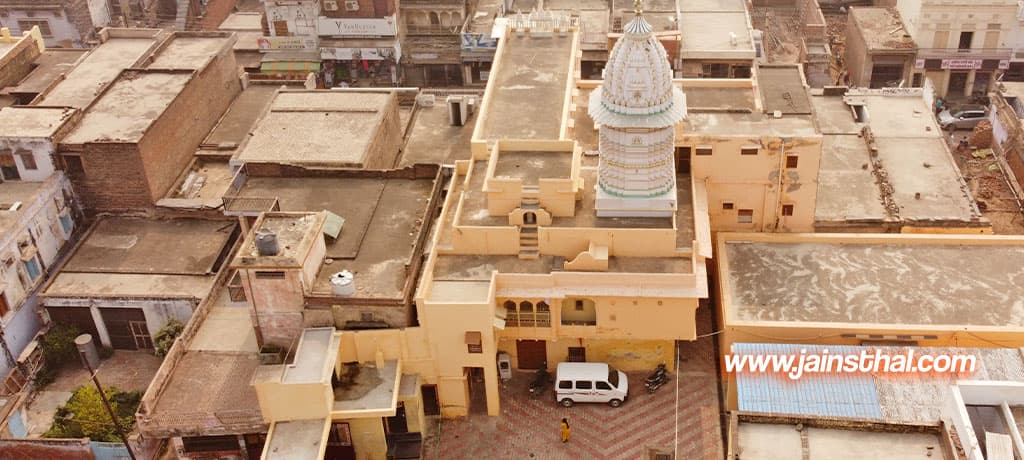
Firozpur Jhirka Lala Harkanth Rai Mandir
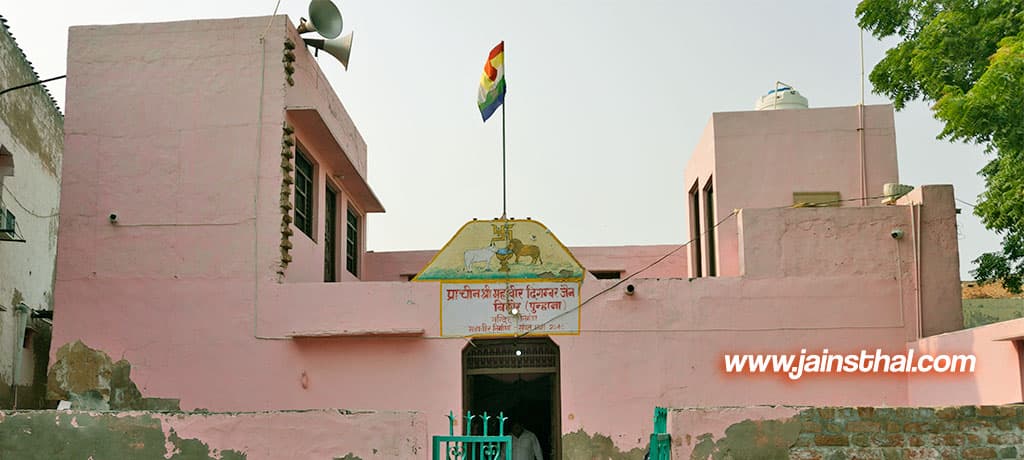
Shri 1008 Digambar Jain Mandir (Lala Harkanth Rai Jain Mandir) in Firozpur Jhirka is located approximately twenty kilometers from Atishay Kshetra Tijara Ji.
A committee has been formed for the smooth functioning of the temple. The active members of the committee are as follows :
Introduction
“Shri 1008 Digambar Jain Mandir (Lala Harkanth Rai Jain Mandir) in Firozpur Jhirka is located approximately twenty kilometers from Atishay Kshetra Tijara Ji.”
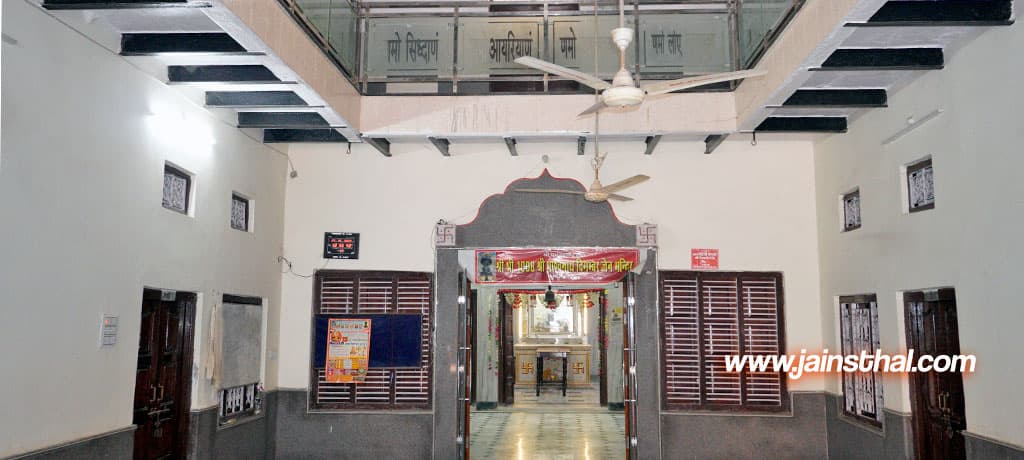
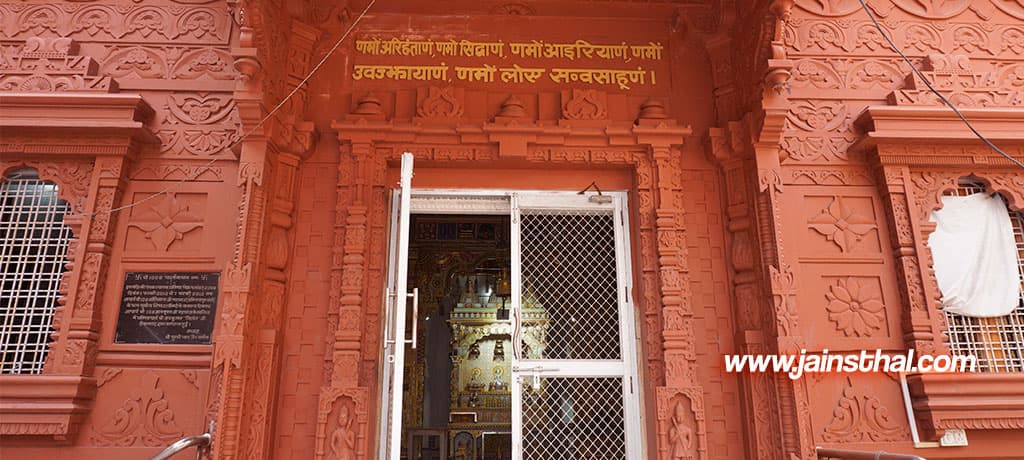
The construction of the temple was initiated by Lala Harikanth Rai Ji about 150 years ago. Later, his family handed over the temple to the Jain community. In Firozpur Jhirka, there are three Jain temples, each managed by a separate committee. Currently, the management of the Shri 1008 Digambar Jain Mandir is overseen by the Jain Panchayat of Firozpur Jhirka. The temple occupies a vast area of four thousand square yards. Initially, the temple did not have a Shikhar (spire), so a fifty-one-foot-high spire was constructed by the Jain community. Presently, the temple primarily holds only one Vedi (altar), housing the pratima of Shri 1008 Ajitnath Bhagwan. In addition to the Moolnayak Pratima (main deity’s idol), the Vedi houses the idols of Shri Parshvanath Bhagwan, Shri Adinath Bhagwan, Shri Mahavir Bhagwan, Shri Chandraprabhu Bhagwan, Shri Munisuvratnath Bhagwan, Shri Shantinath Bhagwan, Siddha Bhagwan, and Shri Nandishwar Ji. All these idols are ancient and highly revered. To ensure the safety of the idols, glass chambers have been constructed above the Vedi. Eleven to twelve years ago, the temple was robbed, resulting in the theft of some Jain idols made of Ashtadhatu (eight metals) and valuable items such as silver Chhatar (brolly) and Bhavmandal. Despite extensive searching, the idols were not recovered, causing distress to the Jain community. Therefore, the temple has since been given full security attention. Due to Atishay Kshetra Tijara Ji being only twenty kilometers away, whenever Jain Saints visit there, they also come to this temple. On their arrival, their stay arrangements are made by converting Digambar Jain Bhawan into Tyagi Bhawan. Daily rituals such as Puja-Prakshal (worship) and Abhishek (auspicious bath of the idol) take place in the temple. For Devotees coming from distant areas, parking and canteen facilities are available. Shops have been established adjacent to the temple, all managed under the temple committee.
Dharamshala
In Firozpur Jhirka, there are approximately 150 Jain families. The Jain community actively participates in every activity of the temple with great enthusiasm. The cleanliness for the devotees who come for daily worship and ablution in the temple is given full attention. If a pilgrim comes to the temple from a distant area, appropriate arrangements are made for them by the Jain community. In the year 1996, the Samadhi of Jain Muni Shri 108 Gyanbhushan Ji’s guru Shri 108 Shantisagar Ji, took place in Firozpur Jhirka. It was his wish that a girls' school should be constructed for the economically weaker sections of society. The Jain community fulfilled his wish by laying the foundation of Jain Girls' School in 1996. By 1999, the school was ready and named as Shri Shanti Sagar Jain Girls' College. Later, a Jain High School was also constructed within its premises.
History
Firozpur Jhirka is a city located in the Nuh district of the Indian state of Haryana. Nuh district is one of the 22 districts of Haryana, covering an area of 1,860 square kilometers (720 square miles) with a population of 1.09 million. It is surrounded by the Gurugram district to the north, Rewari district to the west, and Faridabad and Palwal districts to the east. It is a region primarily inhabited by Muslims and represents the modern southern part of Haryana and northeastern Rajasthan.
The Mewat region has several hilly ranges of the Aravalli Mountains. It was renowned for its aggressive character of its inhabitants for many centuries, who consistently troubled Turk, Pathan, Mughal, and British rulers in Delhi. During the Mughal era, Mewat became a part of the province of Delhi and Agra. Its most famous cities were Narnaul, Kotila, Indore, Alwar, Tijara, and Rewari. The primary occupations in the district are agriculture, closely followed by trade and commerce-based activities. Animal husbandry, particularly dairy farming, is a significant source of income for the people, and those living near the Aravalli mountain range also rear sheep and goats.
Know something about this temple?
Spot something missing or incorrect, or have extra info to share? Let us know and our team will take a look.
A committee has been formed for the smooth functioning of the temple. The active members of the committee are as follows :