
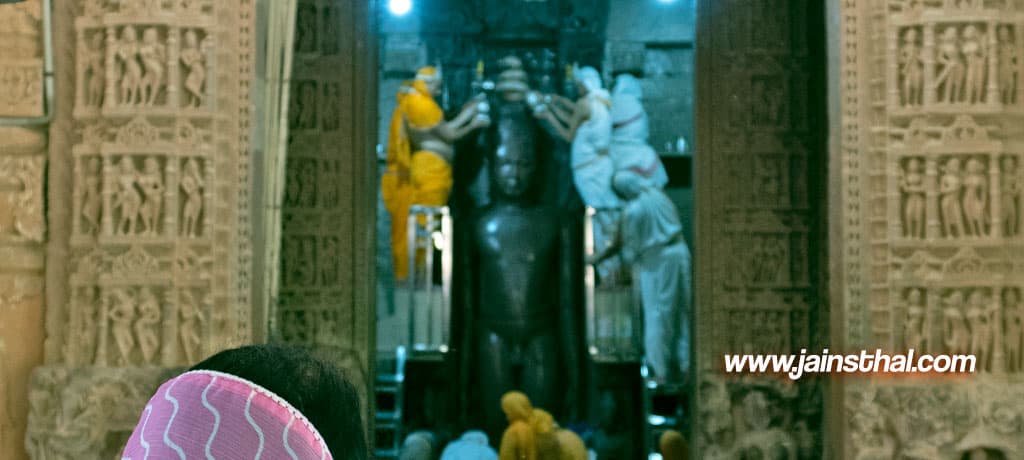
Deogarh Atishay Kshetra
Additionally, there are hundreds of unique idols of Yakshinis such as Chakreshvari, Ambika, Padmavati, Saraswati, Lakshmi, and more, making it a sight to behold.
The management of Shri 1008 Digambar Jain Atishay Kshetra Ji is conducted by the Deogarh Managing Digambar Jain Committee Lalitpur. The members of the committee are as follows:
Introduction
Located 33 kilometers away from Lalitpur district headquarters and Lalitpur Railway Station in the North Central Railway sector, on the banks of the Betwa River, is a serene, picturesque, and naturally beautiful area. It is a vast group of 41 Jain temples situated on the forested Vindhya mountain range, which rises 300 feet above sea level. In this courtyard of Jain temples, there are more than 2000 Jain idols enshrined. The presence of so many Jain idols indicates the dominance of the Jain community here. Just as during the Mughal rule, many Hindu and Jain temples were being destroyed, the same happened here. To protect the idols from invaders, they were buried in the ground. Over time, these idols were excavated and reinstated in the temple. Presently, there are 41 Jain temples on the mountain, showcasing countless inscriptions, manastambh, Pancha-Parameshthi, Achary, Aryika, Upadhyaya, as well as idols of the 24 Tirthankaras including Bhagwan Bharat, Bhagwan Bahubali, Bhagwan Adinath, Bhagwan Shantinath, Bhagwan Parshvanath, Bhagwan Mahavir, and others.
“Additionally, there are hundreds of unique idols of Yakshinis such as Chakreshvari, Ambika, Padmavati, Saraswati, Lakshmi, and more, making it a sight to behold.”
Devagarh is truly a remarkable confluence of Gupta and subsequent Gurjar-Pratihara and Chandel period artistry. Among the group of Jain temples, Temple No. 12 stands out due to its grandeur and the magnificent statue of Bhagwan Shantinath. The grand statue of Bhagwan Shantinath, with its height, antiquity, and artistic qualities, holds the highest reverence. Hence, this temple is considered the main temple here. Inscriptions from the reign of Gurjar-Pratihara Naresh Bhojadev (Vikram Samvat 919 or 862 CE) found on the pillars of the Ardha Mandapa of Bhagwan Shantinath's temple mention the place as "Luachchagiri", while Chandela period inscriptions found at Rajghati (Vikram Samvat 1154 or 1077 CE) mention the place as "Kirtigiri'' in honor of the Chandela king Kirtivarman.
Dharamshala
Despite being distant from populated areas, Deogarh Jain Temple has adequate facilities for pilgrims to stay. Managed by Shri Deogarh Managing Digambar Jain Committee, the Jain Dharamshala is constructed on the foothills of the Atishay Kshetra. Accommodation arrangements for pilgrims coming from outside are made in the Dharamshala. The Dharamshala offers both AC and non-AC rooms according to the needs of the pilgrims. Additionally, the facility of satvik meals is also available in the Dharamshala.
History
To the north of Lalitpur lies Jhansi, to the south lies Sagar, to the east lies Tikamgarh, Chhatarpur, and Shivpuri of Madhya Pradesh, and to the west lies Guna. The Betwa, Dhasan, and Jamni rivers are the major rivers of this region. The prominent tourist destinations in this district include Deogarh, Neelkantheshwar Trimurti, Ranchhodji, Matatila Dam, and Mahavir Swami Sanctuary, which are especially famous. This district was established by the Bundela Rajputs in the seventeenth century. From 1891 to 1974, Lalitpur district was a part of Jhansi district. There are also several Hindu and Jain temples located here. The Deogarh Fort is also situated in Lalitpur, where there are 31 Jain temples inside the fort. Among these temples, the most beautiful temple is that of Jain Tirthankar Shri Shantinath Bhagwan.
Know something about this temple?
Spot something missing or incorrect, or have extra info to share? Let us know and our team will take a look.
The management of Shri 1008 Digambar Jain Atishay Kshetra Ji is conducted by the Deogarh Managing Digambar Jain Committee Lalitpur. The members of the committee are as follows: