
Chavleshwar Atishay Kshetra
Seth Nathmal Shah was also astonished to hear this.
For the management of the Shri 1008 Parshvanath Digambar Jain Atishay Kshetra in Bhilwara, Shri Chavaleshwar Parshvanath Digambar Jain Atishay Kshetra committee has been established, whose members are as follows :
Introduction
Chavleshwar Parshwanath Digambar Jain Mandir is situated in Chainpura, 62 km away from Bhilwara railway station, near the Banas River, atop a hill. This temple is located in a village in the Khera region of Rajasthan's Mewar, about 35 km away from Swastidham Atishay Kshetra Jahajpur. The temple is approximately 20 feet tall and 10 feet wide. Earlier, the means to reach the temple was through stairs, but now a proper road has been constructed by the community.
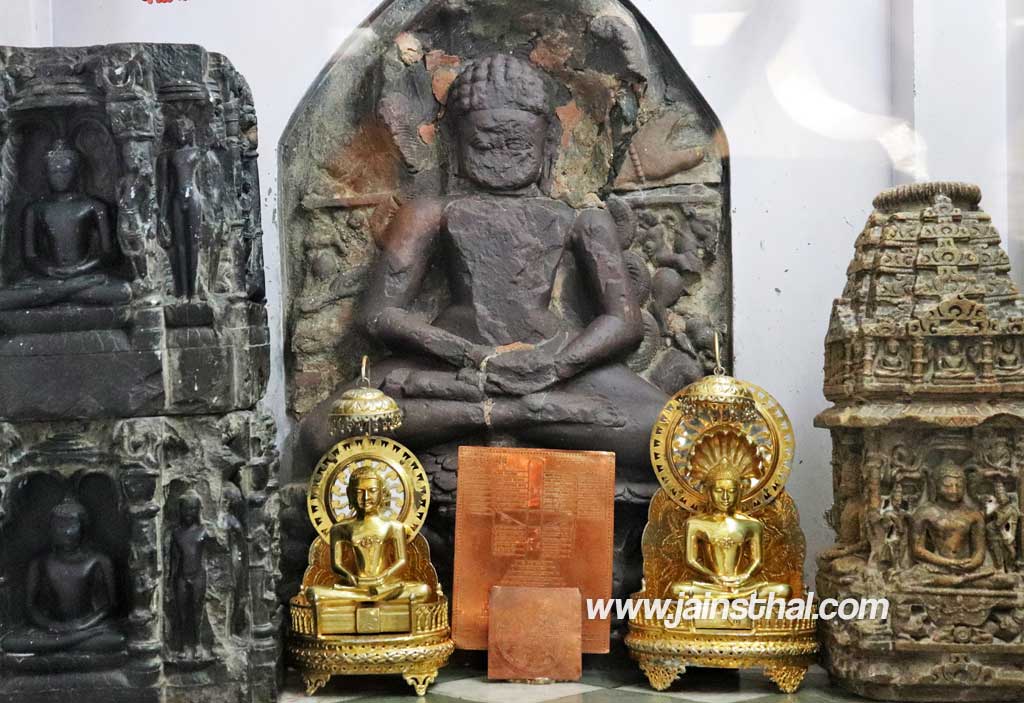
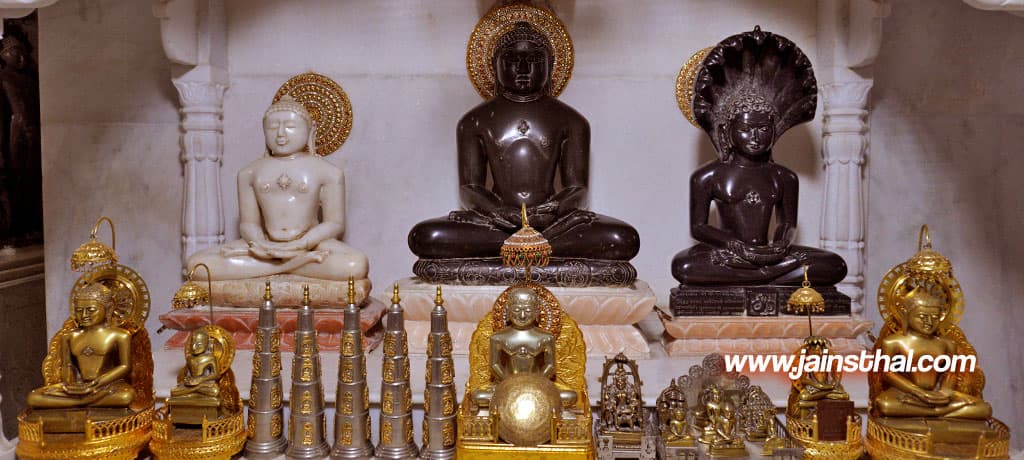
Chavleshwar Parshwanath Digambar Jain Mandir is situated on top of a hill, offering a view of the Banas River. Another Digambar Jain Mandir and a dharamshala have been built below the temple. The original idol enshrined in the temple is neither made of stone or metal; it is made of Chavla sand and milk, hence the temple is called Chavleshwar Mandir. Essentially, in the Mool Vedi (main altar) of the temple, there is an idol of Bhagwan Shri 1008 Parshwanath Ji, which is very ancient. Additionally, in the Vedi, there are two stone and two metal idols placed alongside. In front of the Mool Vedi, there is an idol of Bhagwan Parshwanath Ji in the Khadga Asana posture under a Chhatar (brolly). Furthermore, in another Vedi of the temple, there are five black stone idols of Bhagwan Shri 1008 Parshwanath Ji.
Atishay Katha
Once upon a time, there was a village named Dariba, where a wealthy man named Shyam Shah used to live. His son's name was Seth Nathmal Shah. Seth Nathmal Shah was a deeply religious person. Every day, a cowherd would take Seth Nathmal's cows for grazing and bring them back in the evening. However, one of the cows did not yield any milk. One day, when the cowherd was returning with the cows, he saw that one of the cows was standing at the top of a hill. When he reached the cow, he was amazed to see that the milk from the cow was flowing out on its own onto the ground. After a while, the cow rejoined the herd. When the cowherd returned home, he told Seth Nathmal Shah about what he had witnessed.
“Seth Nathmal Shah was also astonished to hear this.”
That night, Seth Nathmal Shah had a dream that where the cow's milk was flowing, there was an idol of Shri Parshvanath Bhagwan. He decided to excavate the site cautiously and discovered the idol made not of metal or stone, but of sand and milk. Inspired by this divine intervention, Seth Nathmal Shah constructed a temple and enshrined the idol in it. Hence, the temple is known as Chavleshwar Jain Mandir due to the unique material of the idol, which is made of Chavla sand and milk.
Dharamshala
In the present time, the temple provides all kinds of facilities to devotees so that they have no worries during their visit. Beneath the temple, there is a Jain Dharamshala for pilgrims coming from outside. Underneath the temple, there is also a Jain temple, which was initially constructed by Seth Nathmal Ji for his aunt, and later it was reconstructed by the revered 108 Acharya Shri Vidyasagar Ji Maharaj. The guesthouse has 40 rooms equipped with all modern amenities. There is also a kitchen where devotees can cook their meals according to their preferences. Additionally, there is a temple in the Dharamshala for those who are unable to climb stairs to access the main Temple.
History
Bhilwara is also known as the Textile City. The textiles produced in Bhilwara are famous throughout India. Bhilwara is bordered by the districts of Bundi and Tonk to the east, Chittorgarh to the west, Ajmer to the north, and Rajsamand to the south. In terms of area, Bhilwara covers approximately 10,455 square kilometers. It is believed that the Bhil community used to reside here, which is why it was named Bhilwara. According to one belief, the Mevad Textile was established here, where coins called Bhiladi were made, leading to the name Bhilwara. Mica is extracted from here and exported worldwide. Bhilwara is dotted with rivers, waterfalls, and dams. Bhilwara is the confluence of three rivers: Banas, Bedach, and Menali. The fort of Jahazpur was originally built by the great Mauryan emperor Ashoka's grandson, who was a follower of the Jain religion.
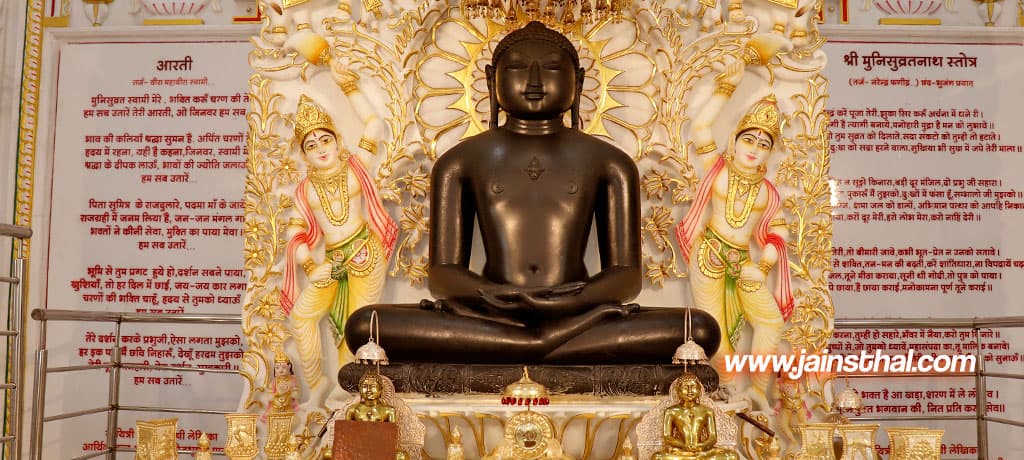
There are two more famous Jain temples here known as Swastidham and Khandelwal Digambar Bada Jain Mandir. In the temple, there is an idol of Shri 1008 Munisuvratnath Ji, which is extremely magnificent. This idol belongs to the Chaturthakal period, and the temple is located on Shahpura Road.
Know something about this temple?
Spot something missing or incorrect, or have extra info to share? Let us know and our team will take a look.
For the management of the Shri 1008 Parshvanath Digambar Jain Atishay Kshetra in Bhilwara, Shri Chavaleshwar Parshvanath Digambar Jain Atishay Kshetra committee has been established, whose members are as follows :