
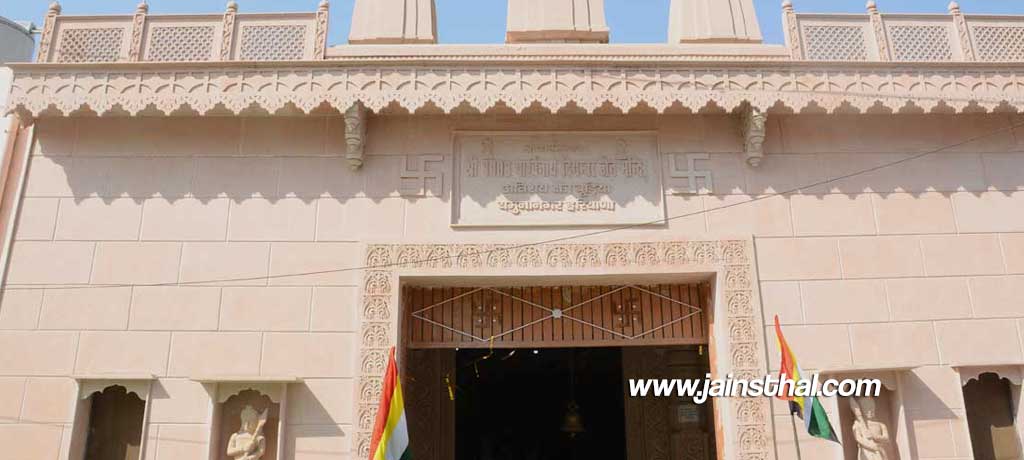
Buria Digambar Jain Mandir
Such a unique idol is rare, and it is more than 600 years old.
Buria Jain Temple is registered under the name 'Shri Digambar Jain Sabha' with registration number HR/003/2017/00843. A committee comprising seven members has been formed. The active members of the committee are as follows :
Introduction
Buria Jain Mandir, along with the history and heritage of the Buria Jain community, is extremely ancient, symbolizing the excellence and prosperity of bygone days. When Shri 108 Saurabh Sagar Maharaj Ji visited Buria in 2002, he declared this temple as Atishay Kshetra. In 2004, the Indian Department of Archaeology surveyed the temple and reported that it is around 250-300 years old. The Mool Vedi (main altar) of the temple belongs to Shri Suparshvanath Bhagwan. Above the deity, there is a unique nine-headed serpent positioned like a Chhatar (brolly) with its hoods spread out.
“Such a unique idol is rare, and it is more than 600 years old.”
To the left of the Mool Vedi, is the Vedi of Shri Chandraprabhu Bhagwan, and to the right there is a Chaubisi Vedi. According to the Vikram Samvat calendar, many ancient Jain idols are placed on both the Vedi, are about 600 years old. If we consider the idols dated according to the Veer Samvat calendar, which corresponds to the year 1548, the idols will be almost 1000 years old. Some idols made of Ashtadhatu (eight metals) are even older, dating back more than 1000 years. Unfortunately, on a dark night in 2013, those idols were stolen. Despite deep investigation by the police team, no clues were found.
Dharamshala
The Buria Jain Dharamshala is an important complex for the local community. It is utilized for the stay of Jain Saints, lectures, religious programs, and social events like weddings. It serves as a significant source of permanent income for the conservation of the dharamshala. The walls of the old building in the dharamshala were made of mud, which had deteriorated over time. Therefore, in 2017, with the support of Shri Ghanshyam Das Arora, a legislator from Yamunanagar, the committee of the Buria Jain community initiated construction work. The newly constructed premises have been equipped with a large assembly hall and several well-appointed rooms.
Jain Samaj
The history and heritage of Buria Village and Buria Jain Mandir are incredibly ancient. They narrate the rich legacy and illustrious past of bygone prosperous communities. The present Buria Jain community has condensed to around 12-15 families. However, despite this small number, they stand shoulder to shoulder, always united, for any rituals, auspicious occasions, festivals, devotion to saints, or welcoming guests with utmost reverence. Jain Saints like Shri 108 Saurabh Sagar Maharaj, Shri 108 Nayan Sagar Maharaj, Shri 108 Vidyabhushan Sanmati Sagar Maharaj have occasionally visited Buria, inspiring everyone and awakening religious, dedicated and service-oriented sentiments, fostering enthusiasm and earning people's admiration.
Once, in 2004, when Shri 108 Gupti Sagar Maharaj visited Buria, he examined some ancient scriptures and explained that they were 2000 to 2500 years old. Due to the lack of proper understanding of these scriptures among the people of the community, to ensure their proper preservation, they gave them to the Gupti Dham Digambar Jain Mandir. Now, the devoted individuals of this place continuously strive to contribute their best efforts for the conservation of their ancient historical heritage. They are always eager to engage in reconstruction, renovation, and maintenance activities, meticulously planned and executed, to safeguard their cultural legacy.
History
Buria is an ancient and prosperous village situated on the eastern part of Yamunanagar district, along the banks of the Yamuna Canal. It is located about nine kilometers away from the Yamunanagar railway station. This historic village preserves within it an ancient civilization, culture, and heritage. The presence of an ancient fort, a Buddhist stupa, and Jain temples highlights its rich past. It was ruled by King Harshavardhan, and within a kilometer radius lies the village of Sugha (Shrughna), which was one of the ancient cities. During the reign of Mauryan Emperor Ashoka, Buddhism flourished here, and this place served as an important center for Buddhism. In 2008, during archaeological excavations, a Buddhist stupa was discovered in the village of Chaneti, located one kilometer west of Buria, which is estimated to be 2000 to 2500 years old. During the same period of prosperity, the Chinese Buddhist scholar Huen Tsang came here for academic exploration. This town is also the birthplace of Birbal, the chief advisor to the Mughal Emperor Akbar.
Know something about this temple?
Spot something missing or incorrect, or have extra info to share? Let us know and our team will take a look.
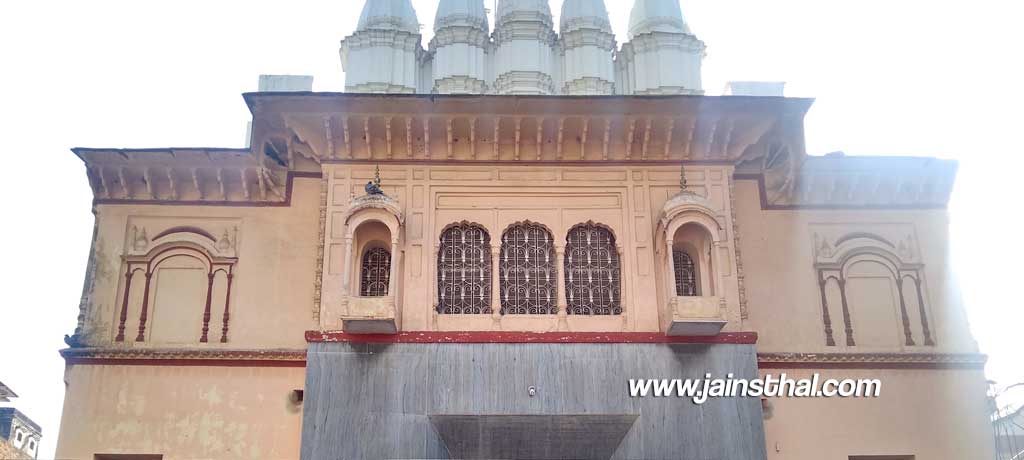
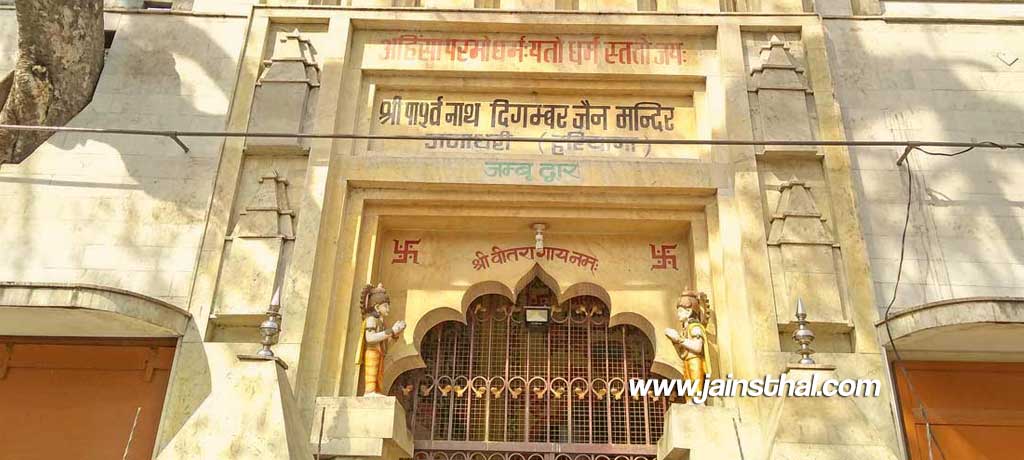
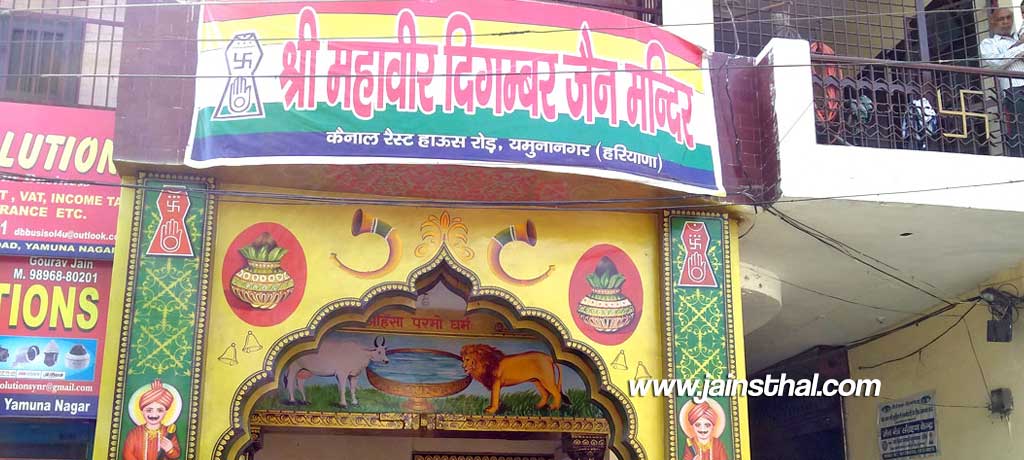
Buria Jain Temple is registered under the name 'Shri Digambar Jain Sabha' with registration number HR/003/2017/00843. A committee comprising seven members has been formed. The active members of the committee are as follows :