
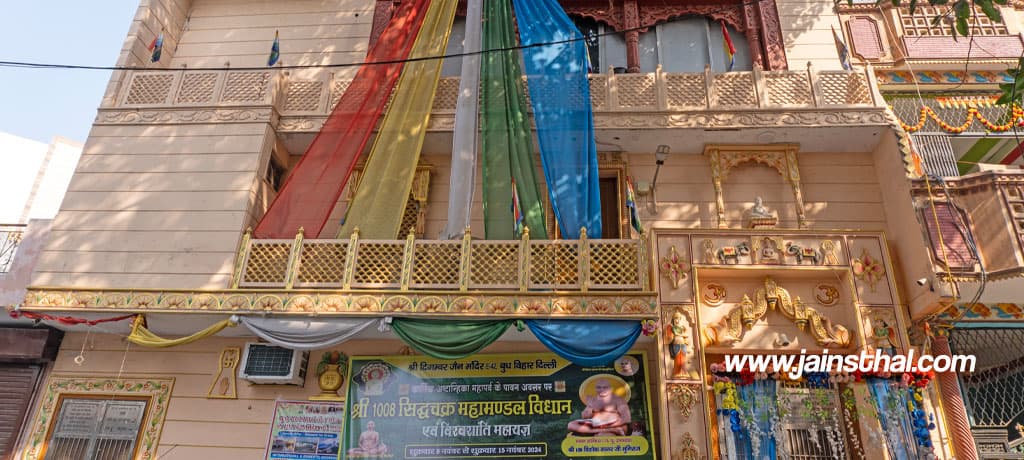
Shri Digambar Jain Temple, Budh Vihar
An extraordinary incident in the temple’s history continues to astonish devotees.
For the efficient management and smooth operation of the temple, a committee of 16 members has been established. This committee ensures the seamless administration of the temple and takes important decisions regarding its functioning. The current key office bearers overseeing temple affairs are:
Introduction
Located in the Budh Vihar area of Delhi, this Digambar Jain temple is 30 years old and was established in 1994. The Jain community of Budh Vihar played a significant role in its construction, actively contributing with dedication to the temple’s development. The grand Panchkalyanak ceremony was conducted 21 years ago, in 2004, under the guidance of Acharya Shri 108 Darshan Sagar Ji Maharaj.
A sacred Vedi (altar) has been set up within the temple, where the main deity, Shri 1008 Mahavir Bhagwan, is enshrined in an exquisitely crafted white stone Padmasana idol. In addition, the temple houses idols of Shri Adinath Bhagwan, Shri Padmaprabhu Bhagwan, Shri Chandraprabhu Bhagwan, Shri Shantinath Bhagwan, Shri Vasupujya Bhagwan, Shri Munisuvratnath Bhagwan, Shri Neminath Bhagwan, Shri Parshvanath Bhagwan, and another idol of Shri Mahavir Bhagwan—bringing the total to 11 idols. The altar is intricately constructed using Makrana marble.
The temple’s Shikhar (spire on the top) is also adorned with carvings in Makrana marble, and notably, no iron has been used in the construction of the Vedi or the Shikhar. The temple stands as a testament to the craftsmanship and skill of the artisans involved. Daily worship and rituals are conducted as per schedule, and festivals such as Mahavir Jayanti are celebrated with great enthusiasm. Special ceremonies like Siddhachakra Paath are also organized periodically.
Atishay Katha
“An extraordinary incident in the temple’s history continues to astonish devotees.”
One night, thieves stealthily entered the temple without the Panditji noticing. They collected valuable items and prepared to escape. However, as they attempted to leave, they were suddenly engulfed in complete darkness. Shortly after, a bright light appeared, making them feel as though they were being signaled to return. Overwhelmed by this inexplicable experience, the thieves abandoned the stolen items and fled. When they were later caught, they revealed the mysterious events that had transpired. The Jain community believes that if not for the divine grace of Bhagwan Mahavir, priceless artifacts, including the idols and Chhatar (brolly), would have been lost. This event remains an unforgettable part of the temple’s history.
Jain Samaj
The temple is surrounded by a devout and close-knit Jain community. Around 15 to 20 Jain families reside near the temple, while the broader Budh Vihar area is home to approximately 90 to 100 Jain families. On a daily basis, 100-150 devotees visit the temple for darshan and actively participate in temple-organized programs.
The temple provides two well-furnished rooms, mainly used for the accommodation of visiting Jain Saints from other temples and locations.
History
Delhi, the National Capital Territory of India, serves as the seat of the country's central government, housing the three branches—executive, legislative, and judiciary. Situated along the banks of the Yamuna River, Delhi has a rich historical and cultural legacy. The city’s origins can be traced back to the Indus Valley Civilization, with excavations in nearby Haryana confirming its ancient roots.
With the rise of the Delhi Sultanate, the city evolved into a prominent political, cultural, and commercial hub. Today, numerous ancient and medieval structures, along with their remnants, are visible across the city. The earliest mention of Delhi appears in the Mahabharata, where it is identified as Indraprastha, the capital of the Pandavas.
Apart from being the nation’s political center, Delhi is a major tourist destination. The city boasts modern architectural marvels such as Rashtrapati Bhavan, Parliament House, and Central Secretariat, alongside historic sites like Purana Qila, Safdarjung’s Tomb, Jantar Mantar, Qutub Minar, and the Iron Pillar. Delhi is also home to revered religious sites, including Birla Mandir, Katyayani Shakti Peeth, Lal Jain Mandir, Bangla Sahib Gurudwara, Lotus Temple, Akshardham Temple, and Jama Masjid. The iconic India Gate, a memorial for the nation’s martyrs, stands prominently on Rajpath.
At present, Delhi has emerged as a commercial powerhouse, serving as the primary trade center of India. The city is also home to approximately 200-250 Jain temples.
Know something about this temple?
Spot something missing or incorrect, or have extra info to share? Let us know and our team will take a look.
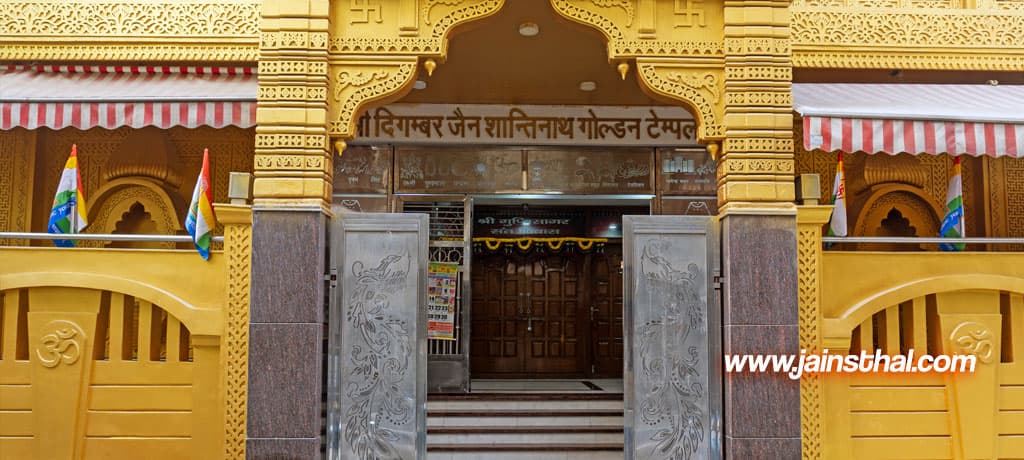
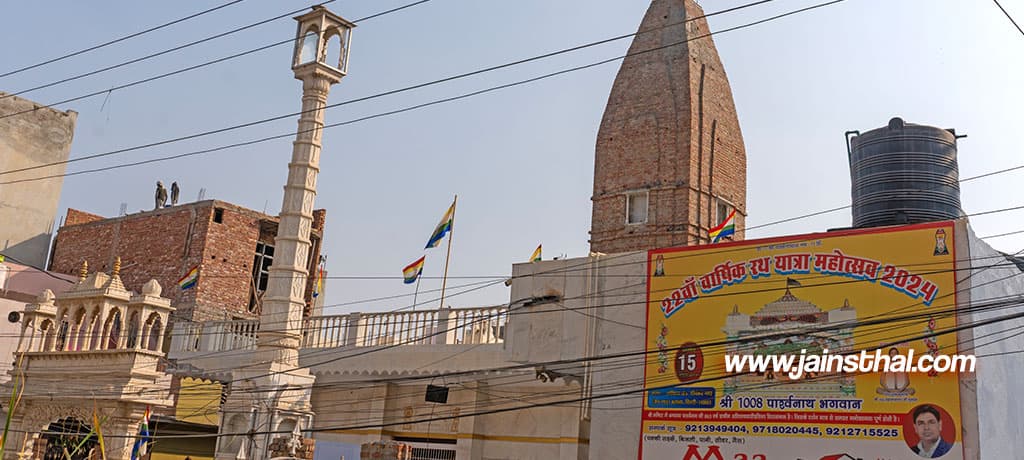
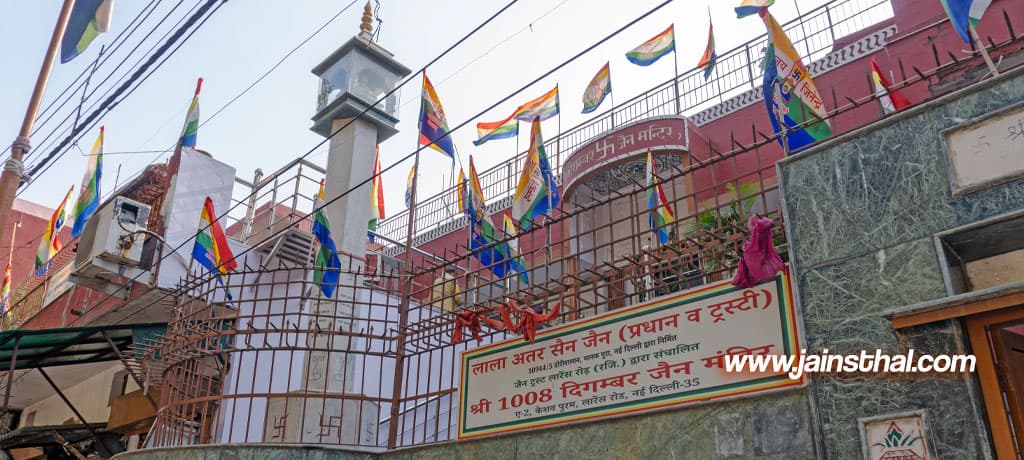
For the efficient management and smooth operation of the temple, a committee of 16 members has been established. This committee ensures the seamless administration of the temple and takes important decisions regarding its functioning. The current key office bearers overseeing temple affairs are: