
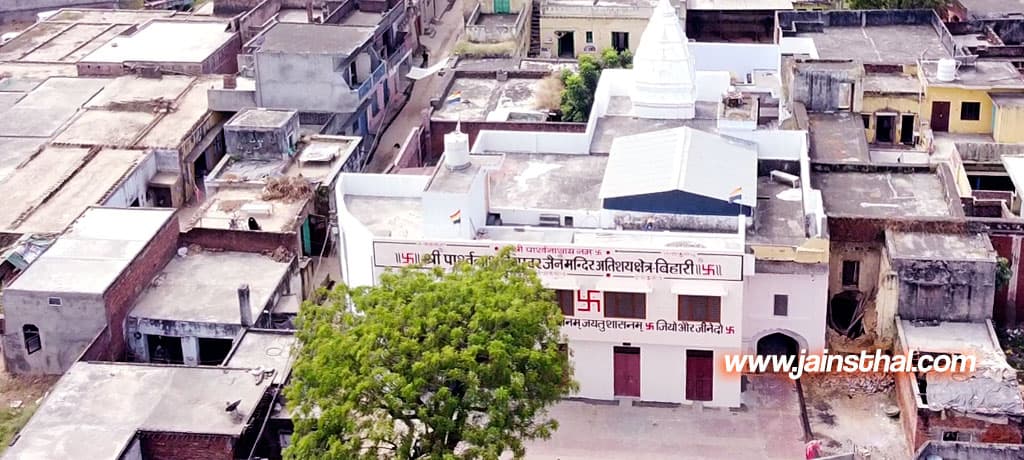
Bihari Ji Atishay Kshetra
It is situated between Saharanpur and Meerut districts in the doab of the Ganga and Yamuna rivers under Saharanpur division, near National Highway 58.
Despite there being few families of Jain community in the area, the temple is run smoothly by the temple committee. The members of the temple committee are as follows :
Introduction
The village Bihari is located seven kilometers away from Mansurpur village and eighteen kilometers away from Muzaffarnagar district in Uttar Pradesh. It is the place where the extremely ancient Jain temple Shri 1008 Parshvanath Digambar Jain Atishay Kshetra is situated. It is said that Bihari Kshetra has connections dating back to the Mahabharata era. During the Mahabharata period, this area was known as Anoop Nagar. This is the same place where the Pandavas lost Draupadi in a game of dice. After this incident, the area became famous as Bu-haari, and in modern times, it came to be known as Bihari, after the transformation from Bu-haari. It is said that during the Mahabharata era, the Pandavas used a secret cave to travel from Hastinapur to Bihari. In the village of Bihari, there is still a pond known as Kanchi Talab, where the Pandavas used to bathe and perform worship rituals.
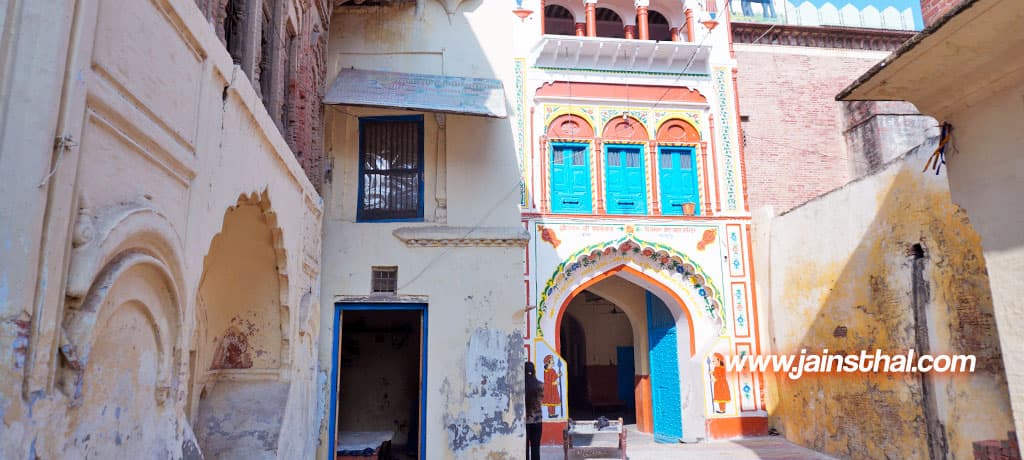
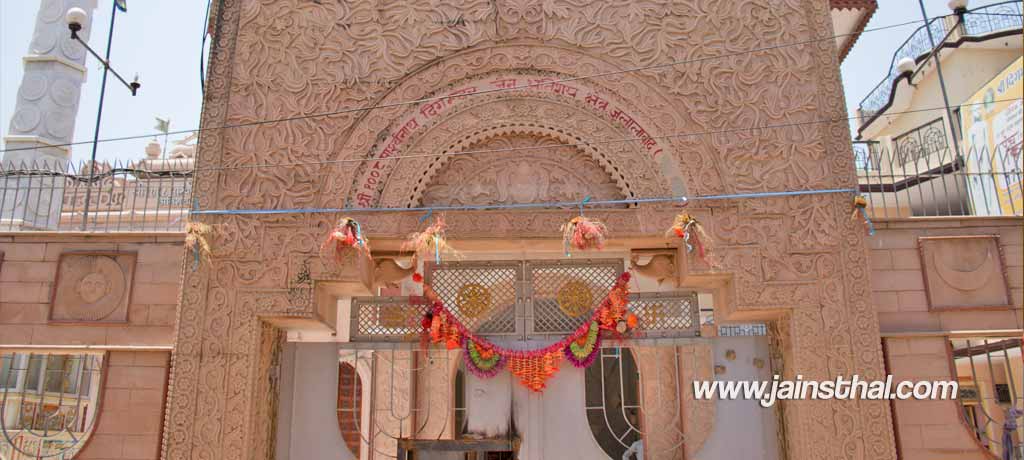
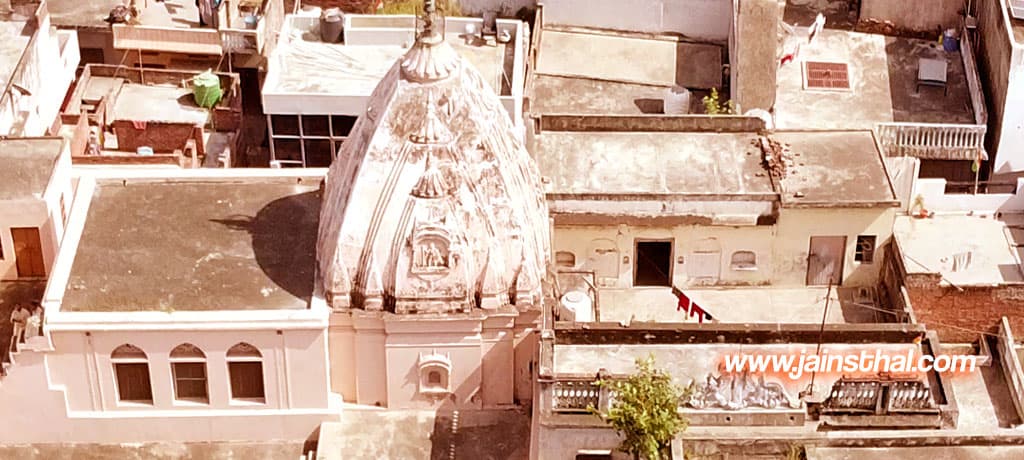
During the Mughal era, when Jain temples were being destroyed, to keep the idols safe, members of the Jain community hid all the idols in the pond. In the year Samvat 1500 (approximately 1443 CE), the idols were retrieved from the pond and reinstated in the present temple. It is believed by local people that bathing in the pond cures all kinds of skin diseases. Currently, the Moolnayak Pratima (main deity’s idol) in the temple is of Shri 1008 Parshvanath Bhagwan, which is believed to be approximately 1800 years old. In addition to the Moolnayak Pratima, there are 26 idols of Shri 1008 Parshvanath Bhagwan carved on a granite stone, also enshrined in the Mool Vedi (main altar), which is rare and extremely ancient. A total of 21 idols are enshrined in the Mool Vedi of the temple, made of stone and Asthdhatu (eight metal), which evoke a sense of profound tranquility upon seeing them. The temple also houses the Vedi of Mata Padmavati Ji and Kshetrapal Baba Ji.
Atishay Katha
On October 15, 2000, the shed skin of a golden snake was found on the Vedi. Local people believe that since this golden snake's skin shen has been found in the temple, the area has become free from the poison of the snake. Nobody till date has died from the snake bite after the incident. Even today, the snake's skin shed is kept safe in the temple. According to another tale, in March 2001, a boy was kidnapped by thugs on the Deoband Mangalore road. He was recalling the name of Bihari Baba in his mind again and again. Then he heard a voice telling him to jump out of the car. The boy jumped out of the moving car, and yet he was not even scratched, and all the thugs ran away from there. According to other stories, on October 7, 2002, hot water suddenly started coming from the tap of the puja room in the morning. Similarly, in December 2004 and March 2005, the Chhatar (brolly) of Shri Shantinath Bhagwan's idol kept spinning for a long time, which hundreds of people witnessed. In May 2006, sweet water suddenly started coming from the tap of the puja room. According to local people, from time to time, the Dev also visits the temple, and during the night, the sounds of bells from the Garbh Grah (sanctum sanctorum) and the chants of hymns by someone are also heard in the temple.
Dharamshala
Arrangements for accommodation have been made in the temple for the pilgrims and Jain Saints, who come to the temple. There are two rooms available along with a dining hall and an open courtyard. Here, you can sit and engage in meditation, prayer, chanting of mantras, and other spiritual practices. Approximately 500 meters away from the temple is Shri Parshvanath Junior High School, which was established in 1997 by Shri Navin Jain. At one time, there used to be a community of 85 Jain families here. However, today only 3 to 4 families remain in the community.
History
The area of Muzaffarnagar is 4049 square kilometers. Muzaffarnagar is located approximately 116 kilometers away from Delhi in the western part of Uttar Pradesh, bordering Haryana and Rajasthan.
“It is situated between Saharanpur and Meerut districts in the doab of the Ganga and Yamuna rivers under Saharanpur division, near National Highway 58.”
This region is significant for various religious sites. Several pilgrimage places are located in this region, such as Shukartaal, Tanda, Amba Bara, Bhithauda, and Mandira Ghat, among others. The festivals and fairs here are also important cultural events. The district boasts several ancient palaces and royal residences, which hold historical significance and are quite popular among tourists. Hindi and Urdu are the primary languages spoken here, but other languages like Haryanvi and Rajasthani are also used. Muzaffarnagar is an important industrial city known for its sugar, steel, paper, and handloom industries, particularly renowned for women's suits made from silk and hand embroidery. Along with sugarcane, grains are the major agricultural produce of this area. The majority of the population here is engaged in agriculture, constituting more than 70% of the district's total population. Muzaffarnagar's jaggery market is the largest in Asia. Muzaffarnagar produces the highest amount of sugarcane in India, and it also has the highest number of sugar mills.
Know something about this temple?
Spot something missing or incorrect, or have extra info to share? Let us know and our team will take a look.
Despite there being few families of Jain community in the area, the temple is run smoothly by the temple committee. The members of the temple committee are as follows :