
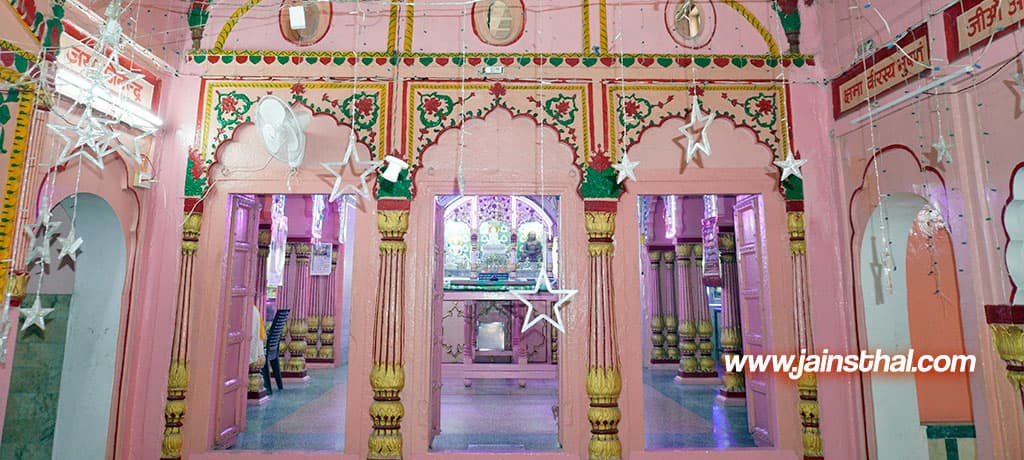
Bahadurgarh Prachin Jain Mandir
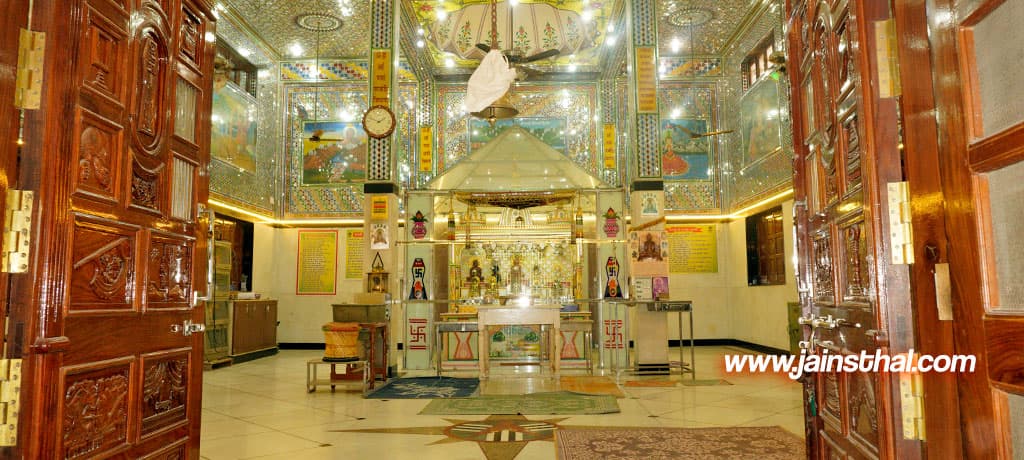
The temple showcases the artistry of Jain Tirthankar’s images and Jain legends using glass paintings in the Garbh Grah (sanctum sanctorum).
For the smooth functioning of the temple, the Shri Digambar Jain Mandir Committee has been established. The active members of the committee are as follows :
Introduction
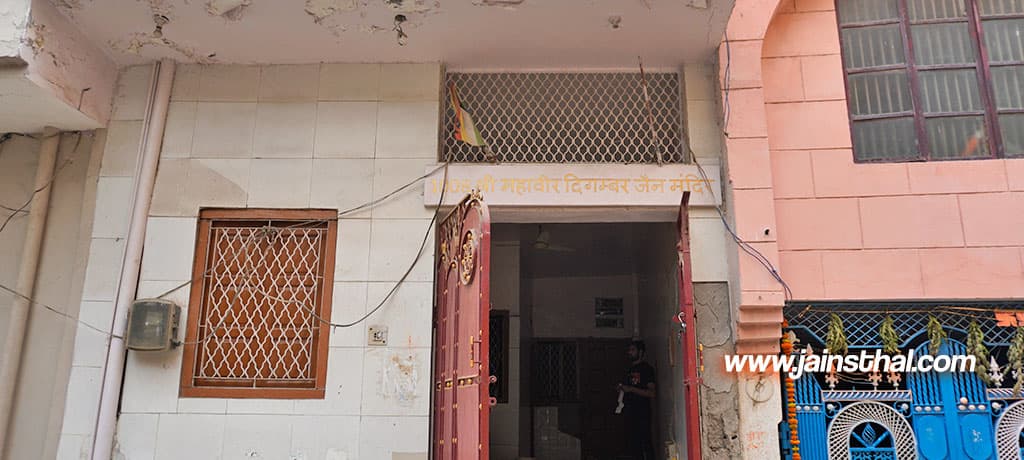
Shri 1008 Padmaprabhu Digambar Jain Prachin Mandir is located in Bahadurgarh Bazaar, 500 meters from the Delhi-Rohtak Main Road. The construction of the temple was undertaken by the Jain community some 200 years ago. Although reconstruction work has been carried out in the temple periodically, its antiquity is intact and can still be inferred from its present appearance.
“The temple showcases the artistry of Jain Tirthankar’s images and Jain legends using glass paintings in the Garbh Grah (sanctum sanctorum).”
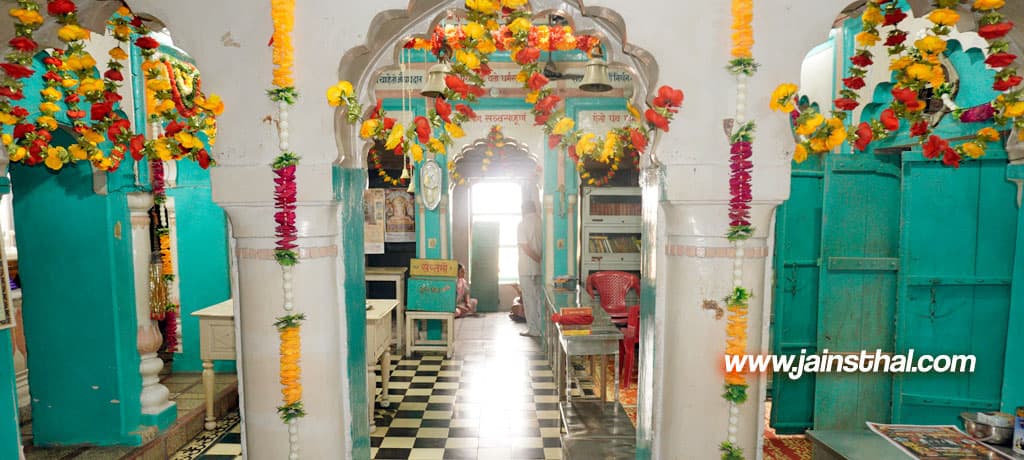
In the Mool Vedi (main altar) of the temple, the Moolnayak Pratima (main deity’s idol) is of Shri 1008 Padmaprabhu Bhagwan. Along with the Moolnayak Pratima, other idols made of stone and Ashtadhatu (octal metal) are also enshrined in the Vedi. In the second Vedi of the temple, the Moolnayak Pratima is the black stone idol of Shri 1008 Parshvanath Bhagwan. This idol of Parshvanath Bhagwan is ancient, dating back 1100 years, and is exceptionally magnificent, radiating an extraordinary charm and providing a sense of celestial peace just by seeing it. In the third Vedi of the temple, the idol of Shri Mahavir Bhagwan was brought and enshrined in the temple's Vedi during the Panchkalyanak of Hansi in 1987. The fourth Vedi of the temple houses the white stone idol of Shri 1008 Parshvanath Bhagwan. Along with the Shri 1008 Parshvanath Bhagwan’s idol in the Vedi, there are idols of Siddha Bhagwan, a crystal idol, Yantra, and idols made of stone and Ashtadhatu (octal metal). In the fifth Vedi, there are the idols of Shri Bahubali Bhagwan, Shri Shantinath Bhagwan, and Shri Shitalnath Bhagwan are enshrined, and all made of white stone. In the temple, there is also a Vedi dedicated to Mata Padmavati Ji, the construction of which was carried out by Shrimati Vidyavanti, the wife of Lala Meghraj Jain, in the year 1984. In the temple, there is also a Vedi dedicated to Jinvani Mata Ji. When any Jain Saint visits the area, they also visit this temple. In the temple, Aryika 105 Nangmati Mata Ji observed the Chaturmas in the year 2018. Additionally, Chaturmas of Shri Kulbhushan Ji also took place in the temple. Daily worship and rituals are performed in the temple in an orderly manner. Adjacent to the temple is a Jain dharamshala, which has 20-22 rooms for pilgrims and a hall for hosting special events.
Dharamshala
There are approximately 500 Jain families in Bahadurgarh. The community actively participates in various activities in the area. Whenever Jain Saints visit the region, arrangements are made for their stay in Tyagi Bhavan. Attention is paid to the cleanliness of the devotees who visit the temple daily. If a pilgrim comes to the temple from a distant area, the Jain community ensures proper arrangements are made for them so that they do not face any inconvenience while visiting. The Jain community also operates an eye center and physiotherapy center where treatments are provided at nominal fees.
History
Bahadurgarh is located in the Jhajjar district of the Indian state of Haryana, situated in the eastern part of the state and the northern part of the country. This city is situated near the border of New Delhi (commonly known as the Tikri Border). The city was founded by Mughal Emperor Alamgir II, who ruled as the Sultan of Delhi from 1754 to 1759. In 1754, he granted the territory of the city to Baloch rulers Bahadur Khan and Tej Khan, who renamed it from Sharfabad to Bahadurgarh. One of their rulers, Bahadur Khan, constructed a fort in 1793 and named it Bahadurgarh Fort. The Baloch Nawabs were defeated by Maratha forces, and in 1793, Bahadurgarh came under the control of the Sindhia dynasty. After the defeat of Sindhia in 1803 to the British Raj, Lord Lake handed over the governance of the city to the brother of the Nawab of Jhajjar.
Know something about this temple?
Spot something missing or incorrect, or have extra info to share? Let us know and our team will take a look.
For the smooth functioning of the temple, the Shri Digambar Jain Mandir Committee has been established. The active members of the committee are as follows :