
Bahadurgarh Mahavir Jain Mandir
Shri Digambar Jain Mandir Committee has been formed for the smooth functioning of the temple. The members working in the committee are as follows :
Introduction
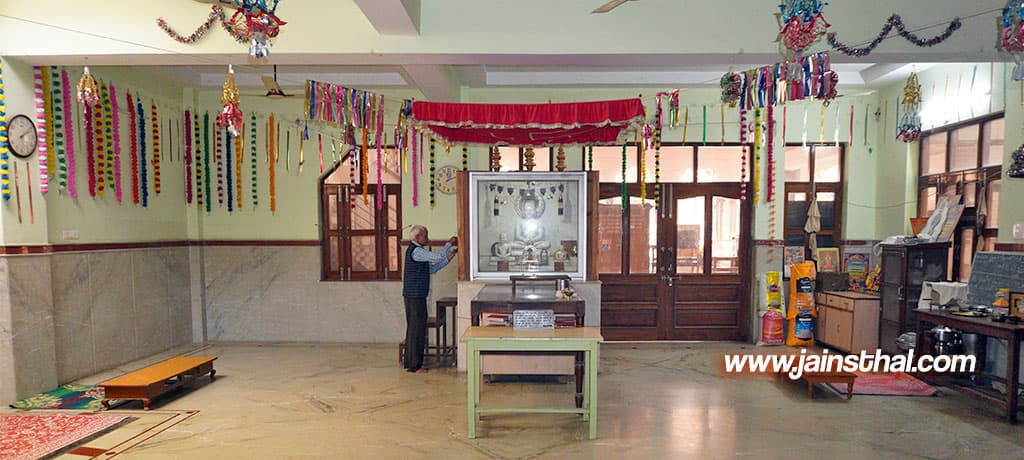
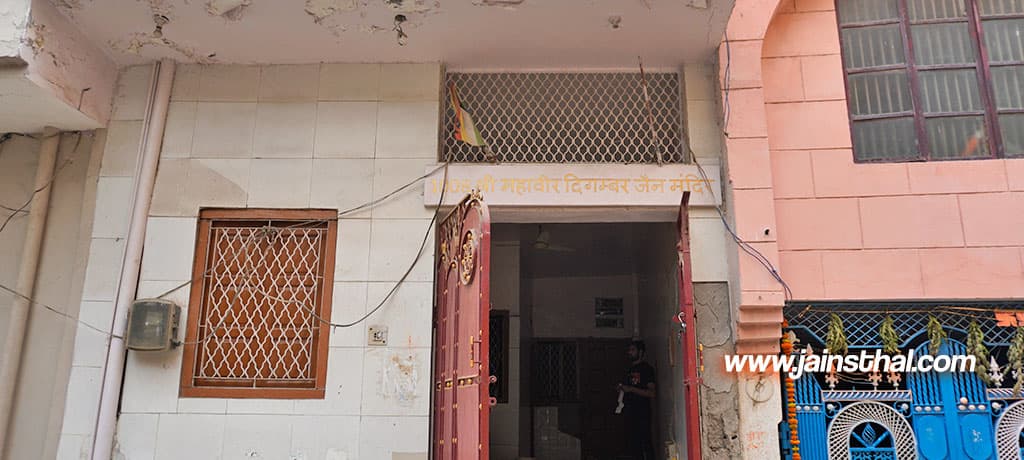
Shri 1008 Digambar Mahavir Digambar Jain Mandir is located in Bahadurgarh, just 19 kilometers away from the capital city of Delhi, situated in the Agrawal Colony. It dates back to the years 1960 to 1962 when there were no Jain temples in the vicinity, and people had to travel to distant areas for Darshan. The local Jain community member Lala Raghubir’s devout wife, vowed to abstain from sweets until a temple was constructed in the area. Lala Bhushan Jain, Lala Durga Prasad Jain, Lala Raghubir Jain, and Lala Sukhmal Jain, all members of the Jain community, collectively decided that a Jain temple should be built in the region. Consequently, they purchased a 300 square-yard plot of land and constructed the temple, known as the Chaityalaya. The Chaityalaya initially housed the idol of Shri Mahavir Bhagwan from Delhi's Lal Mandir. Over time, additional idols were established in the Chaityalaya Vedi (altar). Initially the Chaityalaya was named as Shri 1008 Adinath Chaityalaya because the people thought the main idol is of Shri Adinath Bhagwan Ji, which was later then corrected, and the temple is now known as the Shri 1008 Mahavir Digambar Jain Mandir.
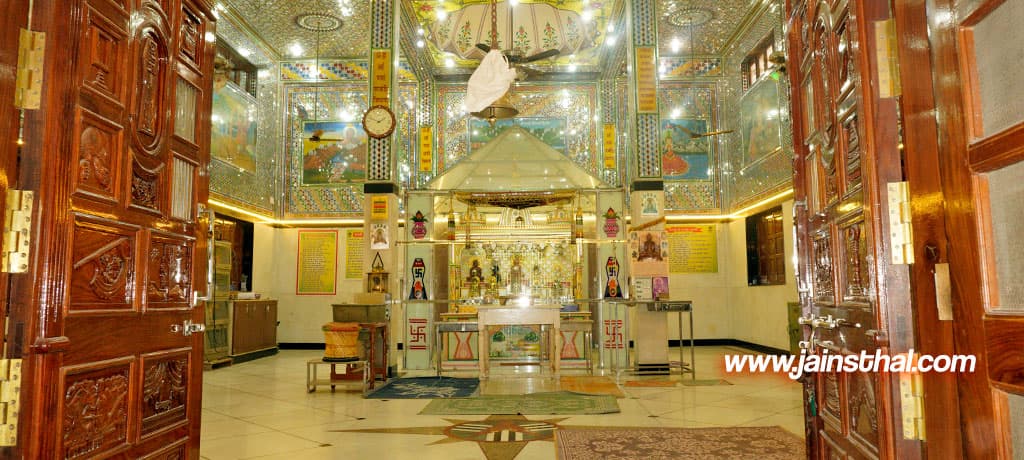
Once, due to a mistake while worshiping, two idols were broken. As a result, between approximately 1980-1982, a Panch Kalyanak (consecration ceremony) was held at the temple. During the years 1980-1982, the temple underwent significant renovations, including the establishment of idols on the Vedi and the construction of the Shikhar (spire), giving the Chaityalaya a grand appearance of a temple. In 2018, under the inspiration of Jain Muni Shri 108 Padmay Sagar Maharaj Ji, old structures were demolished, all the idols were enshrined temporarily in a room and the reconstruction of the temple began. It is expected that the construction work will be completed by the year 2024. The temple construction has been carried out using only stone while avoiding the use of iron. Every detail of the temple has been meticulously crafted using stone. The architecture of the temple allows devotees to perform Parikrama (circumambulation) in three ways from the Garbh Grah, from the upper floor of the temple, and from the lower floor of the temple.
Currently, all the idols of the temple have been temporarily placed on a temporary Vedi in the nearby hall. Every day, Jain devotees come to perform worship, rituals, and Abhishek (auspicious bath of the idol). From time to time, Jain Saints also visit the temple. Jain Muni Shri 108 Deshbhushan Ji Maharaj visited the temple in 1970, and Jain Muni Shri 108 Kunthusagar Ji Maharaj, along with his group, visited between 1980-1985.
Dharamshala
In Bahadurgarh, there is a community of approximately 500 Jain families. The community actively participates in various activities in the area. When Jain Saints visit the area, arrangements for their stay are made at Tyagi Bhavan. Emphasis is placed on the cleanliness for the devotees who visit the temple daily. If any pilgrim comes to the temple from a distant area, appropriate arrangements are made by the Jain community to ensure that they do not face any inconvenience while visiting the temple.
History
Bahadurgarh is located in the Jhajjar district of the Indian state of Haryana, situated in the eastern part of the state and in the northern part of the country. This city is located near the border of New Delhi, commonly known as the Tikri Border. The city was founded by Mughal Emperor Alamgir II, who ruled as the Sultan of Delhi from 1754 to 1759. In 1754, he granted the city to Baluch rulers Bahadur Khan and Tej Khan, who renamed it from Sharfabad to Bahadurgarh. One of their rulers, Bahadur Khan, built a fort in 1793 and named it Bahadurgarh Fort. The Baluch rulers were defeated by the Maratha forces, and in 1793, Bahadurgarh came under the control of the Sindhias. After the defeat of the Sindhias in 1803 to the British, Lord Lake handed over the administration of the city to the brother of the Nawab of Jhajjar.
Know something about this temple?
Spot something missing or incorrect, or have extra info to share? Let us know and our team will take a look.
Shri Digambar Jain Mandir Committee has been formed for the smooth functioning of the temple. The members working in the committee are as follows :