
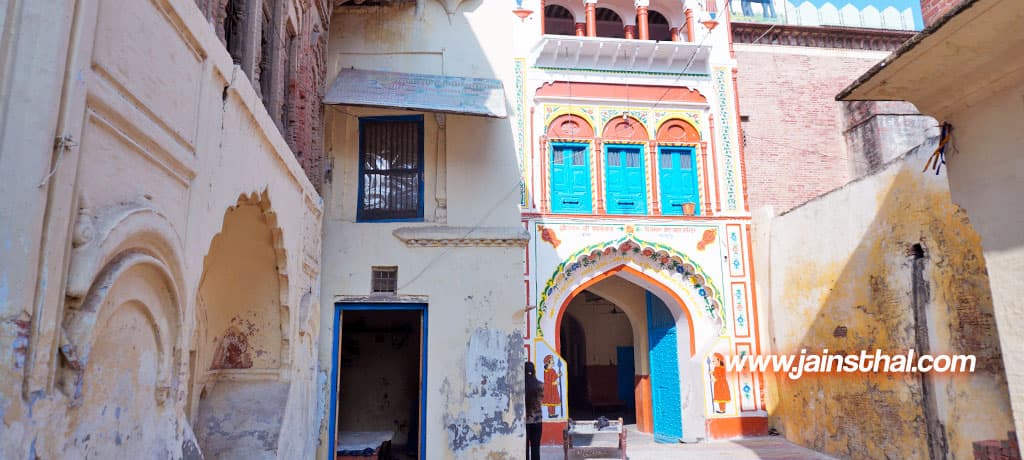
Bada Jain Mandir Mansurpur
The idol of Mata Padmavati Ji is extremely ancient, unique and rare to find and her darshan is considered very auspicious across India.
Despite there being no Jain community in the area, the temple is run smoothly by the temple committee. The members of the temple committee are as follows :
Introduction
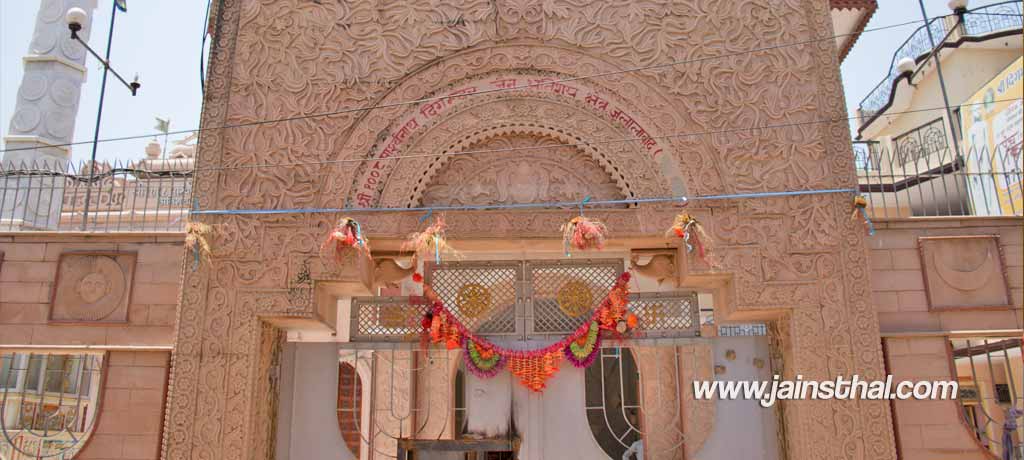
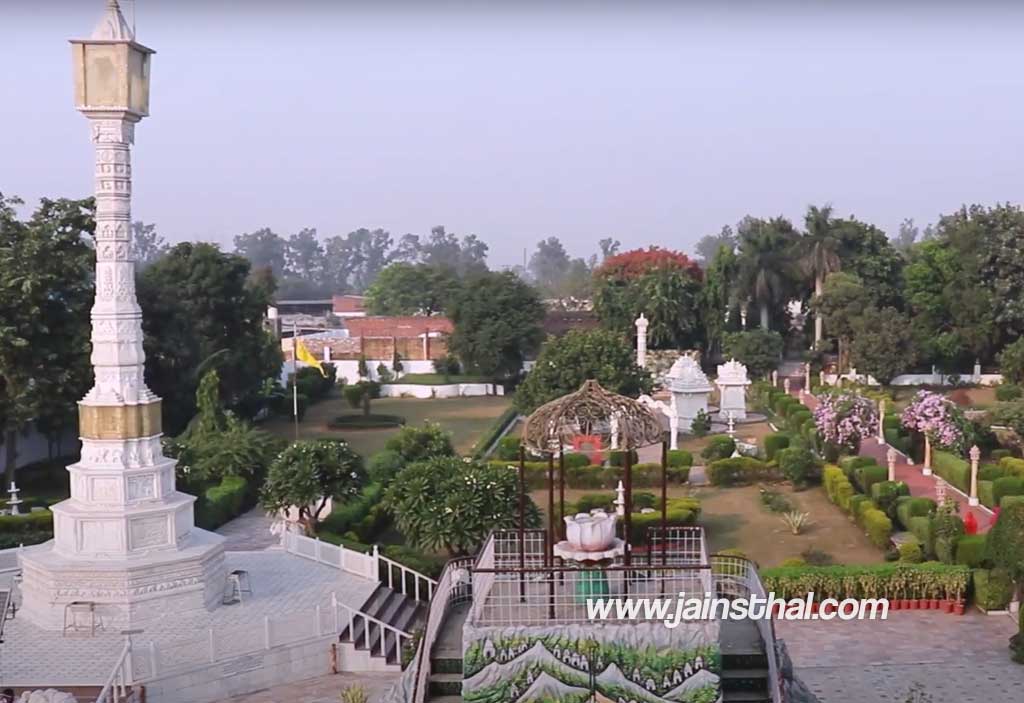
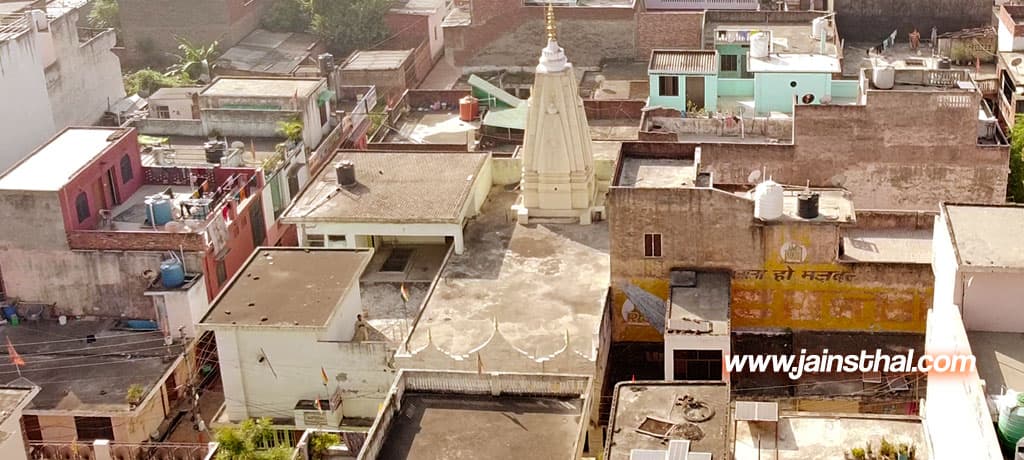
Shri 1008 Parshvanath Digambar Jain Mandir, also known as Bada Mandir Ji, located in Mansurpur, 15 km from Muzaffarnagar. The temple was built by the Jain community six hundred and fifty years ago. Chota Jain Mandir is situated at a distance of about 600 meters from the Bada Mandir Ji. At that time, there used to be more number of Jain families in this area. Due to which Chota Mandir Ji was built a few years later. In the Bada Mandir Ji, only one Vedi (altar) is established. Within the Vedi, several ancient Jain idols are enshrined. The Mool (main) idol within the Vedi is of Shri 1008 Parshvanath Bhagwan Ji. This idol of Shri Parshvanath dates back to the year 1548 Vikram Samvat. This serves as evidence of the temple's antiquity. Along with the main idol, there is also the idol of Shri Neminath Bhagwan, Chaubisi of Shri Parshvanath Bhagwan and the idol of Mata Padmavati Ji with the statue of Shri Parshvanath Bhagwan seated on a Nagfan (hawthorn).
“The idol of Mata Padmavati Ji is extremely ancient, unique and rare to find and her darshan is considered very auspicious across India.”
In most Vedi, according to Jain scriptures, the idols of Bhagwan Jineshwar and Mata Padmavati are placed separately in different Vedi as Bhagwan Jineshwar belongs to the category of those who have conquered attachment and aversion (Vitaragis), while Mata Padmavati is worshipped with other adorned and clothed idols (Ragis). However, in the Bada Mandir Ji, the idol of Mata Padmavati is placed in the same Vedi, alongside with other idols, without any ornaments or garments. This idol holds immense significance in the region. People from far-off areas come to the temple to have the darshan of the idol. Local belief suggests that if someone is facing any trouble, merely having the darshan of the idol, resolves their issues. Every year, a grand Rath Yatra is organized in the area. The walls of the Garbh Grah (sanctum sanctorum) and the inner part of the Shikhar (spire on top) are adorned with gold work. Jain narratives are depicted on the walls with the help of paintings. Water from a well is used for the Jalabhishek (auspicious bath of the idol) of the idols in the temple. This well dates back to ancient times. There are two Jain temples located in the area. While the number of Jain families in this area used to be around 364 in the past, today there is not a single Jain family in the vicinity. Two priests have been appointed by the Jain community to oversee the maintenance of the temples and perform rituals such as Puja Prakshal (Worship), cleaning of idols, and Jalabhishek. If a pilgrim comes to the temple from a distant area, arrangements for their stay and other facilities are provided by the priests.
Dharamshala
It is believed that at one time, there were 364 Jain families in this area. However, today there is not a single Jain household left here. With the passage of time, the increasing Muslim population in the area, along with the rapidly rising incidents of thefts and robberies, as well as concerns for the future of their children, gradually led all Jain families to move towards urban areas. However, on special occasions, all Jain families gather together at the temple. Just 600 meters away from the Shri 1008 Munisuvratnath Digambar Jain Temple, there is a Chota Jain temple where various facilities are available. In the courtyard of the Chota Jain temple, there is a big hall. Accommodation with four rooms and a joint bathroom is available for stay in the Chota Jain temple. There is also a provision for a dining hall in the temple premises. If you are coming to visit the temple and want to have pure food, arrangements can be made here as well. There is a large hall in the temple premises available for religious ceremonies, weddings, and other events. This hall is provided to Jain families, and not only that, but also major programs of sermons by saints are held in this hall of the temple.
History
The area of Muzaffarnagar is around 4049 square kilometers. Muzaffarnagar is situated in the western part of Uttar Pradesh, approximately 116 kilometers away from Delhi, bordering Haryana and Rajasthan. It lies on National Highway 58, within the Ganga-Yamuna Doab, between the districts of Saharanpur to the north and Meerut to the south. This region is significant for various religious sites. Several pilgrimage places such as Shukratal, Tanda, Amba Bara, Bhithauli and Mandira Ghat are located at the confluence of the Ganga and Yamuna rivers. Festivals and fairs held here are important cultural events. The district boasts many ancient palaces and royal residences, which hold historical importance and are popular among tourists. Hindi and Urdu are the primary languages spoken here, but other languages such as Haryanvi and Rajasthani are also spoken in this region. Muzaffarnagar is an important industrial city, renowned for sugar, steel, paper, and hand-woven suits for women. It is also known for its textile industry. Along with sugarcane, grains are the major agricultural produce of this region. Most of the population here is engaged in agriculture, which accounts for over 70% of the area's population. Muzaffarnagar's jaggery market is the largest in Asia. Muzaffarnagar is the largest producer of sugarcane in India, and it also has the highest number of sugar mills in the country.
Know something about this temple?
Spot something missing or incorrect, or have extra info to share? Let us know and our team will take a look.
Despite there being no Jain community in the area, the temple is run smoothly by the temple committee. The members of the temple committee are as follows :