
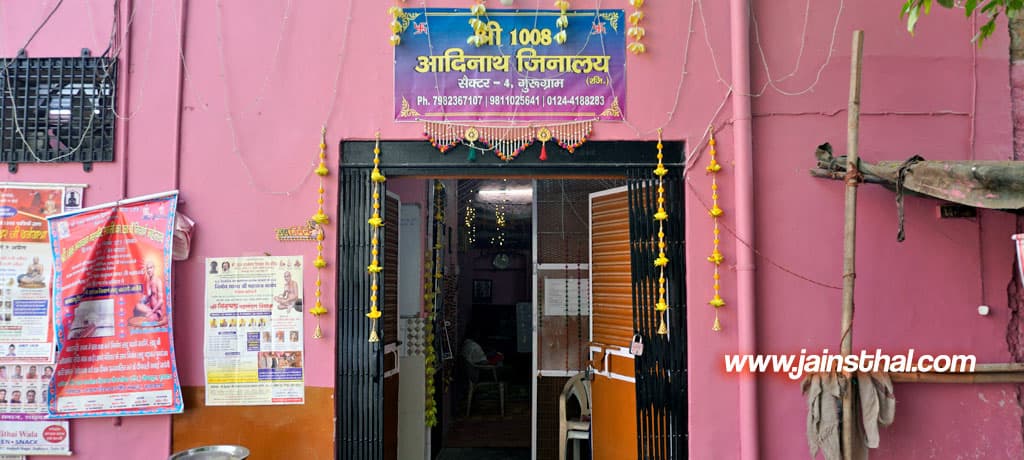
Adinath Jinalaya Sector 4 Gurugram
One such incident about the Atishay (numinous presence) of the temple is recorded that after the construction of the temple in the year 2012, some grains of rice were found kept on the Vedi everyday.
Shri Digambar Jain Temple Committee has been formed for the smooth functioning of the temple. The members working in the committee are as follows -
Introduction
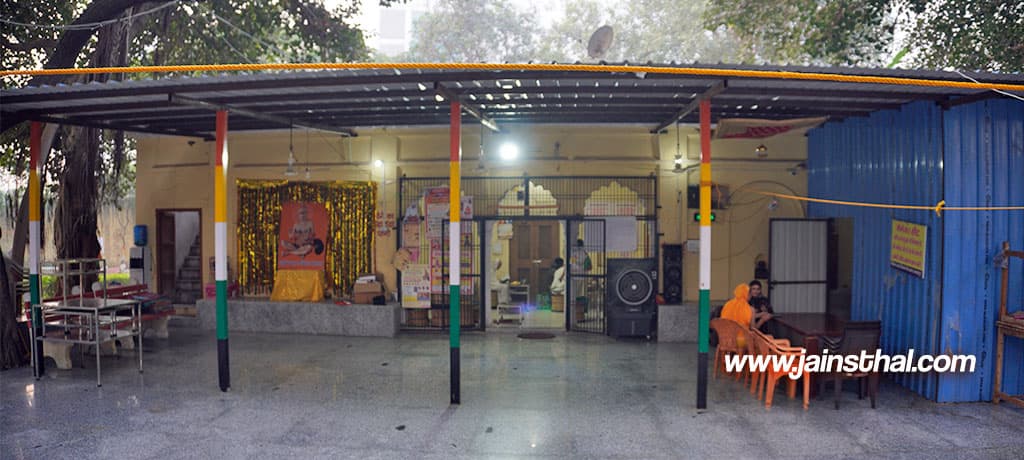
Shri 1008 Adinath Digambar Jain Temple is located in Sector 4, Gurugram. The construction of the temple in the form of a Chaityalaya was initiated in the year 1958 by Shri Madan Lal Jain, the father of Shri Yogesh Jain (the current trustee of the temple). In the year 2011-2012, the Chaturmas of Shri 108 Bahubali Sagar Ji Maharaj and Shraman Ratan Shri 108 Viharsh Sagar Ji Maharaj was held in Gurugram. His wish was that a Jain temple should be constructed in Sector-4. Shri Madan Lal Jain's wife also wanted that some religious work should be done by her, so she handed over the Chaityalaya to the Jain community in the year 2012. The renovation of the temple was undertaken by the Jain community and was completed under the guidance of the most revered Shri 108 Bahubali Sagar Ji Maharaj and Shri 108 Viharsh Sagar Ji Maharaj.
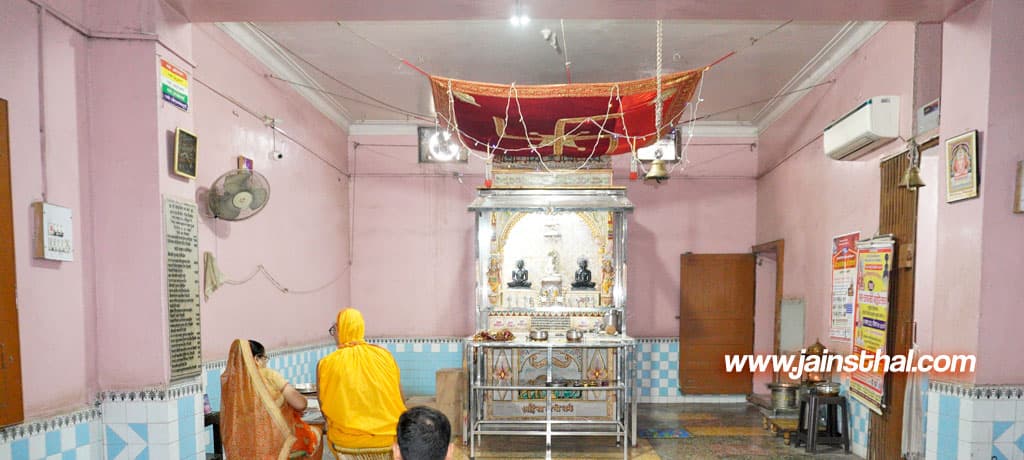
The Moolnayak Pratima (main deity idol) of Adinath Bhagwan Ji was present in the Vedi (altar) of the temple, hence the name of the temple was named Shri 1008 Adinath Digambar Jain Jinalaya. Other idols have been brought from Jaipur and enshrined in the vedi of the temple. Apart from the Moolanayak Pratima, the idol of Shri 1008 Chandraprabhu Bhagwan, Shri 1008 Shantinath Bhagwan, Shri 1008 Munisuvratnath Bhagwan, Shri 1008 Neminath Bhagwan, Shri 1008 Parshvanath Bhagwan and Shri 1008 Mahavir Bhagwan are also enshrined in the Vedi. Jain Pathshala (classes) are organized in the temple every Sunday. Every Sunday, a Jain study session is organized in the temple. In this study session, young children are acquainted with Jain values so that they develop a sense of spirituality and can contribute to their own and society's well-being. Every day twenty-five to thirty Jain devotees come to the temple to perform Puja (Prayer) and Abhishek (auspicious bath of the idol). A clean place has been created for making Puja Samagri (material) for the devotees coming to the temple.
It is said that the temple has been robbed twice, once in the year 2016 and again in 2020. In 2016 on one night thieves entered the temple after breaking the lock of the main gate. They broke the donation box and took away the entire donation amount. As well as they stole the silver or gold-made chhatar (brolly) over the idols of the deities. When the Jain community came to know about this incident in the morning, they were very surprised and saddened. The Jain community made extensive efforts to catch the thieves. They reported the matter to the local police station and hoped that the thieves would be caught soon, but nothing happened. To this day, no one has known anything about those thieves.
Another theft occurred in the year 2020 again at the same temple. This time, two thieves broke the lock of the main gate and entered the temple. They proceeded to break the donation box and advance to take the money kept inside. However, this time there was a security alarm system installed in the temple. As soon as the thieves started to break the donation box, the alarm started ringing. Startled by the alarm, the thieves left the stolen items and fled. After a while, members of the Jain community also reached the temple. Upon reaching there, they saw that the lock of the main gate was broken. Quickly, people reached the Garbh Grah (sanctum sanctorum) of the temple and found that all the belongings were safe inside the temple. Since then, the security of the temple has been further enhanced by the Jain community.
Atishay Katha
“One such incident about the Atishay (numinous presence) of the temple is recorded that after the construction of the temple in the year 2012, some grains of rice were found kept on the Vedi everyday.”
The guardian of the temple, Shri Yogesh Jain ji said that he used to open the temple in the morning and the grains used to be on the Vedi. He often looked around and he never saw anyone. It is believed that Dev (God) comes to the temple, otherwise how can somebody enter the temple without opening the lock. Therefore it was an act of Dev only.
Dharamshala
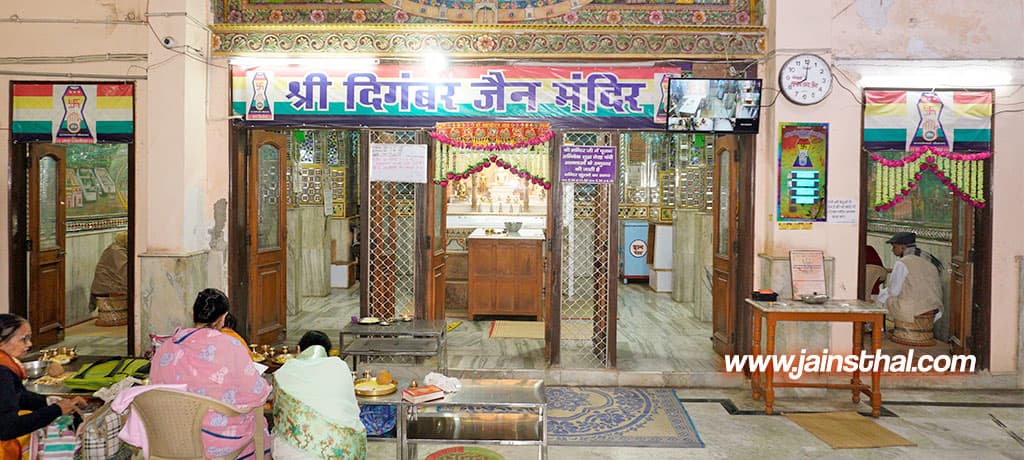
Presently Gurugram has become an industrial hub with all kinds of facilities. Where people of different communities live together. There is a community of about seven hundred to eight hundred Jain families in Gurugram. There are many Jain temples located in different areas of Gurugram. A committee has been formed for each temple. Jain devotees keep coming to Shri 1008 Adinath Digambar Jain Jinalaya located in Sector 4 of Gurugram every day. Arrangements for proper cleanliness have been made for the devotees. Shri 1008 Parshvanath Digambar Jain Mandir is located in Gurugram Sadar Bazaar, just three kilometers away from Sector 4. A Jain Dharamshala is built adjacent to the temple. There is a provision to stay in Dharamshala for the visitors coming from other areas. Jain Saints also keep coming to the area. Arrangements for food for Jain Saints are made in Dharamshala itself. Along with Dharamshala, Bhagwan Parshvanath Charitable Medicare Center is run. In which the facilities of Homeopathy, Physiotherapy Centre, Eye Centre, Dentist, Children's Special Doctor, Skin Doctor etc. are available.
History
Gurugram or Gurgaon is a city in the state of Haryana which is adjacent to the National Capital Region Delhi. It is located south-west of Delhi and is part of the Delhi National Capital Region (NCR). Gurugram is a commercial, economic and modern city which is developing rapidly. It is the second most populous city of Haryana after Faridabad. Gurugram is one of the major satellite cities of Delhi and is part of the National Capital Region. It is the third highest per capita income city in India after Chandigarh and Mumbai. According to popular belief, during the Mahabharata period, King Yudhishthir of Indraprastha (present day Delhi) had given this village to his Guru Dronacharya. It was after his name that it came to be called Gurugram, which later changed to Gurgaon. Gurugram: This city is located at a distance of 32 kilometers from the national capital New Delhi. Along with this, Gurugram is also an important technical area which has big IT companies, banks, financial institutions etc. Gurugram's modern urban development is evolving as a social and cultural hub with modern residential projects, shopping malls, restaurants, hotels and art institutions. There are many historical places near Gurugram - such as Sheshdhari, Sultanpur Lake, and Sultanpur National Park which contain natural beauty in themselves. Gurugram has good educational institutions, hospitals and other facilities for the society. Apart from this, there are various religious places in the city. Along with this, the cultural life of Gurugram is also full of diversity. There are many art galleries, dance and music centers which present the cultural heritage of the city. Overall, Gurugram is a versatile city from a commercial, technological, cultural and social point of view which is located in the Indian state of Haryana.
Know something about this temple?
Spot something missing or incorrect, or have extra info to share? Let us know and our team will take a look.
Shri Digambar Jain Temple Committee has been formed for the smooth functioning of the temple. The members working in the committee are as follows -